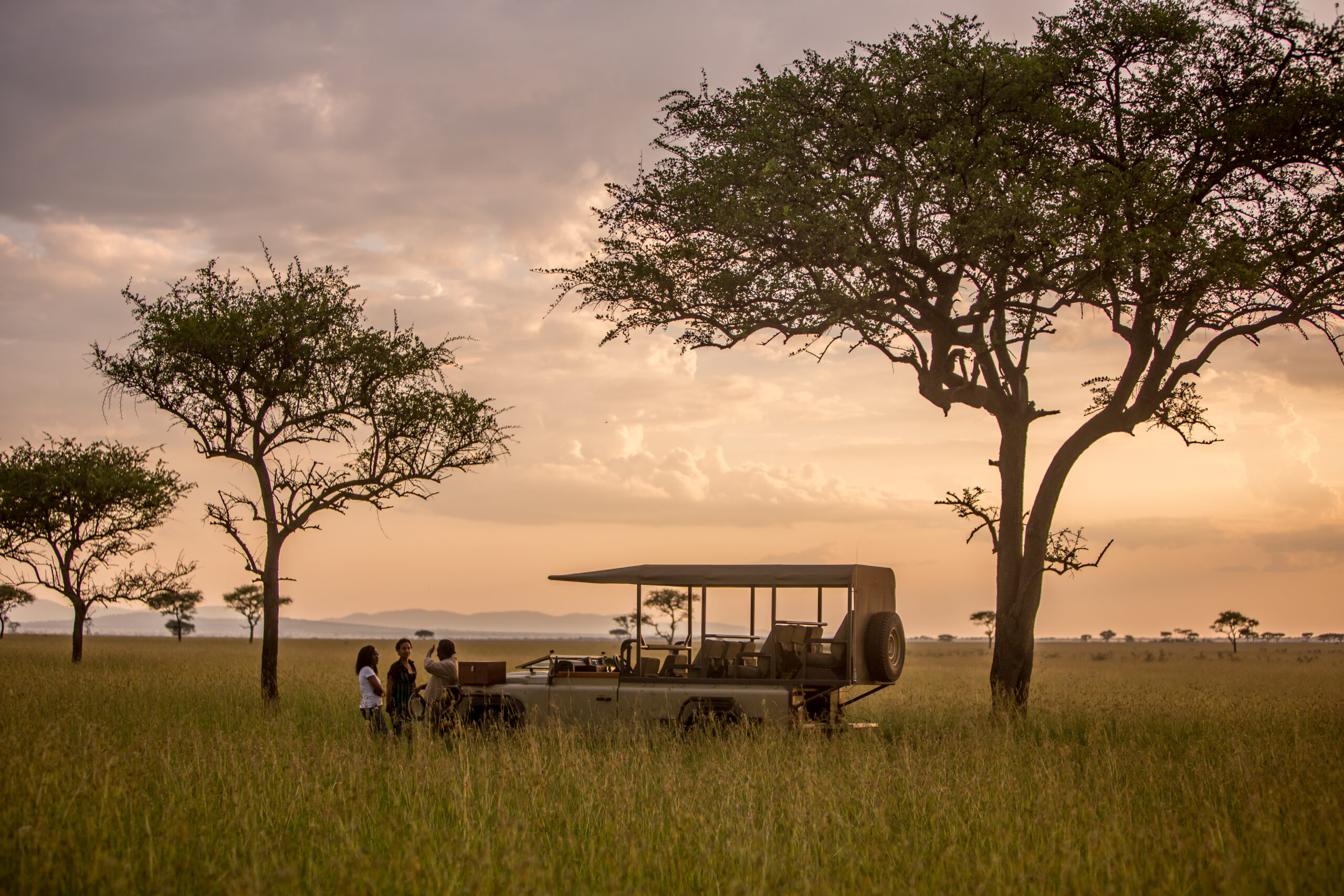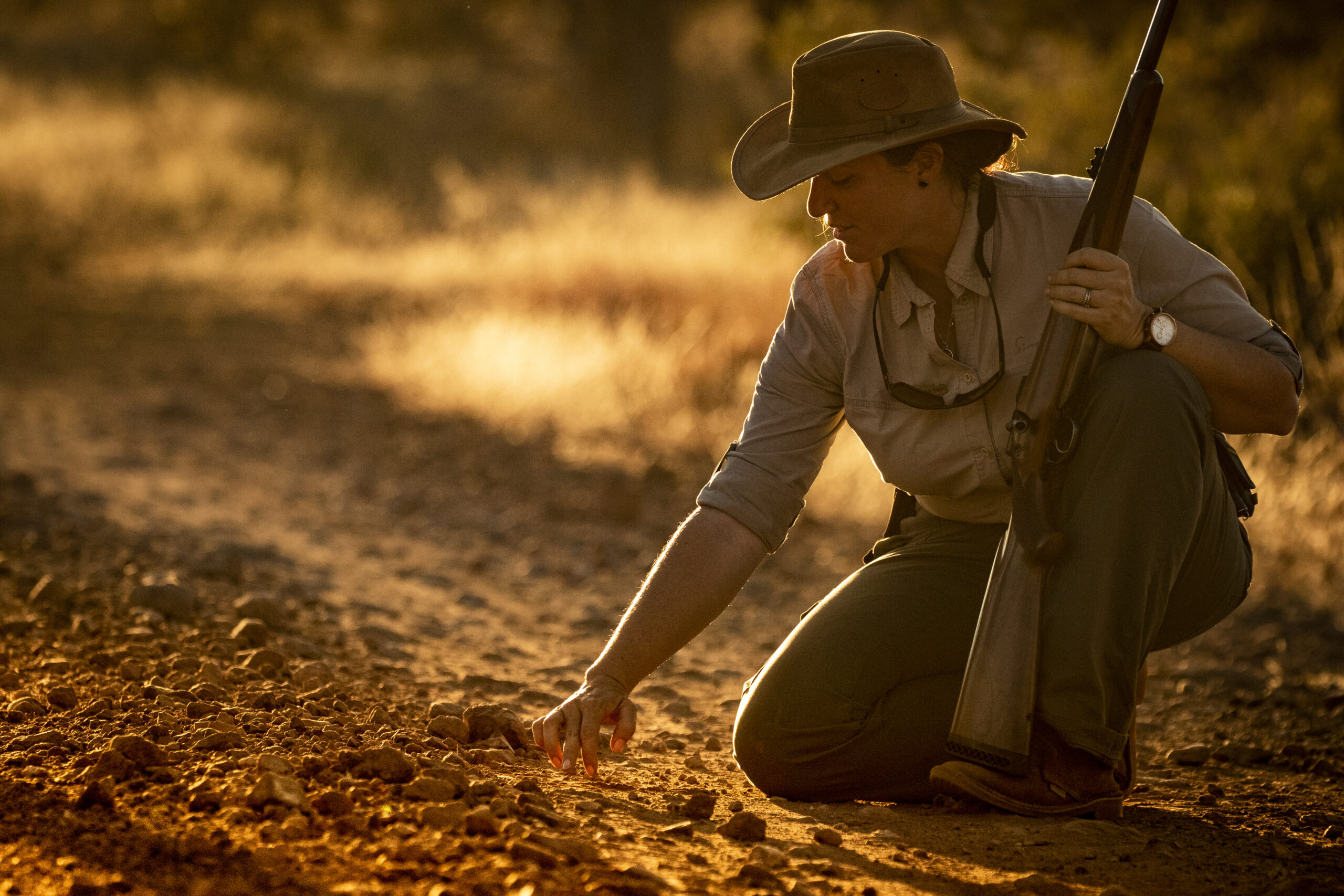
Six days through Tanzania's greatest wilderness — ancient baobabs, the Great Migration, and a crater that holds a world of its own.
There’s a version of Tanzania that most travellers only see from a bus window on the way between parks. This isn’t that safari.
Over six days, this Tanzania safari takes you through three of the country’s most celebrated landscapes: the ancient baobab groves and elephant herds of Tarangire National Park, the endless horizon of the Serengeti, and the extraordinary wildlife density of the Ngorongoro Crater— a collapsed volcanic caldera that behaves like a natural amphitheatre for the animals inside it.
You’ll begin among Tarangire’s centuries-old baobabs and elephant families, move on to the Serengeti’s open plains where the drama of predator and prey plays out daily, and end by descending into Ngorongoro; one of the most concentrated wildlife sanctuaries anywhere on the continent. Along the way, there’s room for a Maasai cultural visit, a nature walk, and a final day in Arusha exploring markets and a working coffee farm before you fly home.
This itinerary is a starting point, not a fixed script. Your specialist will help you adjust the pace, the camps, and the add-ons until the route feels built around you, because the best Tanzania safaris usually are.
The parts of this route past travellers mention most, unprompted.
Walk among baobab trees old enough to have watched centuries pass, each one able to store hundreds of litres of water in its trunk — a lifeline for the park through the dry season.
Watch wildebeest and zebra move across the Serengeti in numbers that are genuinely hard to describe until you've seen them — one of the most compelling wildlife spectacles on earth.
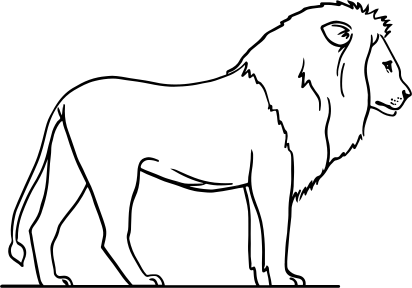
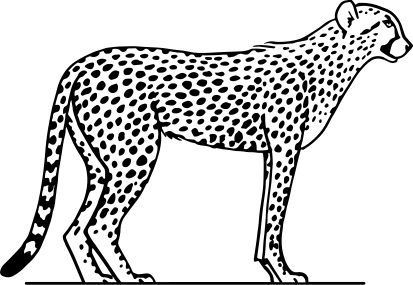
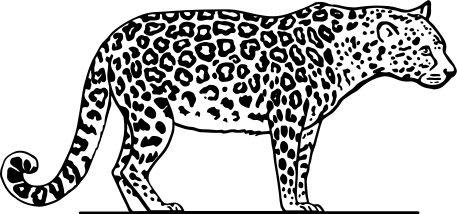
Spend a full day where lion, cheetah and leopard sightings are a realistic, everyday possibility, not a hoped-for bonus.
Drop into a self-contained world of grassland, forest and soda lake, home to an exceptional concentration of wildlife — including some of Tanzania's last remaining black rhino.
Spend time with a Maasai community learning how their traditions and daily life have adapted alongside — not apart from — the wildlife around them.
End the safari gently, with local markets, a working coffee plantation, and a tasting session that connects you to one of Tanzania's most important export crops.
A starting shape: pace, order and length of each stage are all adjustable.
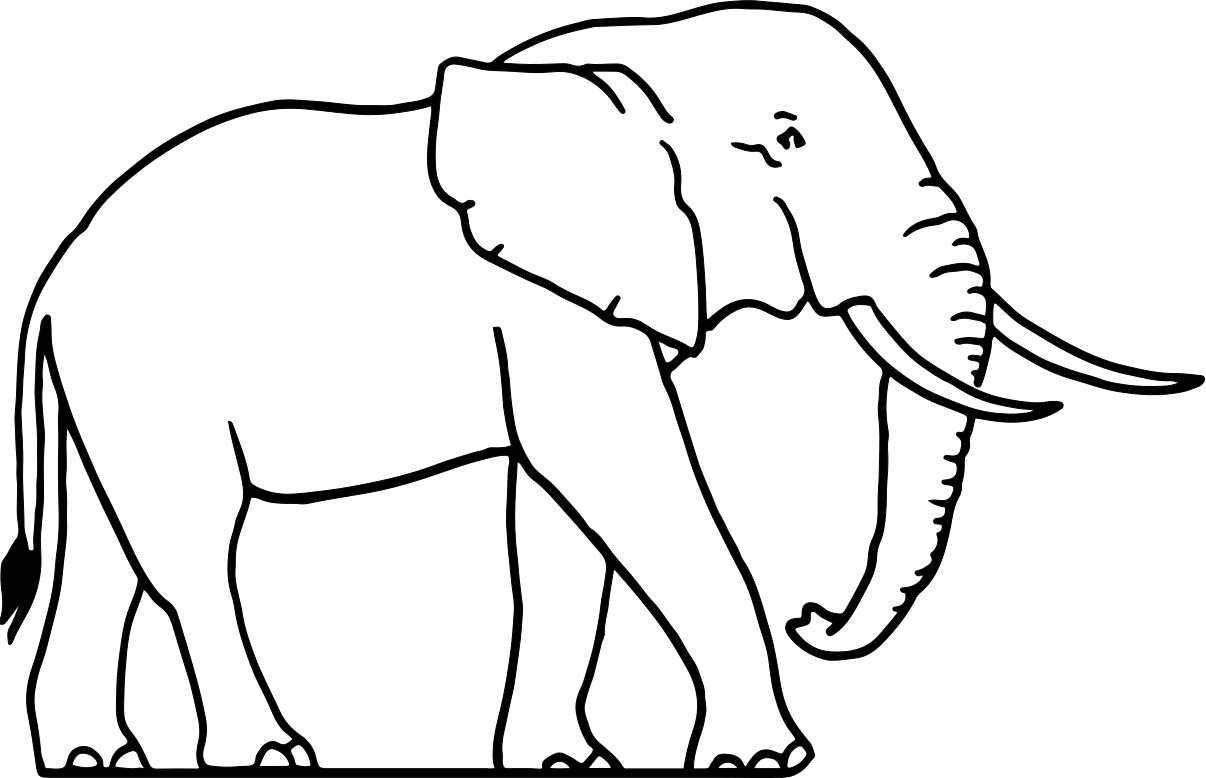
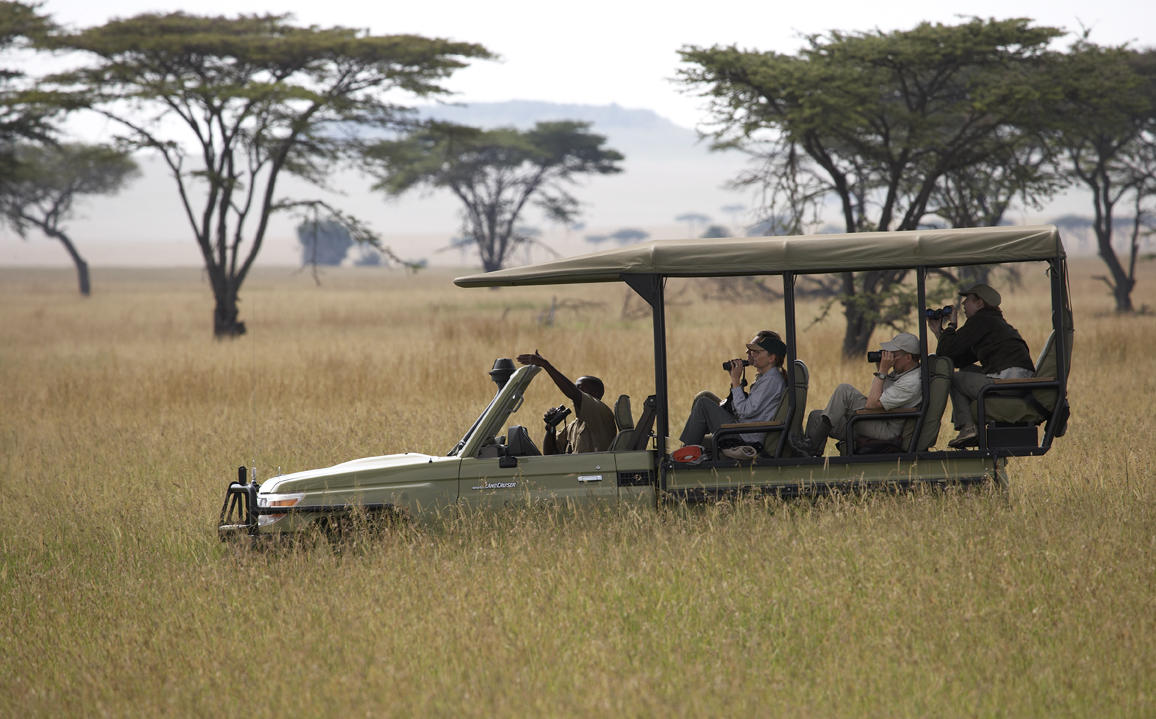
Arrive in Tarangire, a park known for its dense elephant population and baobab trees that have stood for centuries. Head out on a game drive along the Tarangire River, the park's lifeline through the dry season and a magnet for wildlife gathering to drink.
Today moves at a slower pace, focused on Tarangire's birdlife and smaller, less-visited wildlife. A guided nature walk uncovers the park's plant life and survival strategies up close, followed by an afternoon visit to a Maasai community to learn about their traditions and relationship with the land.
Drive to the Serengeti, a name synonymous with the classic African safari. This is Great Migration territory, and a morning game drive puts you among the wildebeest and zebra herds that make this one of the most talked-about wildlife shows anywhere on earth.
A full day in the Serengeti's central region, where predator-prey drama plays out daily. Expect real opportunities for lion, cheetah and leopard sightings — this area consistently delivers some of the most memorable game viewing on the route.
Drop into the Ngorongoro Crater, a collapsed volcano now home to an exceptional density of wildlife, including some of Tanzania's last black rhino. Spend the day exploring the crater floor, from flamingo-lined soda lakes to large tuskers moving through open grassland.
Return to Arusha, Tanzania's safari capital and a genuine cultural mosaic. Browse local markets, tour a working coffee plantation, and round off the safari with a tasting session before a farewell dinner and departure.
Based on past travellers' sightings on this exact route, here's roughly what to expect.
Tanzania's parks and conservation areas depend on the fees safari travellers pay to enter them. We work with camps and guides who take that responsibility seriously — supporting conservation funding, local employment, and low-impact operations.
Park and conservation area fees directly fund anti-poaching efforts, habitat protection, and research across Tarangire, Serengeti and Ngorongoro.
We prioritise guides, drivers and camp staff drawn from local communities, so the economic benefit of your safari stays close to the land it's built around.
Camps on this route are chosen with attention to water use, waste management and minimal footprint within sensitive ecosystems.
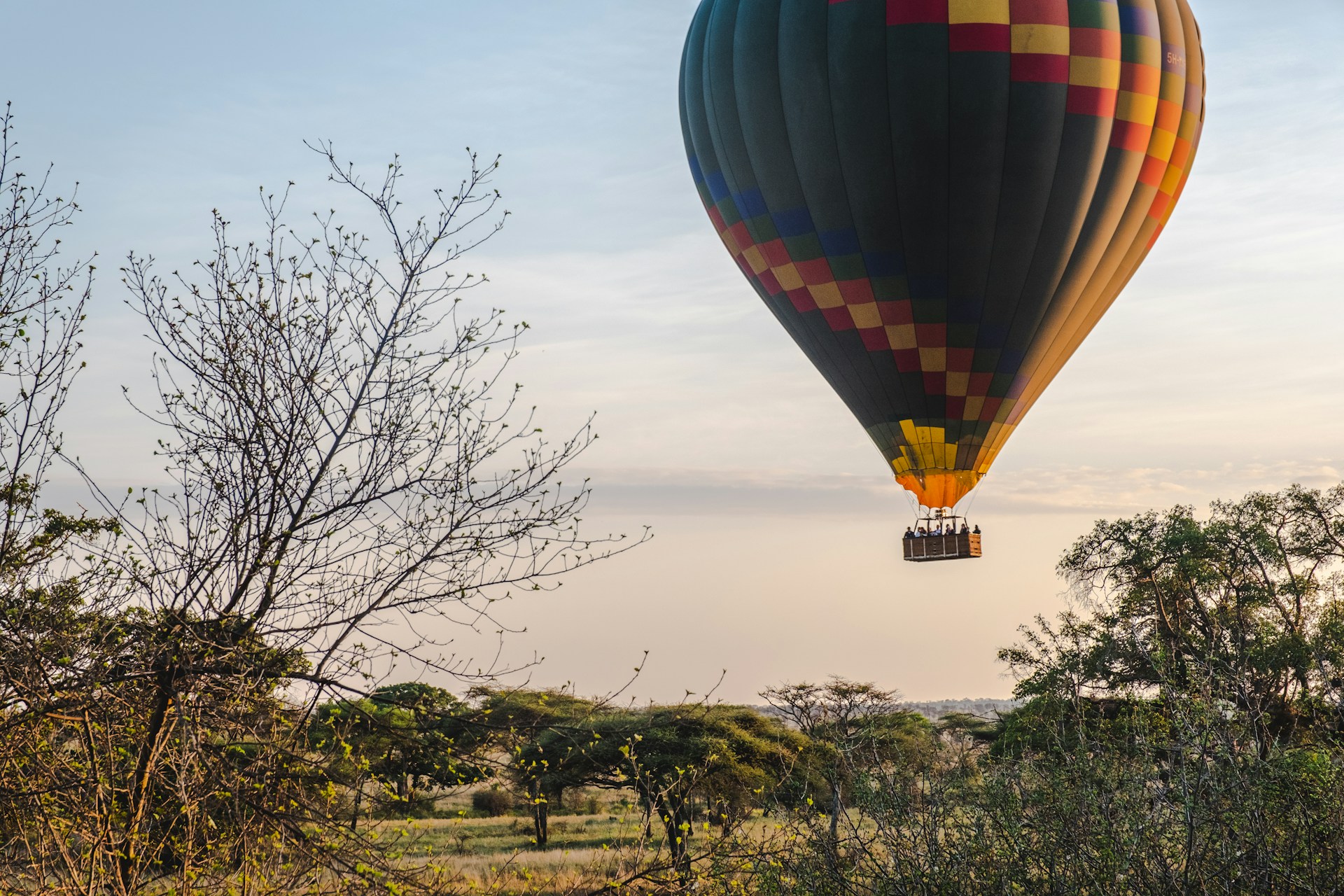
This route is a starting point, not a fixed package. Want an extra night in the Serengeti, a hot air balloon safari at dawn, or a few days on Zanzibar's beaches to finish? Tell us what matters to you and we'll build it in.
With the route as a starting point, your specialist will adjust the pace, camps and add-ons until the itinerary feels like yours.
Tailor My Tanzania Safari
A 9-day Tanzania journey through Tarangire's elephant herds, the Ngorongoro Crater, and two full days in…
Maasai Mara to Serengeti, following the herds across the border.
A 10-day circuit from Amboseli's elephants beneath Kilimanjaro to the Ngorongoro Crater, the Serengeti, and three…
Yes — six days is a well-balanced amount of time for this specific combination. It gives you two full days in the Serengeti (enough for genuine game-viewing depth, not a drive-through), plus dedicated time in both Tarangire and Ngorongoro. If you’d like more breathing room, adding a day or two to the Serengeti is the easiest way to extend the trip.
The migration moves in a rough annual cycle, and its exact position shifts year to year with rainfall. Broadly, the herds are most likely to be in or near the central and southern Serengeti from around December through July, moving north later in the year. Tell us your travel dates when you enquire and we’ll advise on migration positioning for that specific window.
Yes. The crater is one of the most accessible wildlife areas in Tanzania — a single road descends to the floor, where a private vehicle and driver-guide take you through for the day before climbing back to the rim for the night. Vehicle numbers are limited by conservation authorities, which is part of why the experience feels so uncrowded despite the wildlife density.
Park fees, accommodation, all meals, a private 4×4 vehicle with driver-guide, and the activities listed in the itinerary are included. International flights, visas, tips and personal expenses are not. See the full inclusions list above for details.
Yes, both are popular additions to this route. A dawn hot air balloon flight over the Serengeti pairs naturally with Day 3 or 4, and a Zanzibar beach extension is an easy add-on after your Arusha departure. Mention it when you enquire and we’ll build it into your itinerary.
Most nationalities require a Tanzania visa, which can usually be arranged online in advance or on arrival. A yellow fever vaccination certificate is required if you’re arriving from (or have transited through) a country with risk of yellow fever transmission. We recommend confirming current entry requirements with your embassy or a travel clinic closer to your departure date, as rules can change.
Tell us your dates and we'll confirm whether the timing works, then adjust the route from there.
Start planning this trip