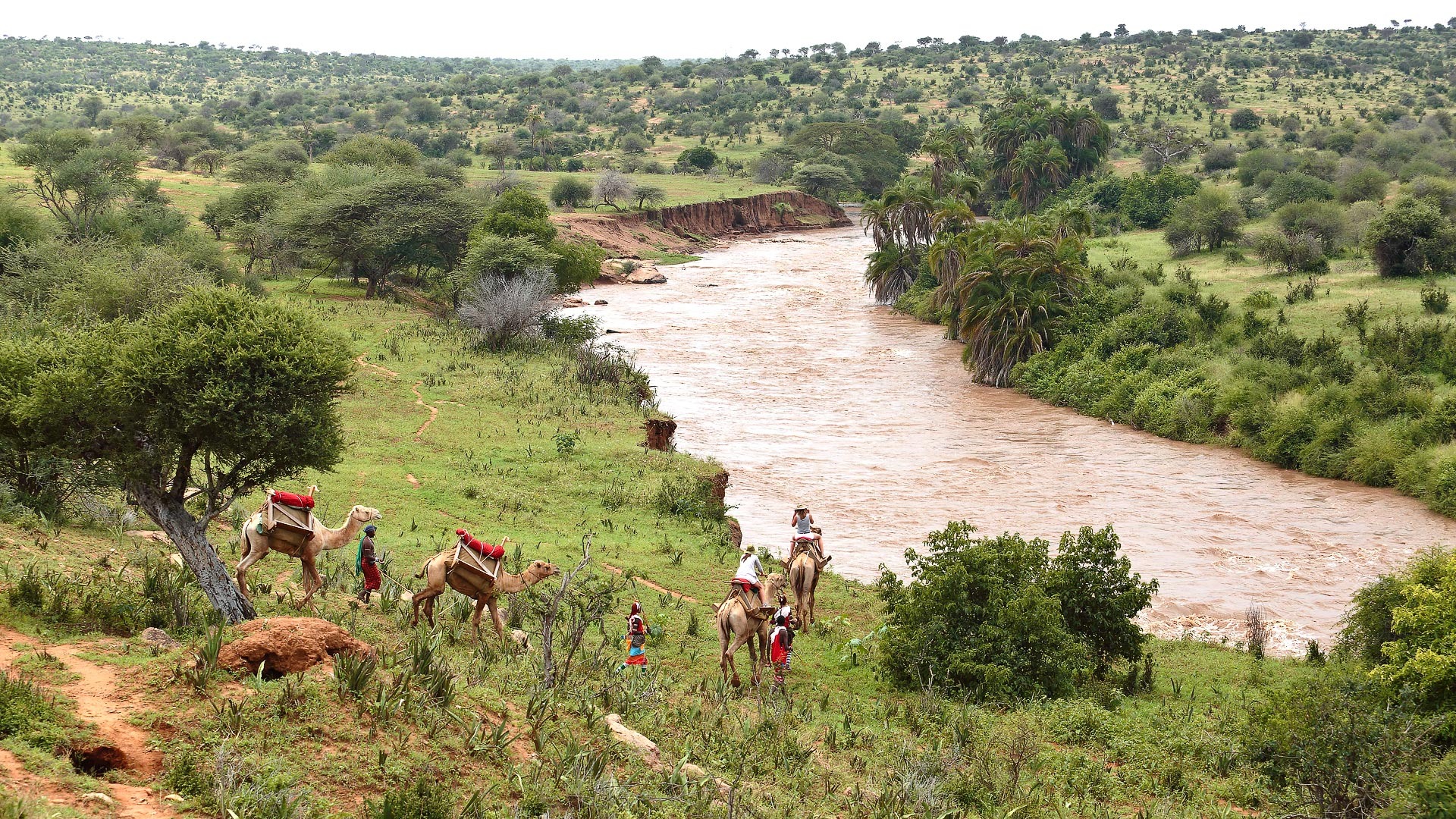
A Private conservancy provides the opportunity for deeply personal wildlife encounters, exquisite accommodations, and tailored services that elevate every moment.
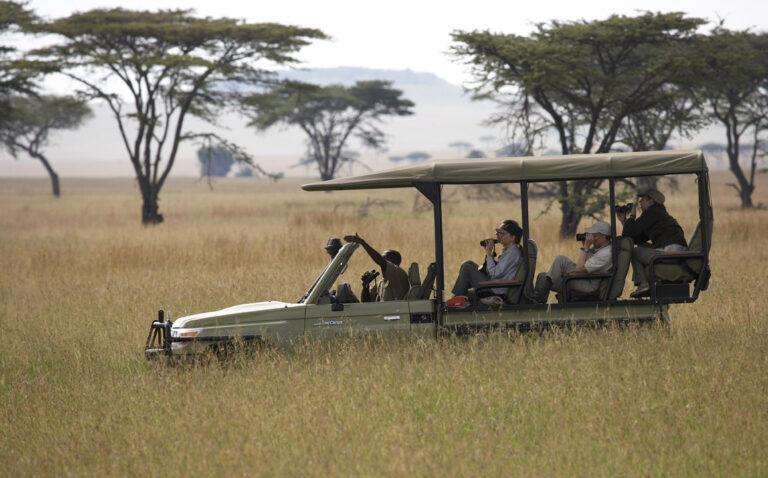
There is a moment that many seasoned travellers remember long after they have forgotten the name of the camp. A cheetah has begun her stalk across the open grass of the Masai Mara, low and deliberate, and you are holding your breath. Then you hear the engines. One vehicle, then six, then fifteen, closing in from every direction until the plain is ringed with roof hatches and lenses, and the cheetah, quite sensibly, gives up and lies down.
It is rarely a bad safari that brings travellers to us asking for something different. More often it is a very good one, interrupted. And the answer we give them, more often than any other, is a private conservancy safari.
The Difference Is Not the Wildlife. It Is the Rules.
Kenya’s Masai Mara National Reserve and Tanzania’s Serengeti National Park are among the great wildlife spectacles on Earth, and we would never suggest missing them. But they are public land, open to every licensed operator who pays the entry fee. There is no cap on how many vehicles may enter, game drives must keep to the tracks, and every vehicle must be back in camp by nightfall. In the weeks of the Great Migration, a single river crossing can draw vehicles into double figures.
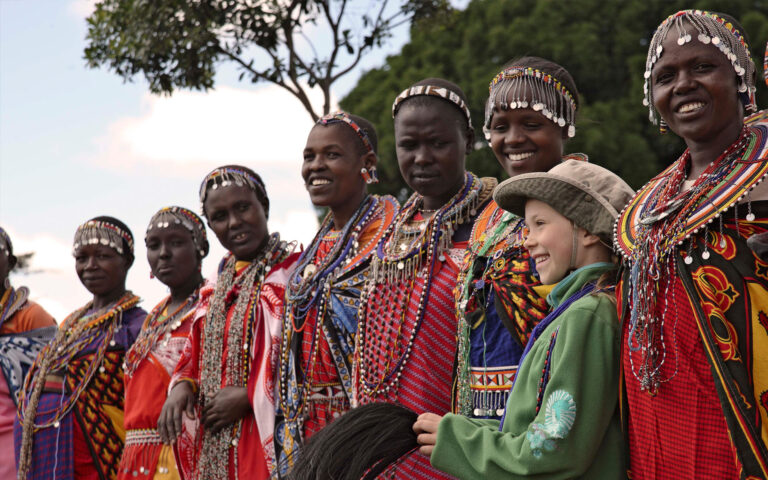
A private conservancy works on an entirely different understanding. The land belongs to local communities, most often Maasai or Samburu families, who lease it jointly to a small number of carefully chosen camps. Together, landowners and camps agree how many guests the land can carry, and the answer is deliberately modest: a single tent for every several hundred acres, rather than the open-ended numbers of a public reserve. Fewer beds mean fewer vehicles, and fewer vehicles change everything that follows.
Six Privileges of a Private Conservancy
I. A sighting that feels like your own. With so few camps sharing the land, you may spend an hour with a pride of lions and see no other vehicle at all. Where vehicles do meet, conservancy rules keep their number small, often no more than five at any one sighting, so the animals, and you, are never crowded.
II. The freedom to leave the track. In a conservancy, your guide may drive off-road, carefully and within limits that protect the grass, to follow a leopard into a gully or position you, with the light behind you, for the moment a lioness rises from the grass. In the national reserve, the same manoeuvre would earn a fine.
III. The night belongs to you. National reserves close at sunset. Conservancies do not. With a careful spotlight, night drives reveal the creatures that most visitors never see: leopard on the move, hyena at work, and the curious, rarely glimpsed nocturnal lives of aardvark, porcupine and genet.
IV. Africa on foot. Walking safaris, led by an armed ranger and an experienced guide, are permitted on conservancy land but not inside the Masai Mara reserve. There is no experience quite like reading fresh tracks in the dust at dawn, or hearing a lion call when you are standing, quite literally, on the same ground.
V. Guides who know the animals by name. A conservancy guide often works the same few hundred square kilometres for years. They know which lioness is raising cubs and where she has hidden them, which coalition of males holds the eastern ridge, and how a particular leopard spends her afternoons. Many of the finest hold advanced qualifications from the Kenya Professional Safari Guides Association, well beyond the basic licence needed for a public reserve.
VI. Privacy, made simple. Many conservancy camps are small, and some can be reserved entirely for a single family or party, with your own vehicle, guide and chef. For a multi-generational family, a celebration or a honeymoon, the camp simply becomes yours.
Where to Find the Quietest Corners of Kenya and Tanzania
The Masai Mara conservancies, Kenya. Along the northern and eastern edges of the Masai Mara National Reserve lies a ring of conservancies that together protect roughly 400,000 acres, more land than the reserve itself. Naboisho, formed in 2010 from the land of several hundred Maasai families, holds one of the highest lion densities in Africa, higher than the reserve next door. Mara North and Olare Motorogi are among the most respected names, each with only a handful of camps across wide open country. Most border the reserve directly, so the river crossings of July to October remain within reach, usually 30 minutes to an hour away by road.
Laikipia, Kenya. North-west of Mount Kenya, the Laikipia Plateau is a patchwork of private ranches and community conservancies covering more than 9,000 square kilometres. It holds roughly half of Kenya’s black rhino and, with neighbouring Samburu, almost all of its Grevy’s zebra. Lewa and Ol Pejeta are its most celebrated names, alongside quieter ranches where horseback safaris, camel treks and guided bush walks are part of everyday life. Because Laikipia’s rhino and elephant do not migrate, it rewards a visit in any month.
See our top safaris here: Kenya Private Wildlife Safari and Safari after the Rhinos of Lewa
The Serengeti’s private edges, Tanzania. On the Serengeti’s western boundary, the Grumeti Reserves form a private concession of about 140,000 hectares in the path of the Great Migration, where off-road driving, night drives and walking safaris are all permitted, and only a few lodges share the land. Elsewhere in northern Tanzania, community Wildlife Management Areas bordering parks such as Tarangire follow a similar spirit, keeping elephant corridors open while giving villages a direct stake in their protection.
See our Collection of Best Safaris in Tanzania
The Quiet Economy of Private Conservancy
It would be easy to see a conservancy as simply a more exclusive way to travel. In truth, it is one of the most hopeful ideas in African conservation.
In the 1990s, much of the land around the Masai Mara was divided into individual family plots, and many families faced a hard choice between grazing more cattle, fencing their land or selling it for farming. Elsewhere in Kenya, community-owned ventures such as Il Ngwesi in Laikipia had already shown that wildlife tourism could support a community directly. The Mara conservancies took that idea further. Families pool their plots into a single wild landscape and lease it to a few camps, receiving a fixed payment for their land whether or not every tent is full.
The result is a quiet bargain that benefits everyone. Landowners receive a steady income that does not depend on the next good season. Fences stay down, so wildlife can move freely between the reserve and the wider ecosystem. And the conservancy fees included in your stay go to the families who own the land and to the people who protect it. Ask us, and we will tell you exactly where your stay makes its contribution.
Reserve and Conservancy
For most of our guests, the most rewarding answer is not one or the other, but both. A typical seven-night journey might begin with three nights close to the Mara River, timed for the crossings, before moving to an adjoining conservancy for four nights of walks, night drives and unhurried sightings. Because many conservancies border the reserve, the move between camps often takes less than an hour, and no day is lost to travel.
The same thinking works in Tanzania, pairing the resident lion prides of the central Serengeti with nights on a private concession at the park’s edge, and in Kenya, where the Mara and Laikipia combine beautifully by light aircraft. Many guests then close their journey with a few days on Zanzibar or the Kenyan coast.
A look at our most requested Tanzania safari
When to Go for a Private Conservancy safari, and When to Book
In the Mara conservancies, July to October brings the Great Migration onto conservancy land as well as the reserve, and with it the year’s greatest demand. Laikipia’s resident wildlife makes it rewarding in every month. January and February are fine in both regions.
Because conservancy camps are small by design, the most sought-after can be fully reserved many months ahead for the peak season. If a particular camp or conservancy matters to you, we suggest securing it first and arranging the rest of your journey around it, rather than the other way around.
Is a Conservancy Safari Worth It?
A night in a private conservancy costs more than a comparable night in a public reserve, and we would rather say so plainly. Part of the difference is the conservancy fee that goes to the landowners; part is the simple economics of fewer guests sharing more land.
What that difference buys cannot be found in a public reserve at any price: sightings without a crowd, the freedom to leave the track, the night drive, the walk at dawn, and a guide who knows the animals as individuals. For a first safari, the great reserves are a wonderful beginning. For the traveller who has seen them, and who now wants the quiet, a private conservancy safari is very often the answer.
Begin Your Private Conservancy Safari
Every journey we arrange is private and tailored, and conservancy safaris reward that care more than most, because the right conservancy depends on the month, the wildlife you most hope to see and the way you like to travel. Tell us what you are dreaming of, whether that is a honeymoon in a camp of six tents, a family safari with its own vehicle and guide, or a return to the Mara with no one else in sight, and your specialist will suggest the conservancies and camps that suit you best.
Plan Your Private Conservancy Safari Here
Frequently Asked Questions
What is a private conservancy safari?
A private conservancy safari takes place on land owned by local communities and leased to a small number of camps, usually bordering a national park or reserve. Guest numbers are deliberately limited, and activities that most reserves do not permit, such as off-road driving, night drives and walking safaris, are part of the experience.
What is the difference between a national reserve and a private conservancy?
A national reserve, such as the Masai Mara, is open to every licensed operator, with no cap on vehicles and game drives kept to the tracks until sunset. A private conservancy limits the number of camps and beds, allows guided off-road driving, night drives and walks, and pays its fees to the families who own the land.
Are private conservancies better than the Masai Mara reserve?
They offer a different experience rather than a better one. The reserve holds the main river crossing points of the Great Migration, while conservancies offer privacy, fewer vehicles and activities the reserve does not permit. Many travellers combine the two in a single journey, since most Mara conservancies border the reserve.
Can you see the Great Migration from a Mara conservancy?
Yes. From roughly July to October, the herds move across conservancy land as well as the reserve, and the main Mara River crossing points are usually 30 minutes to an hour away by road for conservancy guests.
Can you do night drives and walking safaris in a conservancy?
Yes. Night drives and walking safaris led by an armed ranger are permitted in Kenya’s private conservancies, but not inside the Masai Mara National Reserve.
Which are the best conservancies in Kenya for a luxury safari?
In the Masai Mara, Naboisho, Mara North and Olare Motorogi are among the most respected, each with only a handful of camps. In Laikipia, Lewa, Ol Pejeta and the surrounding private ranches offer rhino, horseback safaris and walking in a quieter, year-round setting.
Do conservancy fees support local communities?
Yes. Conservancy fees are paid to the Maasai and other families who lease their land, giving them a steady income for keeping it open to wildlife rather than fencing or farming it. Your specialist can tell you which conservancy and community your stay supports.
How far in advance should a conservancy safari be booked?
For the peak months of July to October, the smallest and most sought-after conservancy camps can be fully reserved many months ahead. Booking the conservancy first and building the rest of the journey around it is usually the wisest approach.