Fourteen days by light aircraft from Amboseli and Samburu to the Masai Mara and the Serengeti, then a direct flight to the white sand of Zanzibar, privately guided across two countries and an island.
There is a particular grandeur in seeing East Africa from above, and this scenic flying safari is built around it.
Fourteen days by light aircraft carry you from the elephant swamps of Amboseli beneath Kilimanjaro to the arid river country of Samburu, the golden plains of the Masai Mara and the endless grassland of the Serengeti, with the road reduced to short transfers and the landscape unrolling below.
One crossing, almost entirely by air, brings you from Kenya into Tanzania. Three nights in the Mara and three in the Serengeti give the two halves of the great ecosystem room to be savoured, and a direct flight from the Serengeti then carries you to Zanzibar, for three nights of white sand, warm water and the old streets of Stone Town.
Five stays, one border crossing and a closing flight to the Indian Ocean make this a complete 14 day Kenya Tanzania Zanzibar safari, privately guided and paced to the traveller rather than the timetable, for those who would rather arrive by air than endure the road.
The parts of this particular route past travellers mention most
Amboseli's herds have been studied since 1972, the longest-running study of wild elephants anywhere, with Africa's highest mountain behind them on a clear morning.
The Ewaso Nyiro draws elephant and big cats to its banks through the driest months, and Samburu is the research base of Save the Elephants, founded here in 1993.
Three nights at Enkakenya Camp on the Olare Orok River, with two full days on the plains and the migration's river crossings possible from roughly July to October.
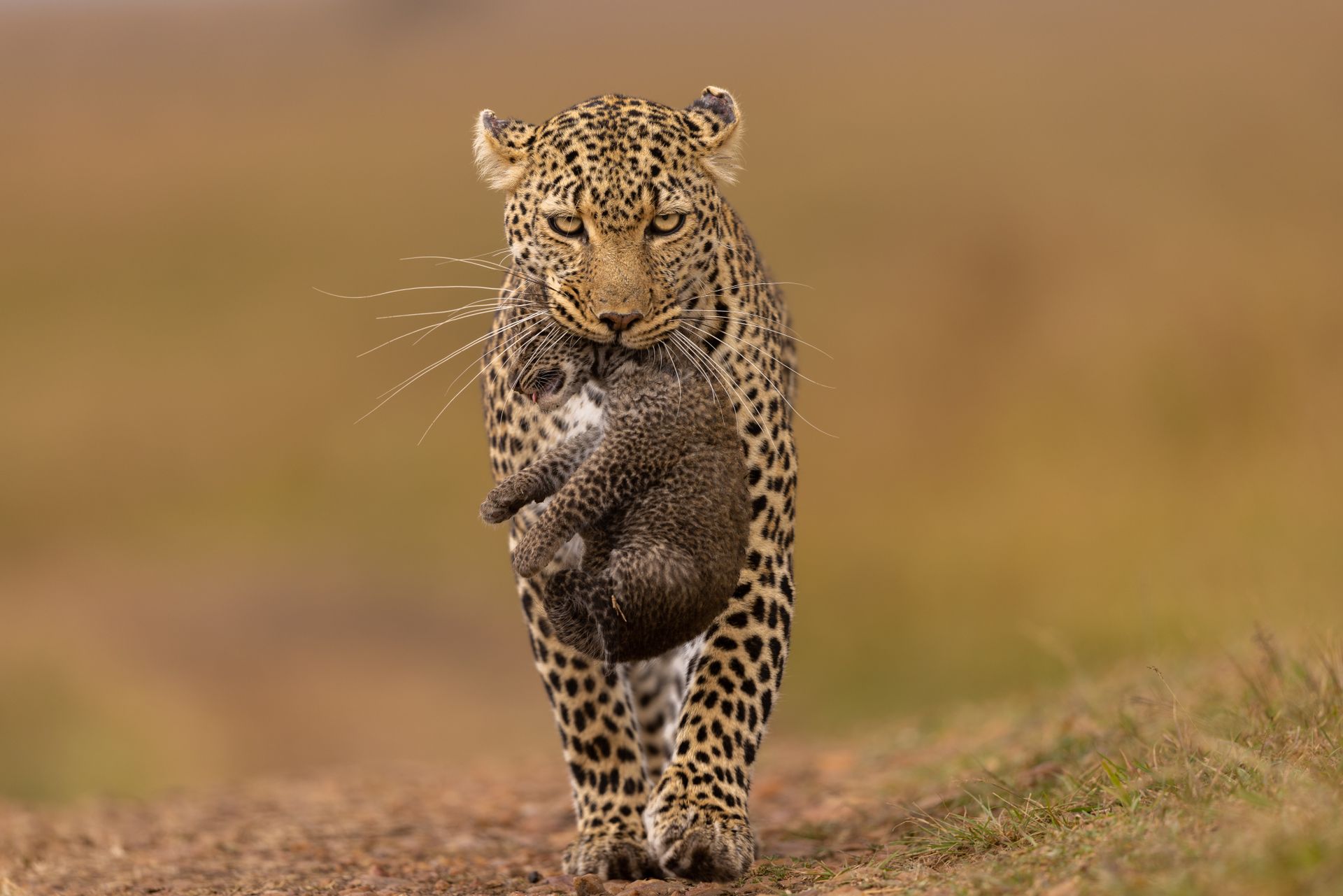
Seronera's lion prides have been studied continuously since the 1960s, and leopard are regularly found resting in the riverine forest along the Seronera River.
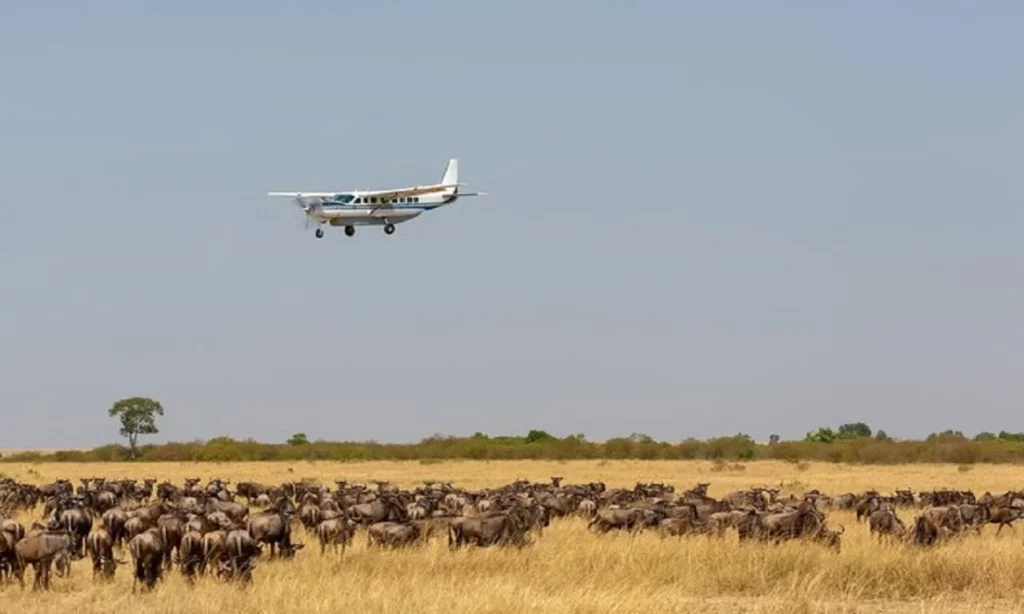
Light aircraft in place of the road across most of the route, so the contrast between the elephant swamps, the northern desert, the Mara and the Serengeti is something you see, not merely hear described.
A non-stop flight of under two hours trades the Serengeti's grassland for the Indian Ocean, with Stone Town's UNESCO-listed old town and a north-coast beach that stays swimmable at any tide.
A starting shape: pace, order and length of each stage are all adjustable.
Your journey opens at Nairobi's Jomo Kenyatta International Airport, where your guide awaits and a private transfer leads to Wilson Airport, a separate airfield some 30 to 45 minutes away, for a direct scheduled flight to Amboseli of around 40 to 45 minutes. The land below dries and opens as the aircraft flies south, and on a clear day Kilimanjaro stands on the horizon long before the airstrip comes into view.
Amboseli is a park of around 392 square kilometres, gazetted in 1974, whose swamps are fed by underground water from Kilimanjaro. Arrival is timed for luncheon at camp and an afternoon game drive, with elephant the first and most dependable of its inhabitants, and an evening spent watching the light leave the mountain.
A lodge or tented camp in or beside Amboseli National Park · Two nights here, positioned for a full day exploring the park.
Morning and afternoon game drives cover Amboseli's swamps and open plains, with the best light, and the clearest views of the mountain, at dawn. The elephants here have been studied since 1972 by the Amboseli Elephant Research Project, founded by Cynthia Moss and now continued by the Amboseli Trust for Elephants, the longest-running study of wild elephants anywhere in the world.
A visit to Observation Hill offers the park's best panoramic view, the herds moving across the plains below with Kilimanjaro behind them. Amboseli is open, short-grass country, rich in elephant, buffalo, lion, giraffe and zebra, with leopard an uncommon sighting and no resident rhino.
Second night in or beside Amboseli National Park · Second night here.
There is no direct flight between Amboseli and Samburu, and so the morning is spent in the air by way of Wilson Airport in Nairobi, a first scheduled flight from Amboseli and a second northward, arriving in Samburu before midday. The country below turns steadily drier and more open, until the Ewaso Nyiro River appears as a ribbon of green doum palms and riverine forest through the thorn-scrub.
Samburu is home to the Special Five, the reticulated giraffe, Grevy's zebra, Beisa oryx, gerenuk and Somali ostrich, animals found together almost nowhere else on a safari itinerary. The first afternoon game drive follows the river, timed for the softer light.
A lodge or tented camp on the Ewaso Nyiro River, inside Samburu National Reserve · Two nights here, positioned for a full day exploring the reserve.
Morning and afternoon game drives follow the Ewaso Nyiro, the only permanent water for miles, which draws elephant, big cats and the Special Five to its banks even in the driest months, with leopard sightings better here than on most open-plains parks thanks to the riverine forest cover.
Samburu is also the main research base of Save the Elephants, founded here in 1993 by Iain Douglas-Hamilton, which has followed the life histories of close to a thousand individual elephants and pioneered the GPS collar tracking now used across the continent, a depth of knowledge that shapes how guides here read the herds.
Second night on the Ewaso Nyiro River · Second night here.
A direct scheduled flight carries you from Samburu to the Masai Mara in around two hours, with no stop at Wilson Airport, though the aircraft may call at other airstrips on the way, a journey of a morning that by road would occupy a day and more. The desert gives way to the highlands and the Rift Valley, and then to the open grassland of the Mara, an extension of Tanzania's Serengeti ecosystem and Kenya's most celebrated reserve.
Arrival is in the early afternoon, with luncheon at camp and a first game drive across the reserve's golden plains, home to resident lion prides, elephant and buffalo and, according to the season, the migrating wildebeest that cross from the Serengeti. The evening is spent beside the Olare Orok River, with nothing fencing the wilderness out.
Enkakenya Camp, an unfenced tented camp on the Olare Orok River, inside the Masai Mara reserve · Three nights here, positioned for two full days exploring the reserve.
The Masai Mara National Reserve covers about 1,510 square kilometres, small enough to be traversed in a day and rich enough to demand two. Full days of game drives cross open grassland and the riverine forest along the Mara River, home to the Big Five and, from roughly July to October, the Great Migration's river crossings, with luncheon taken in the bush or at camp and the afternoons following the river itself, where hippo and crocodile keep their stretch of water throughout the year.
A dawn hot air balloon safari is available as an add-on, drifting over the same grassland as the sun rises, followed by a breakfast laid in the bush, and a visit to a Maasai community can be arranged for a change of pace. Two days allow the Mara to be seen in different light and in different sectors, rather than hurried through in one.
Second and third nights at Enkakenya Camp · Two full days here.
The Mara and the Serengeti are one continuous ecosystem, yet the frontier between them is a real one, with no direct scheduled flight across it, and so today is a cross-border transfer almost entirely by air: a flight from the Mara to Migori, a short road transfer over the Isebania border with immigration formalities, then a flight from Tarime into the Serengeti. Vehicles and guides change at the border, as Kenyan and Tanzanian safari vehicles do not cross.
The air connection runs only in the high seasons, mid-December to the end of March and July to the end of October, so your specialist confirms the routing for your dates. Arrival in the Serengeti is in the afternoon, in time for a first game drive across ground that holds resident lion and leopard in numbers to rival anywhere on the continent.
A lodge or tented camp in central Serengeti, near Seronera · Three nights here, positioned for two full days exploring the park.
The days begin early, whilst Seronera's resident prides are at their most active, the morning drives passing through open grass and amongst the granite kopjes, ancient rock rising from plains that run unbroken to every horizon. The Serengeti covers close to 15,000 square kilometres, roughly ten times the size of the Masai Mara, and according to the month its plains may intersect the Great Migration's herds, which your specialist will advise on for your dates.
After a midday rest at camp, the afternoons follow the Seronera River's riverine forest, prime leopard habitat and one of the most dependable places in Africa to find a leopard resting in a tree. A dawn hot air balloon safari is available as an add-on for those who would see the same plains from above, with breakfast served in the bush.
Second and third nights in central Serengeti · Two full days here.
A direct scheduled flight of about one hour and forty-five minutes carries you from the Serengeti to Zanzibar, one of the more striking transitions a single journey can offer, open grassland giving way below to farmland, then forest, then the sudden, unmistakable turquoise of the Indian Ocean as the aircraft descends.
A private transfer leads to a beachfront lodge on the island's north coast, where the water stays swimmable at any tide, unlike the island's east coast, where the sea recedes dramatically twice a day. The rest of the day is left deliberately empty, a walk along the sand and an early dinner as the light turns gold.
A beachfront lodge on Zanzibar's north coast · Three nights here, with nothing scheduled beyond what you choose.
The two full days here are deliberately unstructured, the island's warm, calm water and white sand the main event, with a traditional dhow cruise at sunset on offer for travellers who want one organised outing rather than none at all, and snorkelling on the reef for those who prefer to be in the water.
For those who would like a change of pace, Stone Town's spice-scented alleys and historic waterfront are a short transfer away, a UNESCO-listed old town built on centuries of Swahili, Omani and colonial trade, and Jozani Forest, home to the endemic Zanzibar red colobus monkey, found nowhere else on Earth, makes a worthwhile half-day detour.
Second and third nights at the same beachfront lodge · Two full days here.
There is time for one last swim or a slow breakfast looking out at the water, before the transfer to Zanzibar's international airport, a short drive from most of the island's beaches. Depending on your onward routing, the flight home may connect through Dar es Salaam, Nairobi or another regional hub, and your specialist confirms the routing once flights are booked.
Fourteen days after landing in Nairobi, the journey closes having seen Amboseli's elephants, Samburu's river country, the plains of the Mara and the Serengeti and the white sand of Zanzibar, five landscapes and two countries, and the best of East Africa from the air.
Based on past travellers' experiences, here's what this route is really about.
Five stays across two countries and an island, from a camp beneath Kilimanjaro to Samburu's river, Enkakenya Camp in the Masai Mara, the Serengeti plains and a beachfront lodge on Zanzibar, each placed for the landscape it belongs to.
Park, reserve and marine fees across this route fund ranger operations, elephant research and reef protection in two countries and on an island.
The Amboseli Elephant Research Project has followed the park's herds since 1972, and Save the Elephants has worked from Samburu since 1993, funded in part by the visitors who pass through.
The Serengeti and the Masai Mara protect the same migration landscape from either side of the border, and the fees paid on this route support ranger patrols in both.
Activities such as snorkelling and boat trips around Zanzibar typically include marine conservation area fees that fund reef and coastal protection.
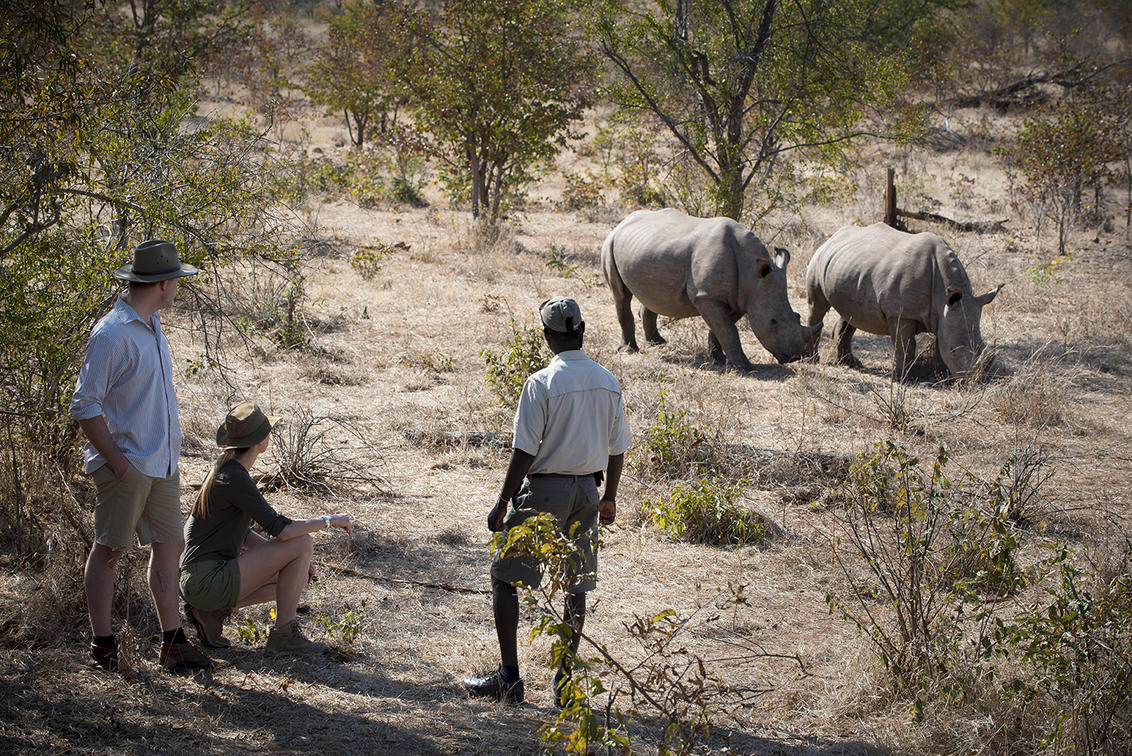
Rhino are not claimed anywhere on this route, because Amboseli and Samburu have none and the Mara and Serengeti offer only rare sightings, so every wildlife claim here is one we can stand behind.
Fourteen days by air is arranged for travellers who would rather see East Africa from above than from a vehicle seat. Swap the order of the stages, add a night in the northern Serengeti for the migration, extend the beach with a further night, or add a day of snorkelling or a Stone Town stay, your specialist will work from here.
With the route as a starting point, your specialist will adjust the pace, camps and add-ons until the itinerary feels like yours, not a template.
Start tailoring this safari
Three nights each in the Mara and the Serengeti, an overland border crossing between them, then…
The Mara, the Serengeti, Ngorongoro's crater floor, then four days on Zanzibar's white sand.
Three days in the Mara, four unhurried days on Diani's sand, an honeymoon built around presence.
Almost. Four of the five legs between stays are flown. The exception is the Masai Mara to Serengeti crossing on Day 8, where there is no direct flight across the border, so a short road transfer over the Isebania border sits between two flights.
Most visitors need Kenya’s Electronic Travel Authorisation before arrival and a Tanzanian visa, which covers Zanzibar, and a yellow fever certificate is also required on entry to Tanzania from Kenya. The East Africa Tourist Visa covers Kenya, Uganda and Rwanda but not Tanzania, so your specialist confirms the exact requirements for your nationality before you book.
No. The air and road connection runs only from mid-December to the end of March and from July to the end of October, and needs at least two passengers. Your specialist confirms the routing and dates, and arranges an alternative if you are travelling outside those windows.
Light aircraft limit luggage, typically to around 15 kg per person in soft-sided bags, and the Day 8 connection specifically allows 15 kg. Your specialist confirms each airline’s allowance, and can store larger luggage in Nairobi for the safari portion.
Not reliably. Amboseli and Samburu have no rhino to offer, and sightings in the Masai Mara and Serengeti are rare and never guaranteed. White rhino do not naturally occur on this route.
It depends on your dates. The Mara River crossings are possible from roughly July to October, and the herds’ position in the Serengeti shifts through the year, so your specialist will advise what the herds are doing on your specific dates.
The island’s north coast, where the water stays swimmable at any tide, unlike the east coast, where the sea recedes dramatically twice a day. Stone Town is a short transfer away for a half-day visit.
Tell us your dates and we'll confirm whether the timing works, then adjust the route from there.
Start planning this trip