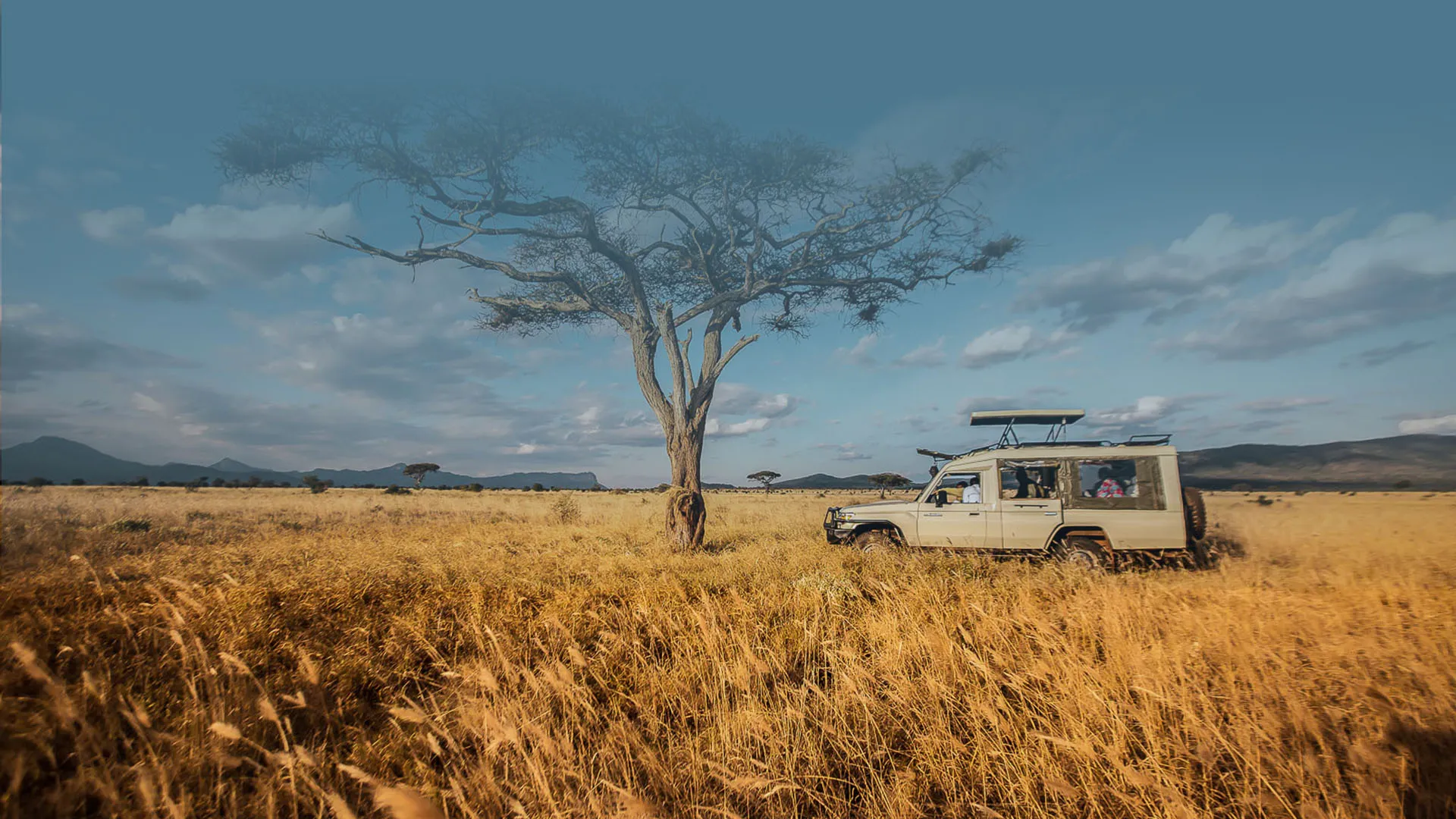
Seven days across three genuinely different landscapes, Tsavo East's vast plains and huge elephant herds, the ancient granite hills and rare endemic birds of Taita, and Diani's white sand on the way home.
This route covers ground most itineraries treat as three separate trips.
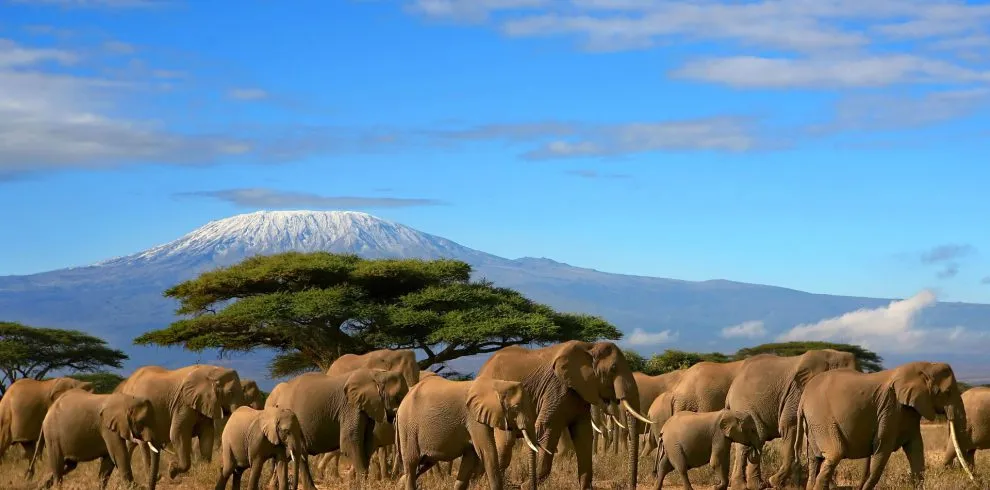
It opens in Tsavo East, one of the largest national parks on Earth, open plains running out toward the Yatta Plateau’s near-300-kilometre lava ridge, and elephant herds that gather here in numbers that rival anywhere in Africa. From there it climbs, briefly, into the Taita Hills, an ancient granite range rising unexpectedly out of the surrounding plains, where small surviving fragments of cloud forest hold bird species found nowhere else on Earth, and lodges are built on raised stilts directly over their own waterholes.
The last three days belong to Diani, a stretch of white sand and coral reef south of Mombasa, consistently rated among Kenya’s, and Africa’s, best beaches. Coastal forest just behind the shoreline is home to the endangered Angolan colobus, protected by a genuine, active conservation project based in the area, adding a different kind of wildlife encounter to a week that began with elephant on the open plains.
Three landscapes, each a genuinely different mood, connected into one continuous week out of Mombasa and back.
The parts of this particular route past travellers mention most
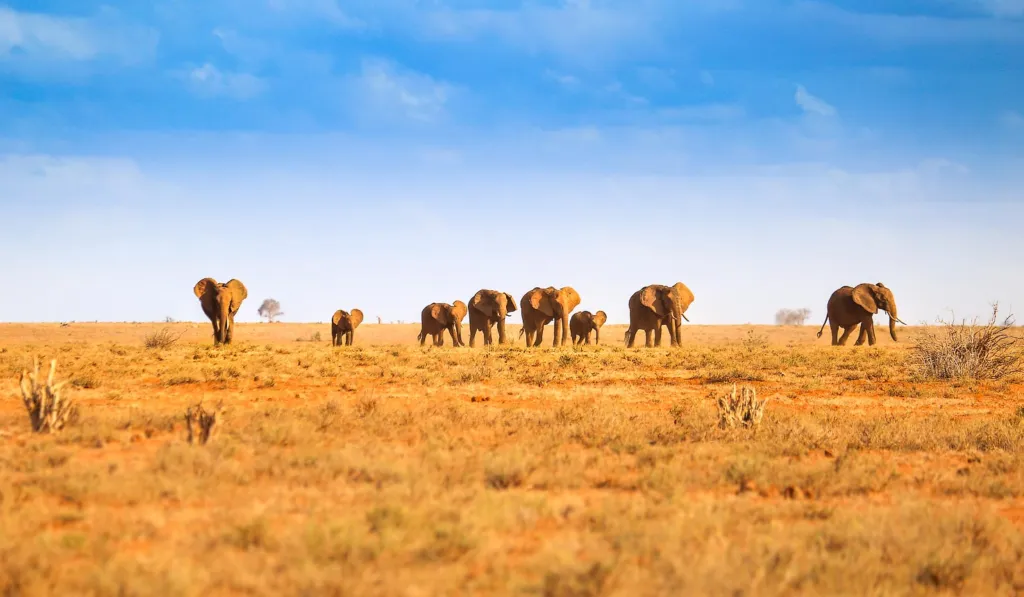
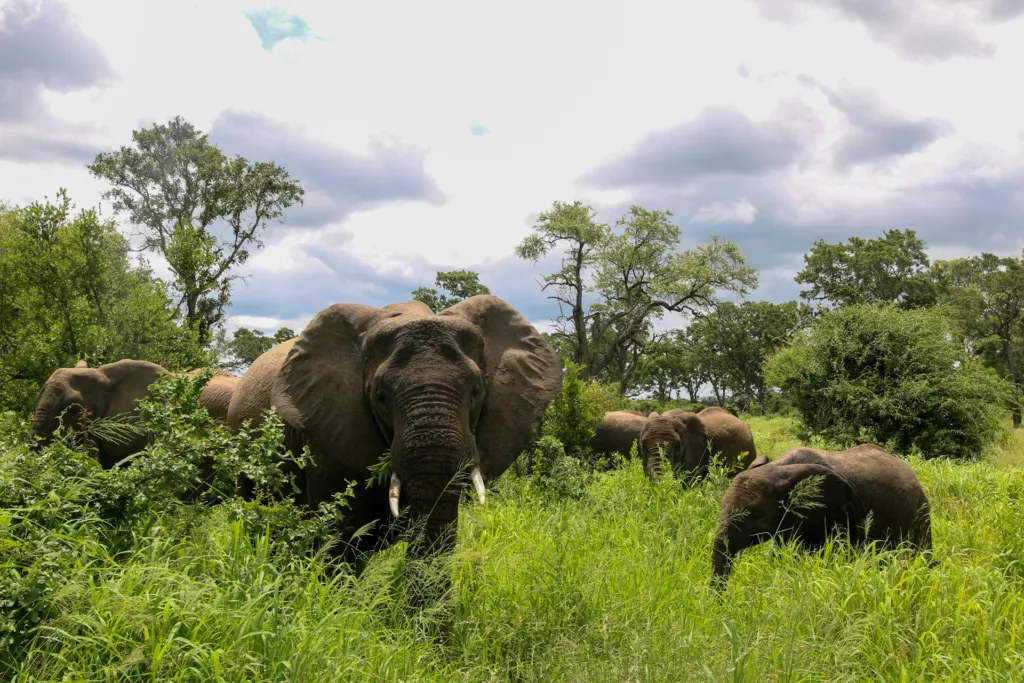
Tsavo East's red-dust elephants often gather in herds of a hundred or more, some of the largest concentrations anywhere in Africa.
Taita Hills' signature style of accommodation, raised on stilts directly above the water, wildlife visible from your own room.
Tiny surviving fragments of cloud forest in the Taita Hills hold critically endangered endemic species found in no other place on the planet.
Open plains, ancient granite hills, and an Indian Ocean coastline, each a genuinely different chapter of the same seven days.
Consistently rated among Kenya's best beaches, with coral reef offshore and coastal forest, home to the endangered Angolan colobus, just behind the sand.
A starting shape: pace, order and length of each stage are all adjustable.
The drive out of Mombasa covers around 100 kilometres, two to four hours depending on the gate, the coastal humidity giving way to the dry, wide country Tsavo is known for well before the park boundary comes into view. It's a comfortable, well-travelled route, more a gentle unwinding into safari country than a journey to be endured.
Arrival is timed for lunch, with the first game drive setting out in the softer light of early afternoon, open plains, a first distant view of the Yatta Plateau's flat-topped ridge, and, with real luck, one of the park's famous large elephant herds.
A lodge overlooking a waterhole near Voi · One night here, close to the park's southern game-viewing circuit.
The day begins early, while the plains are still cool and the resident wildlife at its most active. The morning drive moves toward the Galana River, tracing it to Lugard Falls, a rare stretch of white water where the river narrows and tumbles briefly over rock, a striking sight in a park otherwise defined by flat, open ground. Elephant, buffalo and giraffe are all a normal part of a morning here, and Tsavo East's herds are genuinely some of the largest anywhere in Africa.
After a midday rest at camp, the afternoon drive turns toward Aruba Dam, where wildlife gathers to permanent water through the dry months, with the Yatta Plateau's long lava ridge visible along the western horizon for much of the day.
Second night at the same lodge overlooking a waterhole near Voi · Second night here
The drive from Tsavo East to the Taita Hills is short, under an hour, but the landscape changes completely, flat, open plains giving way to ancient granite hills rising unexpectedly out of the surrounding country, among the oldest rock formations in East Africa. The Taita Hills Wildlife Sanctuary, a private conservancy bordering Tsavo West, holds its own resident plains game across roughly 28,000 acres, and an afternoon game drive here has a genuinely different character from the wide-open Tsavo circuit of the past two days.
Accommodation here follows a distinctive local style, lodges built on raised stilts directly over their own waterhole, wildlife visible from the room itself without needing to leave for a drive. The hills themselves hold something rarer still, tiny surviving fragments of cloud forest that are home to bird species found nowhere else on Earth, several critically endangered and known only from these specific slopes.
A lodge built on stilts over its own waterhole · One night here, in the Taita Hills Wildlife Sanctuary.
This is the longest drive of the trip, roughly five to six hours, retracing part of yesterday's route back toward Mombasa before continuing south along the coast to Diani, a comfortable stop along the way makes it easier to break up. The landscape shifts gradually as the road nears the coast, dry hill country giving way to coconut palms and the first proper sense of humidity in the air.
Arrival at Diani is timed for the late afternoon, in good time for a first walk along sand consistently rated among Kenya's, and Africa's, best beaches, and a first swim in water considerably warmer than anything the safari stages offered. Dinner the first night sets the tone for the three days ahead, genuinely nothing scheduled unless you choose to add it.
A beachfront hotel on Diani Beach · Three nights here, on one of Kenya's best-known stretches of coast
One of these two days works well for a dhow trip or snorkelling excursion out to Diani's reef, clear water and coral just offshore, or a visit to Colobus Conservation's centre nearby, a genuine, active project protecting the endangered Angolan colobus and the coastal forest patches it depends on, a different kind of wildlife encounter from anything the safari stages offered.
The second day is left deliberately open, a beach with nothing scheduled, a swim whenever the mood strikes, or simply the chair on the veranda that a week that began on Tsavo's plains has fully earned. Both nights are spent at the same hotel, so nothing about this stretch feels rushed.
Second and third nights at the same hotel · Same beachfront hotel, both nights.
A last, unhurried morning, breakfast on the veranda, a final swim if the timing allows it, nothing scheduled beyond enjoying the coast one more time before the transfer north. Seven days in, this is often the moment the whole trip comes into focus, plains, hills and coastline, each a genuinely different chapter of the same week.
The drive back to Mombasa is short, around 30 to 45 minutes including the Likoni crossing, in good time for an onward flight or a connecting night in the city.
Based on past travellers' sightings across the Tsavo East and Taita Hills portions of this route.
Three genuinely different stays, a lodge near Voi, a stilted lodge over a Taita Hills waterhole, and a beachfront hotel on Diani, each placed for the landscape it belongs to.
Fees paid on the Tsavo East portion of this route fund Kenya Wildlife Service operations, Taita Hills Wildlife Sanctuary is a private conservancy whose fees support both its wildlife and its critically important cloud forest fragments, and Diani's coastal forest is protected in part by Colobus Conservation, a genuine, active project working to save the endangered Angolan colobus.
Entry fees collected in Tsavo East go to the Kenya Wildlife Service, which funds ranger salaries, anti-poaching patrols and infrastructure across the park.
Taita Hills Wildlife Sanctuary's fees support the conservation of some of the last cloud forest fragments in Kenya, home to critically endangered bird species found nowhere else.
Colobus Conservation, based near Diani, works to protect the endangered Angolan colobus and the coastal forest it depends on, real, ongoing work rather than a general claim.
With the route as a starting point, your specialist will adjust until the itinerary feels like yours
Seven days is a starting point, not a ceiling. Add a second night at Taita Hills to give the birding more time, extend the Diani stay for a longer beach finish, or open the trip from Nairobi instead of Mombasa, your specialist will work from here.
Start tailoring this safari
A Tsavo East safari by train from Mombasa: two nights amongst the red elephants, then back…
A private Kenya coast to Masai Mara safari: Tsavo East, Amboseli, Lake Naivasha and the Mara,…
A 7-day Kenya safari from Samburu's rare northern wildlife to Ol Pejeta's rhino sanctuary, Lake Naivasha's…
Taita Hills works well as a scenic stopover between Tsavo East and the coast, a genuinely different landscape and lodge style from either end of the trip, without needing to add extra days most travellers don’t have. If birding is a real priority for you, it’s easy to extend this stage to two nights.
Its cloud forest fragments, tiny surviving patches of a habitat now almost gone from Kenya, hold several critically endangered bird species found nowhere else on Earth, including the Taita Apalis and Taita Thrush. It’s a globally significant site for a very specific kind of traveller.
It depends on the season, camp and hotel choice, and any add-on activities, so there isn’t one number that fits every trip. Tell us your dates and we’ll put together a tailored quote.
Yes, Diani is one of Kenya’s most established beach destinations, with calm, shallow water in many stretches and a wide range of activities on land as well as in the water.
Yes, this route works well adjusted to open from Nairobi, driving to Tsavo East from that direction instead, your specialist can rebuild the opening days around either starting point.
Tell us your dates and we'll confirm whether the timing works, then adjust the route from there.
Start planning this trip