Ten unhurried days from the Masai Mara to a lakeside interlude on Lake Victoria, the Serengeti, the Ngorongoro Crater and Amboseli beneath Kilimanjaro, privately guided across two countries.
Most Kenya and Tanzania safaris hurry from one park to the next. This 10-day Kenya and Tanzania safari pauses in the middle for the grandest of all the great African lakes. It begins in the Masai Mara, two days among its golden plains and the Olare Orok River, then crosses the border into Tanzania for two days beside Lake Victoria, the continent’s largest lake and the world’s largest tropical lake.
From the lake the road enters the Serengeti by its western corridor, a scenic approach, for two days on the plains, before a single afternoon in the Ngorongoro Crater. A long and rewarding road then returns through the border at Namanga to Amboseli, where two days of elephant herds beneath Kilimanjaro bring the journey to its close.
Five stays, two border crossings and a Lake Victoria safari at its heart make this one of the more distinctive combined itineraries on offer, privately guided and paced to the traveller rather than the timetable, for those who value a pause by the water as much as a morning among lions.
The parts of this particular route past travellers mention most.
Open plains, the Mara River and a camp on the Olare Orok River, with the migration's river crossings possible from roughly July to October.
Lake Victoria covers more than 68,000 square kilometres across three countries, and two nights on its Tanzanian shore offer a quiet interlude of water, birds and village life between two great plains.
The road from the lake enters the Serengeti through its western corridor, along the Grumeti River, a scenic approach to the park.
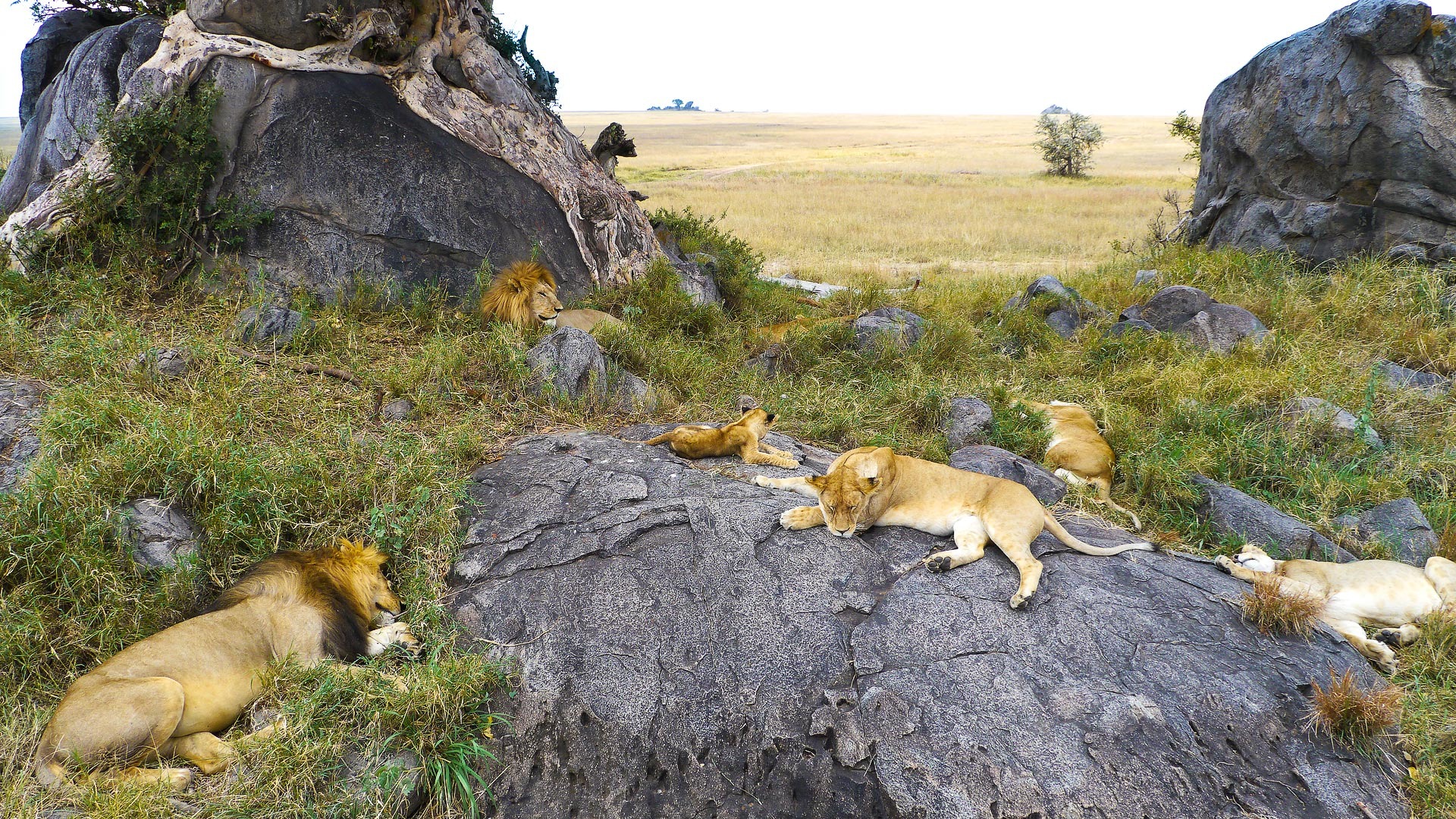
Seronera's lion prides have been studied continuously since the 1960s, and leopard are regularly found resting in the riverine forest along the Seronera River.
A collapsed volcanic caldera some 20 kilometres across and 600 metres deep, holding an estimated 25,000 large animals that stay resident all year.
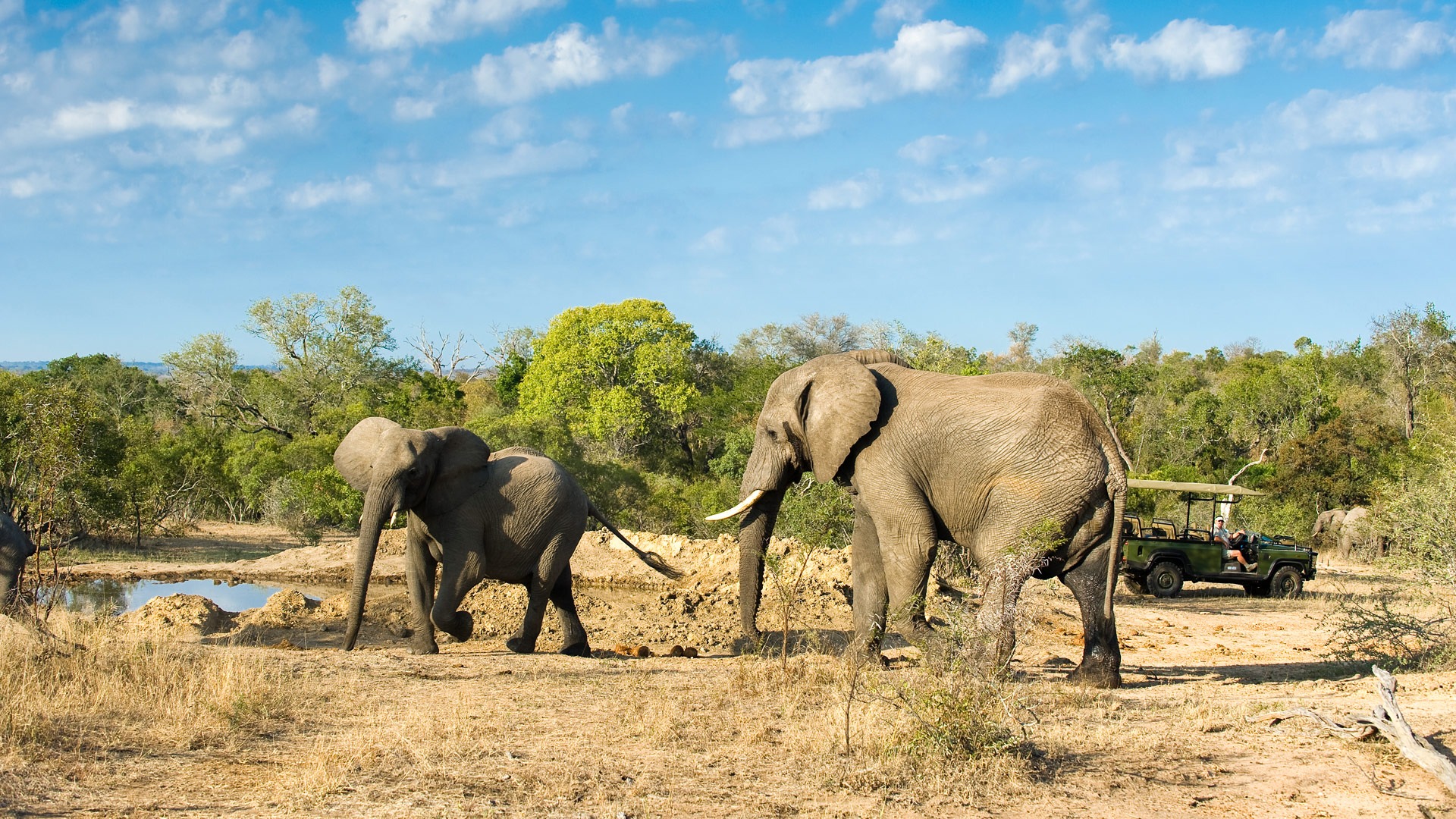
Amboseli's herds have been studied since 1972, the longest-running study of wild elephants anywhere in the world, with Africa's highest mountain behind them on a clear morning.
A starting shape: pace, order and length of each stage are all adjustable.
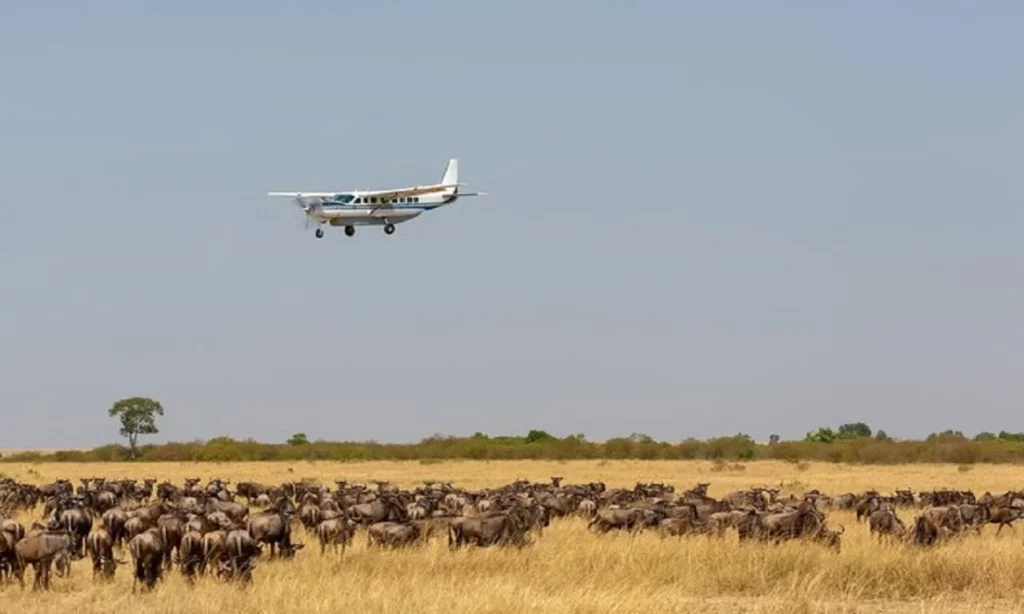
Your journey opens at Nairobi's Jomo Kenyatta International Airport, where your guide awaits and a private transfer leads to Wilson Airport, a separate airfield some 30 to 45 minutes away, for a scheduled flight into the Masai Mara of under an hour and a half. The plains appear below long before the airstrip does, a first and most agreeable glimpse of what lies ahead.
Arrival is timed for luncheon at camp and an afternoon game drive, an introduction to the reserve's golden grassland, its resident lion prides and, according to the season, the herds of the Great Migration. The evening is spent beside the Olare Orok River, with nothing fencing the wilderness out.
Enkakenya Camp, an unfenced tented camp on the Olare Orok River, inside the Masai Mara reserve · Two nights here, positioned for a full day exploring the reserve.
The Masai Mara National Reserve covers about 1,510 square kilometres, small enough to be traversed in a day and rich enough to demand one, and a full day of game drives crosses open grassland and the riverine forest along the Mara River, home to the Big Five and, from roughly July to October, the Great Migration's river crossings. Luncheon is taken in the bush or at camp.
The afternoon follows the Mara River itself, where hippo and crocodile keep their stretch of water throughout the year, and the light takes on the deep gold for which the reserve is celebrated. A dawn hot air balloon safari is available as an add-on, drifting over the same grassland as the sun rises, followed by a breakfast laid in the bush.
Second night at Enkakenya Camp · Second night here.
There is no direct road or flight between the Mara and the lake, and so today is a cross-border transfer by air and road: a short scheduled flight from the Mara to Migori, a brief road journey to the Isebania border with immigration formalities, and, once across into Tanzania, a drive of one to two hours on tarmac to the water. Vehicles and guides change at the frontier, as Kenyan and Tanzanian safari vehicles do not cross.
The air connection runs only in the high seasons, mid-December to the end of March and July to the end of October, so your specialist confirms the routing for your dates. The afternoon is left to arrive and settle, and to watch the light across Lake Victoria, the largest lake in Africa and the largest tropical lake in the world, from a quiet seat on its shore.
A lodge on the shore of Lake Victoria, on the Tanzanian side · Two nights here, a pause between the Mara and the Serengeti
Today is deliberately a different kind of day. The lake is vast, some 68,000 square kilometres in all and shared by Tanzania, Kenya and Uganda, and the lodge arranges its own quiet pursuits: a morning excursion by boat or canoe on the shallows, birdwatching along the shore, and, for those who wish, a visit to a lakeside village to see how life on the water is lived.
Having spent a week among game drives, the opportunity to do nothing in particular is part of the design, and the afternoon is yours to read, to walk the shoreline or simply to watch the lake change colour towards evening. It is a rest worth having before the Serengeti, where the days begin early again.
Second night on the shores of Lake Victoria · Second night here
The journey from the lake to central Serengeti takes roughly five hours with stops, the first stretch on tarmac as far as the Ndabaka Gate, where the western corridor of the park begins. This is the scenic western approach to the Serengeti, following the Grumeti River, and the game can begin well before the day's destination is reached.
The road continues across the plains to Seronera, the heart of the park and its most reliable game-viewing sector throughout the year. Arrival is timed for an afternoon game drive through ground that holds resident lion and leopard in numbers to rival anywhere on the continent.
A lodge or tented camp in central Serengeti, near Seronera · Two nights here, in the park's most reliable game-viewing sector.
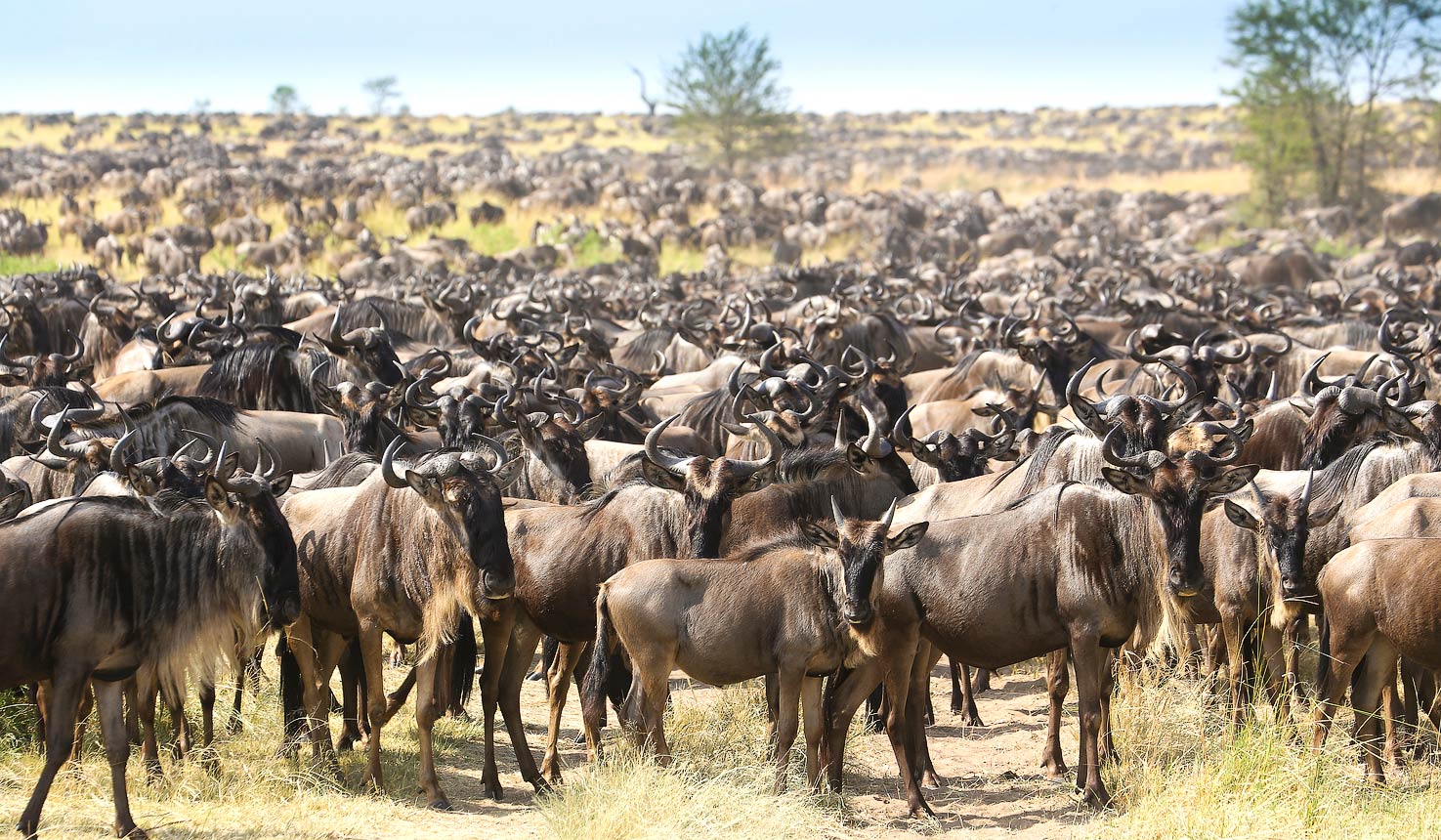
The day begins early, whilst Seronera's resident prides are at their most active, the morning drive passing through open grass and amongst the granite kopjes, ancient rock rising from plains that run unbroken to every horizon. According to the month, this stretch of the park may also intersect the Great Migration's herds, and your specialist will advise what they are doing on your dates.
After a midday rest at camp, the afternoon follows the Seronera River's riverine forest, prime leopard habitat and one of the most dependable places in Africa to find a leopard resting in a tree. A dawn hot air balloon safari is available as an add-on for those who would see the same plains from above, with breakfast served in the bush.
Second night in central Serengeti · Second night here.
An early start leaves the Serengeti for the Ngorongoro highlands, the grassland giving way to highland forest as the road climbs, with a stop at Olduvai Gorge on the way if time allows, one of the most important palaeoanthropology sites on Earth, where fossil discoveries reshaped scientific understanding of early human evolution. Arrival at the crater rim is timed for luncheon above the caldera.
The afternoon is given to the crater itself, a collapsed volcanic caldera some 20 kilometres across and 600 metres deep, holding an estimated 25,000 large animals. A half-day on the floor covers lion, wildebeest, zebra and buffalo and, with some fortune, black rhino, before the climb back to the rim in time for the last of the light. It is a shorter visit than a full crater day, and tomorrow's long road is the reason.
A lodge on the Ngorongoro Crater rim · One night here, with an early start tomorrow.
Today is the longest of the journey, a dawn departure from the rim and a road of roughly seven to eight hours, by way of Arusha to the border post at Namanga, plus one to two hours for immigration formalities, where travellers change vehicles and guides to continue into Kenya. The landscape turns drier and more open as the road descends, and on a clear day Kilimanjaro appears on the horizon well before the park does.
Arrival at Amboseli is in the late afternoon or early evening, in time for the last light across the swamps, though not for a game drive in earnest. It is a day best regarded as part of the journey, and a quiet dinner and an early night are the proper reward for it.
A lodge or tented camp in or beside Amboseli National Park · Two nights here, positioned for a full day exploring the park
Amboseli is a park of around 392 square kilometres, gazetted in 1974, whose swamps are fed by underground water from Kilimanjaro and draw some of Africa's most photographed elephant herds. Morning and afternoon game drives cover the swamps and open plains, with the best light, and the clearest views of the mountain, at dawn.
The elephants here have been studied since 1972 by the Amboseli Elephant Research Project, founded by Cynthia Moss and now continued by the Amboseli Trust for Elephants, the longest-running study of wild elephants anywhere in the world. A visit to Observation Hill offers the park's best panoramic view, the herds moving across the plains below with Kilimanjaro behind them.
Second night in or beside Amboseli National Park · Second night here.
After a final morning game drive or a slow breakfast with Kilimanjaro on the horizon, the road returns to Nairobi, roughly four hours, arriving in the afternoon, timed to connect with onward international flights home. A direct flight to Wilson Airport, of 40 to 45 minutes, can be arranged for those who would rather spend the last afternoon elsewhere than in a car.
Ten days after arriving, the journey closes having taken in the Mara's golden plains, the quiet shore of Lake Victoria, the Serengeti's open grassland, the Ngorongoro Crater and Amboseli's elephants, two countries and a great deal of Africa between them.
Based on past travellers' experiences, here's what this route is really about.
Five stays across two countries, from Enkakenya Camp in the Masai Mara to a lakeside lodge on Lake Victoria, the Serengeti plains, the Ngorongoro rim and Amboseli, each placed for the landscape it belongs to.
Park and reserve fees across this route fund ranger operations, monitoring and research in two countries, and the Ngorongoro Conservation Area is a rare working example of wildlife and people sharing the same land.
Maasai communities have lived and grazed cattle inside the Ngorongoro Conservation Area since its boundary was drawn in 1959, a deliberate alternative to excluding people from conservation land.
Poaching cut the crater's black rhino from over 100 in the 1960s to fewer than 20 by the mid-1980s, and today's population of around 30 is the largest single group left in Tanzania.
The Amboseli Elephant Research Project has followed the park's herds since 1972, the longest-running study of wild elephants anywhere, funded in part by the visitors who pass through.
The Serengeti and the Masai Mara protect the same migration landscape from either side of the border, and the fees paid on this route support ranger patrols in both.
Ten days is arranged for travellers who want a pause at the water as well as the great plains. Add a night at Ngorongoro for a full crater day, extend the Lake Victoria stay, fly from Amboseli to Wilson on the last day, or close with a few days of beach at Diani or Zanzibar, your specialist will work from here.
With the route as a starting point, your specialist will adjust the pace, camps and add-ons until the itinerary feels like yours, not a template.
Start tailoring this safari
Twelve days in search of the Big Five across Solio, Lake Nakuru, the Masai Mara, the…
Ten days following the Great Migration across the Masai Mara and the Serengeti, closing with a…
Fourteen days by light aircraft across Amboseli, Samburu, the Masai Mara and the Serengeti, then a…
Yes, twice: from the Masai Mara towards Lake Victoria on Day 3, by air and road with immigration formalities at Isebania, and from Ngorongoro back into Kenya on Day 8, by road at Namanga, with a change of vehicle and guide each time.
Most visitors need Kenya’s Electronic Travel Authorisation before arrival and a Tanzanian visa, and the East Africa Tourist Visa covers Kenya, Uganda and Rwanda but not Tanzania. Because this trip leaves and re-enters Kenya, your specialist confirms the exact requirements for your nationality, including the Day 8 re-entry, before you book.
The Tanzanian shore, a drive of one to two hours from the Isebania border and on the way to the Serengeti’s western corridor. Lake Victoria is shared by Tanzania, Kenya and Uganda, and this is the stretch that links the Mara to the Serengeti.
Quiet things, by design: a boat or canoe excursion on the shallows, birdwatching along the shore, a visit to a lakeside village, or simply time by the water. Your lodge arranges the details.
No. The air connection runs only from mid-December to the end of March and from July to the end of October, and needs at least two passengers. Your specialist confirms the routing and dates, and arranges an alternative if you are travelling outside those windows.
No. The crater is visited on the afternoon of Day 7, a half-day on the floor, because Day 8 is a long transfer to Amboseli. A night can be added at Ngorongoro to allow a full crater day, which your specialist can arrange.
Black rhino are a real possibility in the Ngorongoro Crater and a rare sighting in the Serengeti and Masai Mara, but never guaranteed, and Amboseli has no resident rhino. White rhino do not naturally occur on this route.
It depends on your dates. The Mara River crossings are possible from roughly July to October, and the herds’ position in the Serengeti shifts through the year, so your specialist will advise what the herds are doing on your specific dates.
Tell us your dates and we'll confirm whether the timing works, then adjust the route from there.
Start planning this trip