Ten days following the Great Migration from the Masai Mara into the northern Serengeti, with both banks of the Mara River, the big cats of Seronera and the Ngorongoro Crater, privately guided across two countries.
The 10 Days, Kenya and Tanzania Wildebeest Migration Safari follows the Great Migration across the Masai Mara in Kenya and the northern and central Serengeti in Tanzania, then closes with an afternoon inside the Ngorongoro Crater before ending in Arusha. It is a private, tailor-made itinerary from Kenya Tanzania Safari, and it is best travelled from July to October, when the herds are usually at the Mara River.
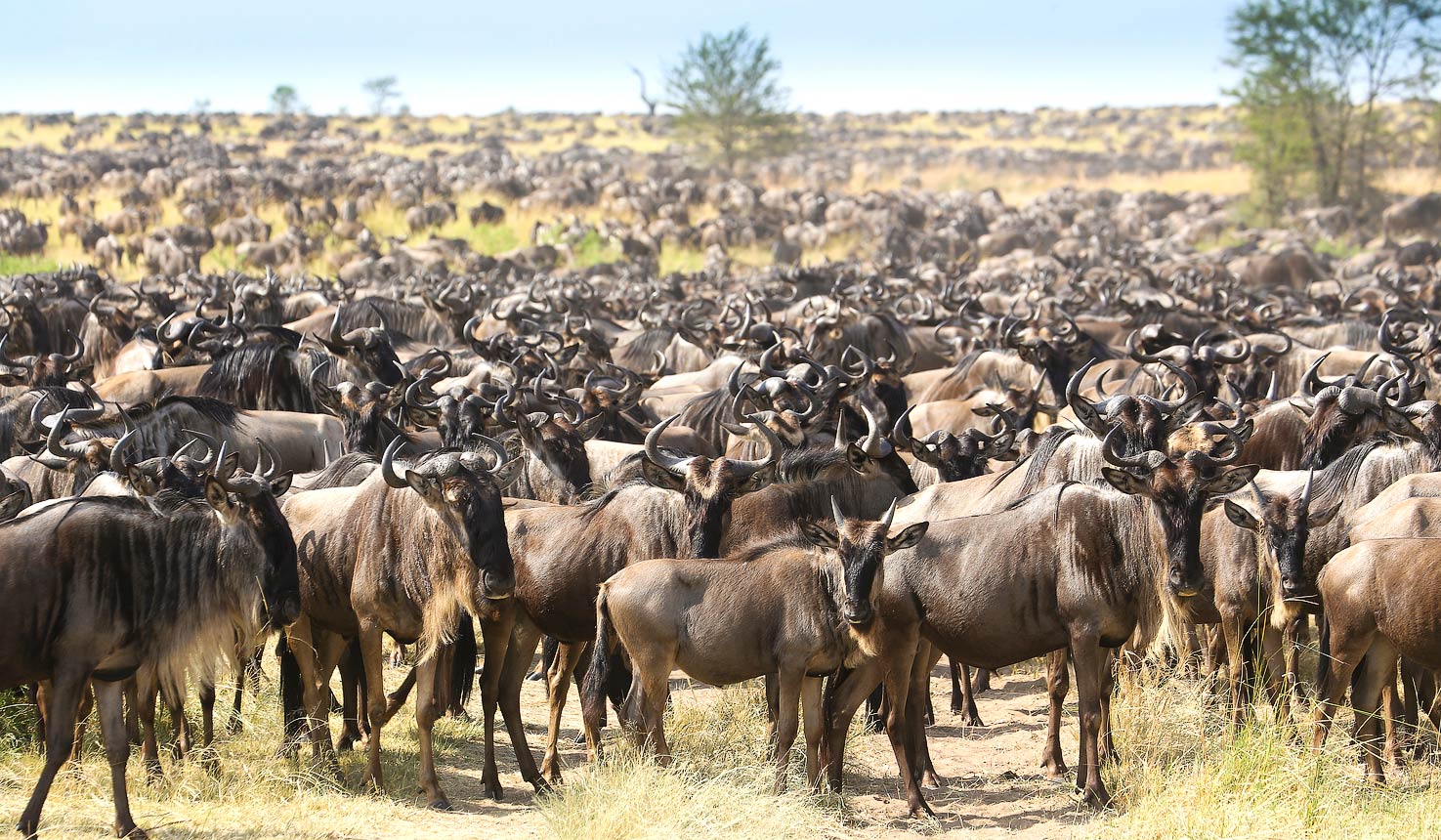
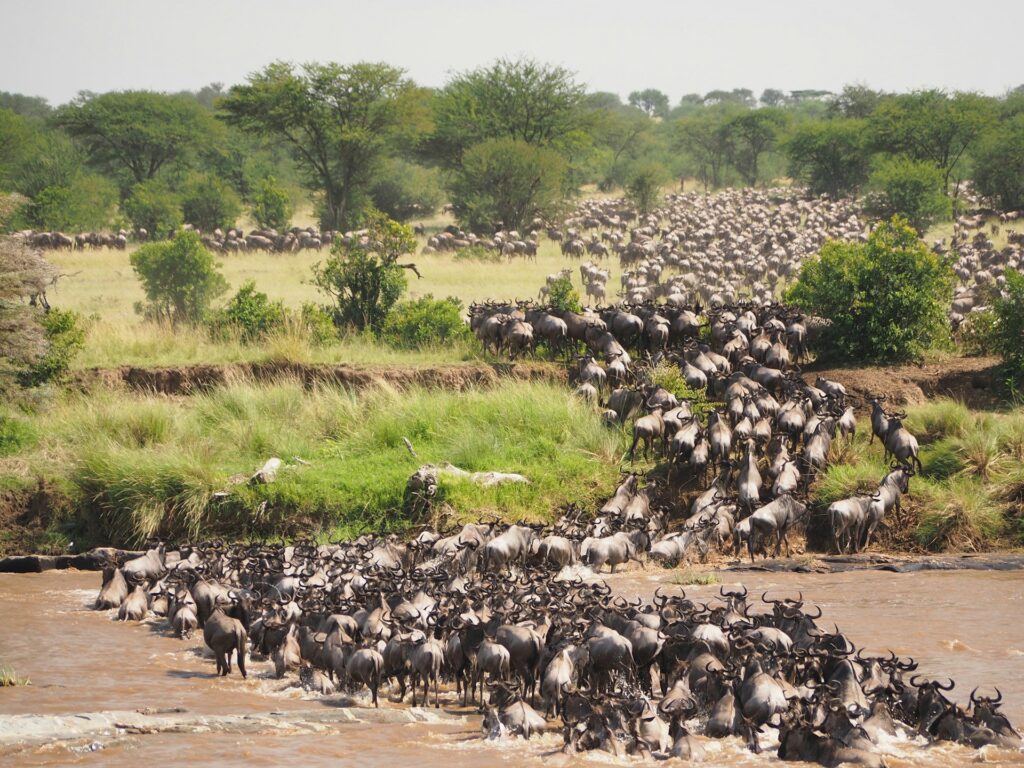
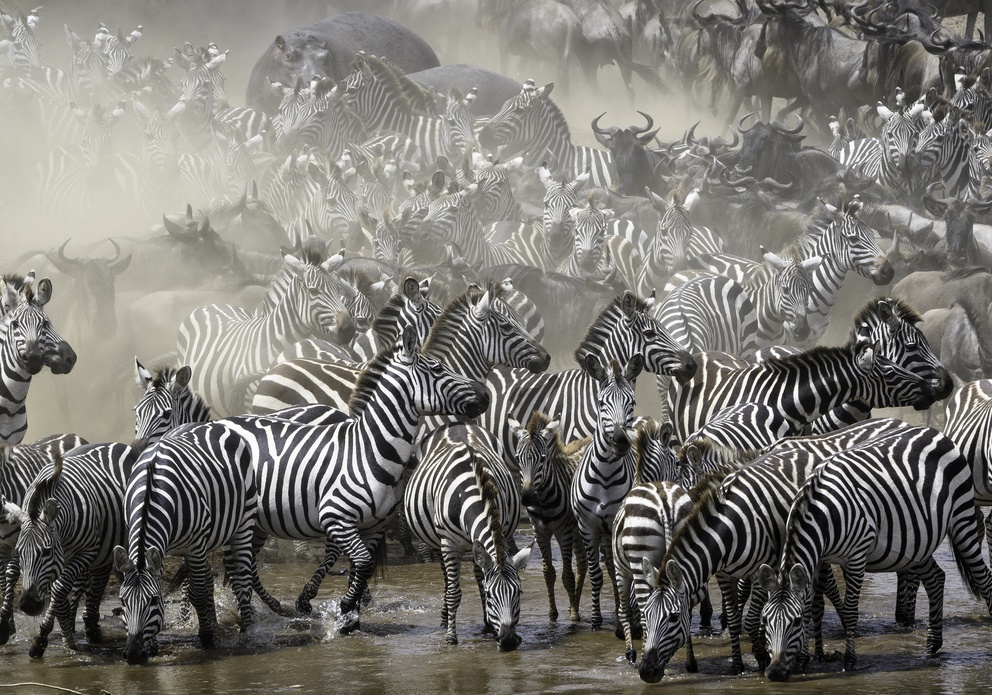
The Great Migration is the movement of around 1.5 million wildebeest, together with hundreds of thousands of zebra and gazelle, in a vast circuit through the Serengeti and the Masai Mara, following the rains and the new grass. The most dramatic moments come between July and October, when the herds mass at the Mara River and cross it, past waiting crocodiles, between the two countries. This safari spends three nights on the Kenyan side, at Enkakenya Camp on the Olare Orok River, and three nights on the Tanzanian bank in the remote north of the Serengeti, so that the river is watched from both sides.
Two nights in the central Serengeti then give the trip’s finest big-cat country, near Seronera, and a final night on the Ngorongoro Crater rim brings the journey to a close, a collapsed volcanic caldera some 20 kilometres across. One border crossing, four stays and nine nights make this a complete Great Migration safari, privately guided and paced to the herds rather than the timetable. A crossing on any single day can never be promised, and the copy that follows is plain about that, as every honest account of the migration must be.
The parts of this particular route past travellers mention most
Three nights in Kenya and three in Tanzania place you beside the river on each side, during the months, roughly July to October, when the herds mass at the water, though a crossing on any one day cannot be promised.
Together with hundreds of thousands of zebra and gazelle, the herds make the largest overland movement of mammals on Earth, a circuit of the Serengeti and Mara that never entirely stops.
The Tanzanian bank of the Mara River is reached by a seasonal flight and a border crossing, in the part of the Serengeti where the river's best-known crossing points lie, including Kogatende and the Lamai Wedge.
Three nights at an unfenced tented camp inside the Masai Mara reserve, a country of about 1,510 square kilometres where the herds arrive from the south and lion prides keep the plains.
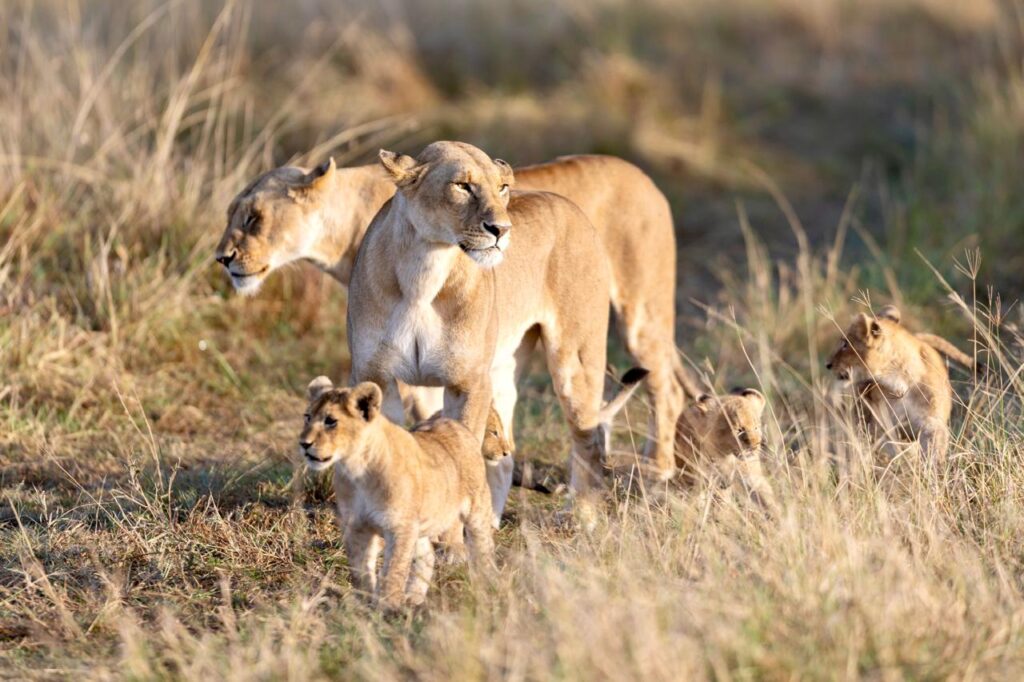
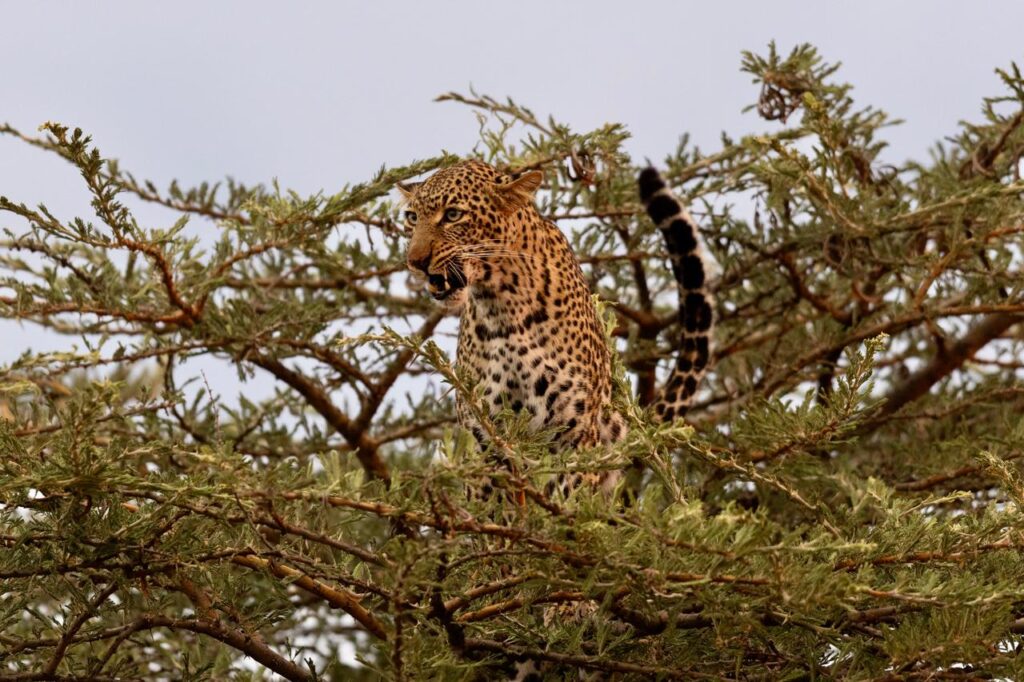
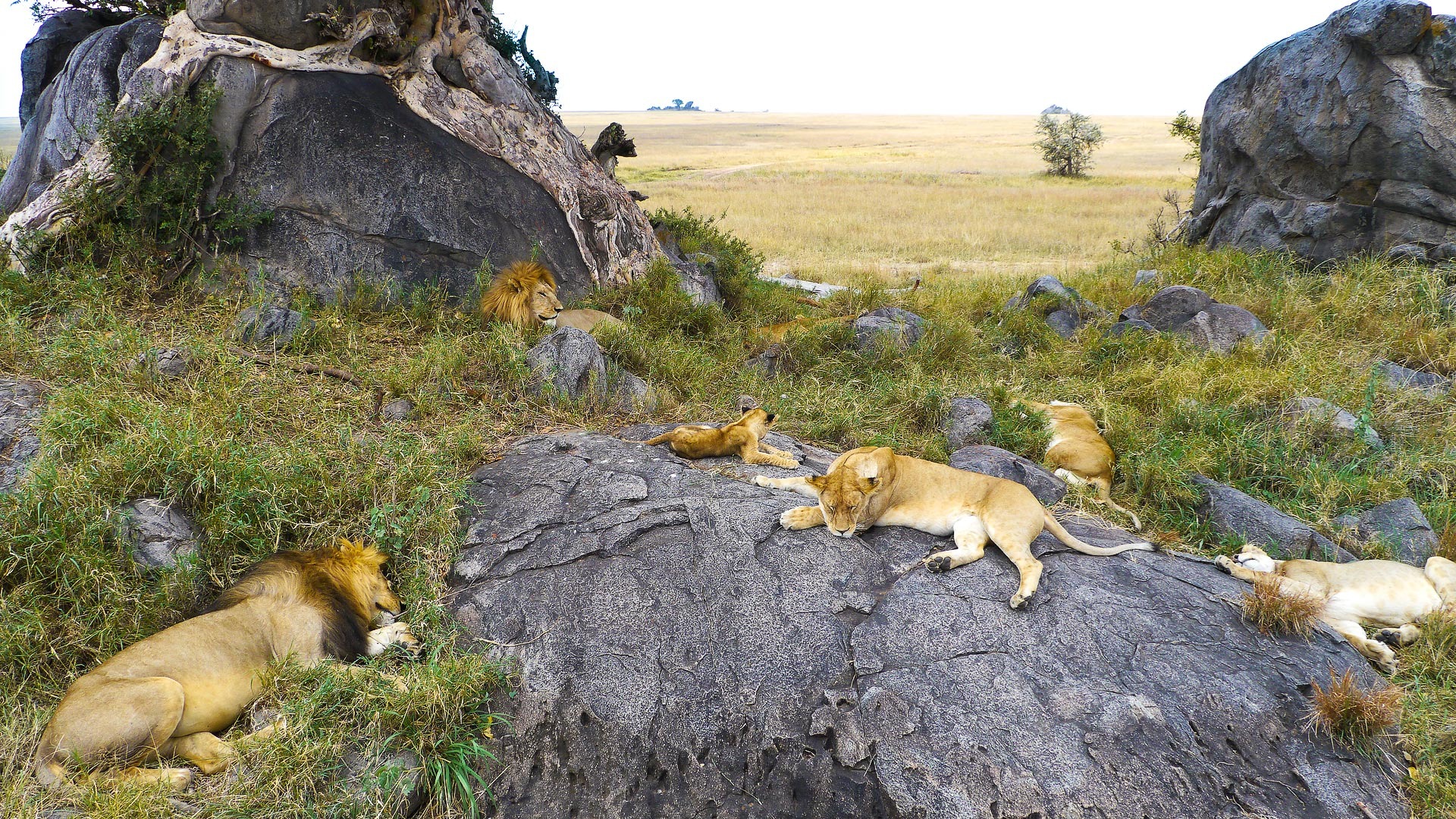
Seronera's lion prides have been studied continuously since the 1960s, and leopard are regularly found resting in the riverine forest along the Seronera River, a rich stage after the river.
A caldera some 20 kilometres across and 600 metres deep, holding around 25,000 large animals, with black rhino possible, though never guaranteed, among the last of the trip's wildlife.
A starting shape: pace, order and length of each stage are all adjustable.
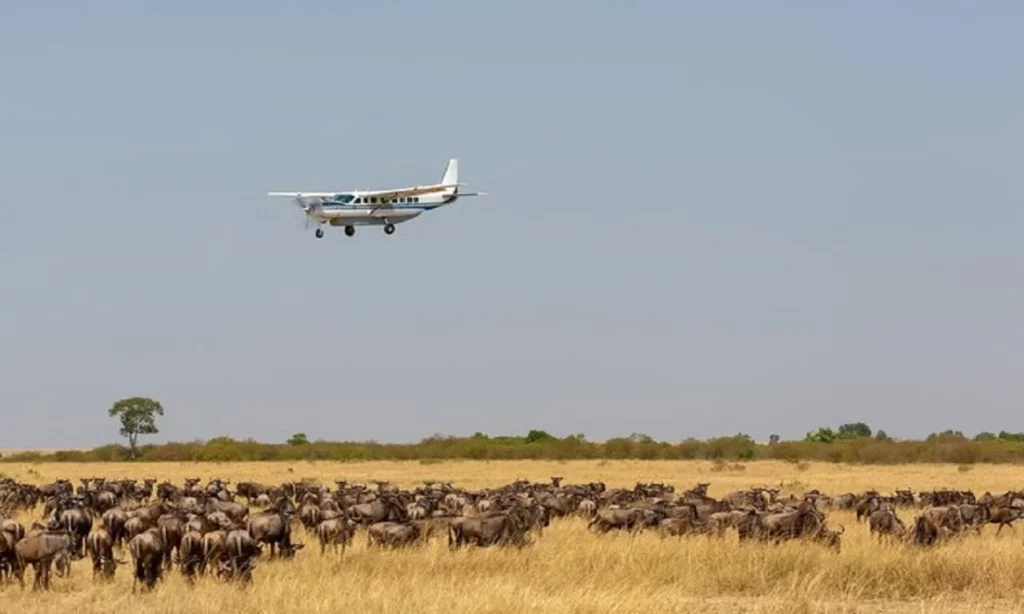
Your journey opens at Nairobi's Jomo Kenyatta International Airport, where your guide awaits and a private transfer leads to Wilson Airport, a separate airfield some 30 to 45 minutes away, for the flight to the Masai Mara, about 45 minutes direct and up to an hour and twenty minutes with stops. The Rift Valley drops away below, and the aircraft descends to a bush airstrip on grassland that stretches to the horizon, a journey that by road would take five to six hours.
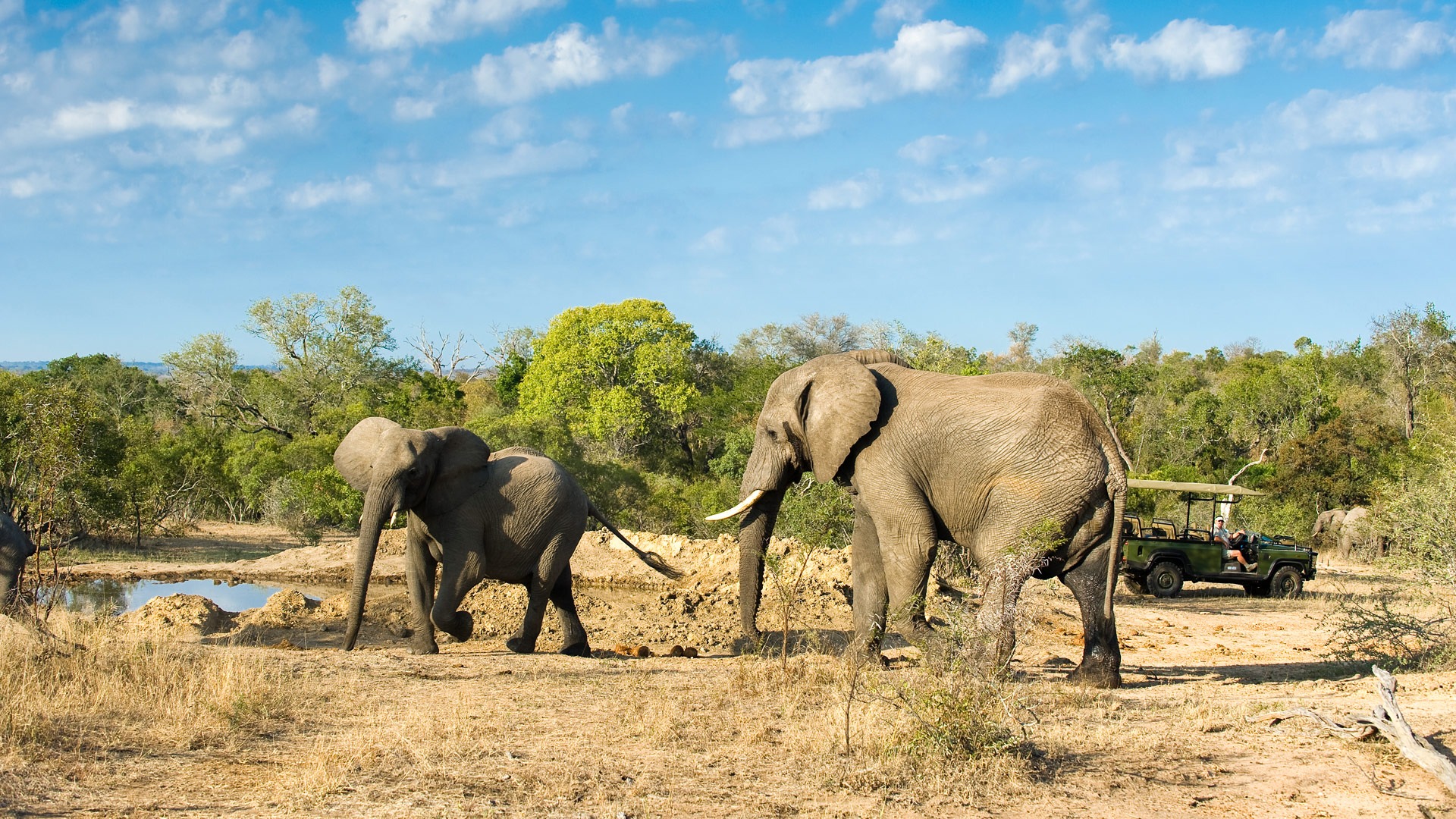
The Masai Mara National Reserve covers about 1,510 square kilometres, protected as a national reserve since 1961. A vehicle meets the airstrip for the transfer to camp, and an afternoon game drive follows luncheon, with elephant, giraffe and lion the first of the reserve's inhabitants, and the Mara River itself seen for the first time as the light softens.
Enkakenya Camp, an unfenced tented camp on the Olare Orok River, inside the Masai Mara reserve · Three nights here, positioned for two full days exploring the reserve.
Full days of game drives cross the open plains and follow the Mara River's banks, where hippo and crocodile keep their stretch of water throughout the year and, from roughly July to October, the herds gather to cross. Wildebeest often cross back and forth rather than in one direction, so two days allow the patient, specific rhythm that a good chance at a crossing requires, positioning near a known crossing point when herds are nearby and reading the restlessness at the bank. Luncheon is taken in the bush or at camp.
Whether a crossing happens on either day is outside anyone's control, and it is one of the few unscripted moments left on an African safari. What both days deliver regardless is the Mara itself, resident lion prides, elephant and buffalo, and the plains where the herds arrive from the south. A dawn hot air balloon safari is available as an add-on, and a visit to a Maasai community can be arranged for a change of pace.
Second and third nights at Enkakenya Camp · Two full days here.
The Mara and the Serengeti are one continuous ecosystem, yet the frontier between them is a real one, with no direct scheduled flight across it. Today's transfer is made by air and road in roughly four to five hours: a flight from the Mara to Migori, a short road transfer over the Isebania border with immigration formalities, and a flight from Tarime into the Serengeti. Vehicles and guides change at the border, as Kenyan and Tanzanian safari vehicles do not cross, and the direct route across the Mara's southern boundary is not open to visitors.
The air connection runs only in the high seasons, mid-December to the end of March and from July to the end of October, which suits the migration months well, and your specialist confirms the routing and flight times for your dates. Arrival in the northern Serengeti is in the afternoon, in time for sundowners at camp and a first look at the country beside the Mara River, remote and open.
A tented camp in the Northern Serengeti, near the Mara River · Three nights here, positioned for two full days beside the river.
The northern Serengeti is where the Mara River's best-known Tanzanian crossing points lie, including the Kogatende area and the remote Lamai Wedge, and where the herds spend much of the period from July to October. Your guide reads the herds' position each morning and decides where to wait, the days built around long periods at the river with luncheon taken in the bush, because patience is what a crossing requires and a rushed day rarely finds one.
The river's resident crocodiles, some of the largest in the ecosystem, lie in wait below the banks, and hippo crowd the pools between the crossing points, so the river holds interest on a day when the herds do not cross. The herds' position varies from year to year with rainfall, and your specialist advises what they are doing on your dates. A full day at a single crossing point can be arranged for those who would rather wait than roam.
Second and third nights in the Northern Serengeti · Two full days here
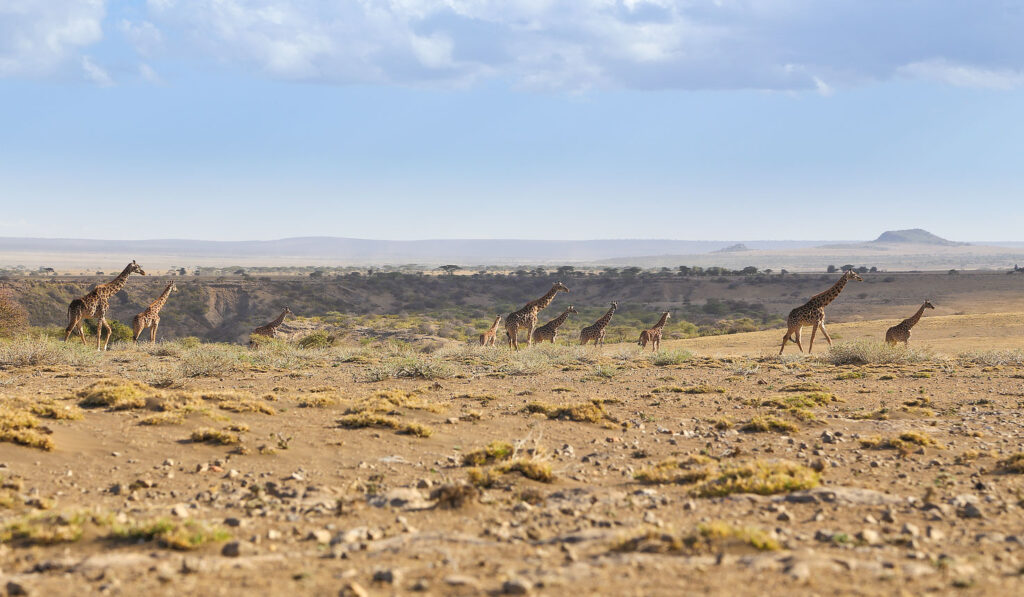
The journey south crosses the length of the Serengeti, a game drive transfer of roughly five to eight hours depending on the route, the herds and the stops, passing from the river country of the north through open grassland and scattered kopjes to the central plains. The Serengeti covers close to 15,000 square kilometres, roughly ten times the size of the Masai Mara, and today is the clearest way to feel that scale from the ground.
Arrival at Seronera is in the afternoon, in time for a first drive along the Seronera River. The herds are usually further north in these months, so the central Serengeti is a stage for the resident wildlife that remains throughout the year, its lion prides among the best studied in Africa, and an afternoon here gives a first sense of how different the country is from the river.
A lodge or tented camp in central Serengeti, near Seronera · Two nights here, positioned for a full day exploring the park.
The day begins early, whilst Seronera's resident prides are at their most active, the morning drive passing through open grass and amongst the granite kopjes, ancient rock rising from plains that run unbroken to every horizon. The Serengeti National Park was established in 1951 and inscribed on the UNESCO World Heritage List in 1981, and Seronera is the part of it with the richest and most dependable big-cat sightings.
After a midday rest at camp, the afternoon follows the Seronera River's riverine forest, prime leopard habitat and one of the most dependable places in Africa to find a leopard resting in a tree. Migrating herds may cross these plains according to the year, though they are usually further north at this season. A dawn hot air balloon safari is available as an add-on for those who would see the same plains from above.
Second night in central Serengeti · Second night here.
An early start leaves the Serengeti for the Ngorongoro highlands, the grassland giving way to highland forest as the road climbs, a drive of roughly three to five hours with a stop at Olduvai Gorge on the way if time allows, one of the most important palaeoanthropology sites on Earth, where fossil discoveries reshaped scientific understanding of early human evolution. The Ngorongoro Conservation Area was created in 1959 and inscribed on the UNESCO World Heritage List in 1979.
The afternoon is given to the crater itself, a collapsed volcanic caldera some 20 kilometres across and 600 metres deep, holding an estimated 25,000 large animals. A half-day on the floor covers lion, wildebeest, zebra and buffalo and, with some fortune, black rhino, before the climb back to the rim in time for the last of the light. It is a shorter visit than a full crater day, and tomorrow's road to Arusha is the reason.
A lodge on the Ngorongoro Crater rim · One night here, with an early start tomorrow.
The morning allows a last look across the crater from the rim, before the road descends through the farmland and coffee country of the Karatu highlands to Arusha, the gateway to Tanzania's northern safari circuit, a drive of about three and a half to four hours. Arrival is in the early afternoon, with luncheon in the town.
From Arusha, a private transfer leads some 50 kilometres to Kilimanjaro International Airport for an evening departure, or an extension to Zanzibar or a further night can be arranged. Ten days after landing in Nairobi, the journey closes having followed the Great Migration across two countries, the Mara River from both banks, and the plains and crater beyond.
Based on past travellers' experiences, here's what this route is really about.
Four stays across two countries, Enkakenya Camp in the Masai Mara, a tented camp beside the Mara River in the northern Serengeti, a camp on the central plains near Seronera and a lodge on the crater rim, each placed for the landscape it belongs to.
Park and reserve fees across this route fund ranger operations and anti-poaching work in two countries, on both sides of a migration that does not recognise the border.
The Serengeti and the Masai Mara protect the same migration landscape from either side of the border, and the fees paid on this route support ranger patrols in both.
A Mara River crossing cannot be scheduled or forced, so we promise a good chance of one in the right months and nothing more, which keeps expectations realistic and the herds unhurried.
Waiting patiently at a crossing point, rather than crowding the bank, gives the herds the space they need to decide when to cross, and your guide is briefed to keep the vehicle back.
Poaching cut the crater's black rhino from over 100 in the 1960s to fewer than 20 by the mid-1980s, and today's population of around 30 is the largest single group left in Tanzania, protected in part by the fees visitors pay.
Ten days is built around the river, and it flexes to the herds. Add a night in the northern Serengeti for a longer wait at the crossings, a night at Ngorongoro for a full day on the crater floor, a dawn hot air balloon safari over the Mara or Seronera, or a beach finish on Zanzibar after Arusha. Your specialist will work from here.
With the route as a starting point, your specialist will adjust the pace, camps and add-ons until the itinerary feels like yours, not a template.
Start planning this migration safari
Twelve days in search of the Big Five across Solio, Lake Nakuru, the Masai Mara, the…
Fourteen days by light aircraft across Amboseli, Samburu, the Masai Mara and the Serengeti, then a…
Ten days from the Masai Mara to Lake Victoria, the Serengeti, the Ngorongoro Crater and Amboseli,…
The best time is from July to October, when the herds are usually at the Mara River on the Kenya and Tanzania border. River crossings are possible from roughly July to October, with August and September the most dependable months, and by October most herds have crossed back into Tanzania. This 10 day itinerary is best from late July to the end of September.
In July to October the herds are usually in the Masai Mara and the northern Serengeti, which is where Days 1 to 6 are spent. The central Serengeti on Days 7 and 8 is usually outside the herds’ position at that time, so those days are for resident lion, leopard and cheetah. The herds’ exact position varies with rainfall, and your specialist advises you before you travel.
No. A Mara River crossing cannot be guaranteed on any single day, and wildebeest often move back and forth at the water before crossing, or do not cross at all. Six nights beside the river, three on each bank, give a good chance of seeing one in the right months, but no honest operator can promise it.
Around 1.5 million wildebeest take part, along with hundreds of thousands of zebra and gazelle, in a circuit of the Serengeti and the Masai Mara. Published estimates vary between sources and years, but the herd is the largest overland movement of mammals on Earth.
Because they are one ecosystem on either side of a border, and the Mara River that the herds cross runs between them. The Serengeti covers about 14,750 square kilometres, roughly ten times the Masai Mara’s 1,510, so the Mara gives a compact view of the herds and the Serengeti gives the scale. Visiting both lets you watch the river from each bank.
By a seasonal air and road connection that takes roughly four to five hours, because no direct flight crosses the border. It uses a flight from the Mara to Migori, a short road transfer over the Isebania border and a flight from Tarime into the Serengeti. It runs only from mid-December to the end of March and from July to the end of October, needs at least two passengers, and limits luggage to 15 kg in soft bags. The all-road alternative takes 10 to 14 hours.
Yes. Most visitors need Kenya’s Electronic Travel Authorisation before arrival and a Tanzanian visa, and a yellow fever certificate is also required on entry to Tanzania from Kenya. The East Africa Tourist Visa covers Kenya, Uganda and Rwanda but not Tanzania. This trip crosses the border once and does not return to Kenya, and your specialist confirms the requirements for your nationality before you book.
This itinerary spends three nights in the Masai Mara, three in the northern Serengeti, two in the central Serengeti and one at Ngorongoro. Three nights in each of the river areas allow patient waiting at the crossings on both banks, and two in Seronera give a full day among the big cats. A night at Ngorongoro allows an afternoon in the crater, and an extra night there gives a full day on the floor.
Not reliably. Black rhino are possible on the Ngorongoro Crater half-day, where around 30 survive, and are rare in the Masai Mara, but a sighting is never guaranteed. White rhino do not naturally occur on this route
This is a private safari with its own vehicle and guide, tailored to your dates and group. Rates are not published on this page, because every trip is built around your dates, camps and group size, and an enquiry returns a tailored quotation from your specialist.
Tell us your dates and we'll confirm whether the timing works, then adjust the route from there.
Start planning this trip