23 Days Experience East Africa Safari

23 Days Experience East Africa Safari

Twenty-three days across Kenya and Tanzania, from the Aberdares and Samburu to the Masai Mara, Serengeti and Ngorongoro Crater, then a day on Kilimanjaro and a closing run through Tsavo and Amboseli.

23 DaysDuration Kenya & TanzaniaCountries PrivateGroup type
Overview

23-day safari in Kenya and Tanzania

This is the long way round East Africa: twenty-three days that begin in Nairobi, climb into the forests of the Aberdares, push north into Samburu’s arid river country, then turn south through the rhino sanctuaries of Ol Pejeta and Lake Nakuru to the Masai Mara.


From the Mara, the route crosses into Tanzania for the Serengeti, the Ngorongoro Crater and Tarangire, then turns to Kilimanjaro for a day on the mountain’s forested slopes, before returning across the border into Kenya for Tsavo East, Tsavo West and Amboseli, ending where it began, in Nairobi.


Twelve stops, two countries and two border crossings make this one of the most complete East Africa itineraries possible in a single trip, built for travellers who want the whole region rather than a single park, and who are happy to trade some long driving days for the range.

At a glance

  • Duration23 Days
  • CountriesKenya & Tanzania
  • Group typePrivate

Activities

A few additions past travellers have asked for on this route

A dawn hot air balloon safari over the Masai Mara or the Serengeti
A visit to the Sheldrick Wildlife Trust's elephant orphan nursery in Nairobi, if arrival timing allows
A stop at Olduvai Gorge on the road to the Ngorongoro Crater
A visit to a Maasai or Samburu community near one of the parks
Moments to note

Standout moments

The parts of this particular route past travellers mention most

I

Twelve Landscapes in One Journey

Aberdare forest, Samburu's river, two rhino sanctuaries, the Mara, the Serengeti, Ngorongoro, Tarangire, Kilimanjaro, Tsavo East, Tsavo West and Amboseli, a cross section of East Africa few trips attempt in full.

II

Three Rhino Sanctuaries Along the Route

Ol Pejeta, Lake Nakuru and Tsavo West each protect black rhino inside managed sanctuaries, and Ol Pejeta is also home to the last two northern white rhinos on Earth.

III

The Mara and the Serengeti, Back to Back

Kenya's Masai Mara and Tanzania's Serengeti are one continuous ecosystem, visited here on consecutive stages, two sides of the same migration landscape.

IV

A Day Inside the Ngorongoro Crater

A collapsed volcanic caldera about 20 kilometres across and 600 metres deep, holding an estimated 25,000 large animals that stay resident year round.

V

Africa's Highest Mountain, From Both Countries

Kilimanjaro's forested slopes are walked from the Tanzanian side on Day 16, then the summit is seen across the border from Amboseli in Kenya.

Day by day

How the days break down

A starting shape: pace, order and length of each stage are all adjustable.

Day
Day 1
Nairobi
Arrival in Nairobi

Arrival in Nairobi, and a Slow First Evening

The trip opens at Nairobi's Jomo Kenyatta International Airport, where a private transfer takes you to a hotel in the city for the first of twenty-two nights, with the rest of the day free to recover from the journey.
Depending on arrival time, the afternoon can include a visit to the Sheldrick Wildlife Trust's elephant orphan nursery, which opens to visitors at set hours, or simply a quiet evening before a trip briefing and an early night ahead of the road north.

Where you rest

A hotel in Nairobi · One night here, before the drive north to the Aberdares.

Day
Day 2
Aberdare
Nairobi to Aberdare National Park

North to the Aberdare Forest, and a Night Above a Waterhole

The road north from Nairobi runs roughly three to three and a half hours toward Nyeri, through tea and coffee country with Mount Kenya often in view, to the edge of Aberdare National Park, a forested range of about 767 square kilometres protected since 1950 and rising to 4,001 metres at Ol Donyo Lesatima.

Guests normally arrive for lunch at a lodge on the park boundary, then travel by shuttle into the forest to a lodge built above a floodlit waterhole, where elephant, buffalo and other forest animals come to drink through the evening and night. The Aberdares are also tied to one of Kenya's best-known royal stories, the night of 5 to 6 February 1952, spent by a young Princess Elizabeth in a treetop lodge here, the night her father died and she became queen.

Where you rest

A forest lodge overlooking a floodlit waterhole, inside Aberdare National Park · One night here, the usual overnight stay for this park, with a return to the road after breakfast

Day
Day 3
Samburu
Aberdare to Samburu National Reserve

Into Kenya's Arid North, Along the Ewaso Nyiro River

After breakfast the road turns north through Nanyuki and Isiolo, roughly four to five hours, the landscape drying steadily from highland farmland into the open thorn-scrub of the north, until the Ewaso Nyiro River appears as a ribbon of green doum palms and riverine forest.

Samburu is home to the Special Five, the reticulated giraffe, Grevy's zebra, Beisa oryx, gerenuk and Somali ostrich, animals found together almost nowhere else on a safari itinerary, and the first afternoon game drive along the river is timed for the softer light.

Where you rest

A lodge or tented camp on the Ewaso Nyiro River, inside Samburu National Reserv · Two nights here, positioned for a full day exploring the reserve.

Day
Day 4
Samburu
Full day exploring Samburu National Reserve

A Full Day on the River Where Elephants Are Known by Name

Morning and afternoon game drives follow the Ewaso Nyiro, the only permanent water for miles, which draws elephant, big cats and the Special Five to its banks even in the driest months, with leopard sightings better here than on most open-plains parks thanks to the riverine forest cover.

Samburu is also the main research base of Save the Elephants, founded here in 1993 by Iain Douglas-Hamilton, which has followed the life histories of close to a thousand individual elephants and pioneered the GPS collar tracking now used across the continent, a depth of knowledge that shapes how guides here read the herds.

Where you rest

Second night on the Ewaso Nyiro River · Second night here.

Day
Day 5
Ol Pejeta
Samburu to Ol Pejeta Conservancy

South to Ol Pejeta, East Africa's Rhino Sanctuary

The drive south from Samburu takes roughly two and a half to three and a half hours, back through Isiolo and Nanyuki with Mount Kenya rising ahead, before the turn onto Ol Pejeta's own unpaved final stretch into a fenced, not-for-profit conservancy in Laikipia.

Ol Pejeta holds more eastern black rhino than anywhere else in East and Central Africa, alongside Najin and Fatu, the last two northern white rhinos on Earth, living under armed guard, and Sweetwaters Chimpanzee Sanctuary, a rescue sanctuary run with the Jane Goodall Institute. The afternoon game drive is built around rhino, with a Sweetwaters visit possible for those who want it.

Where you rest

A lodge or tented camp inside Ol Pejeta Conservancy · One night here.

Day
Day 6
Lake Nakuru
Ol Pejeta to Lake Nakuru National Park

Into the Rift Valley, and a Second Rhino Sanctuary

The road from Ol Pejeta runs roughly three and a half to four hours south and west into the Rift Valley, arriving at Lake Nakuru National Park in time for an afternoon game drive.

Lake Nakuru's fenced sanctuary protects both black and white rhino, and Rothschild's giraffe, an endangered subspecies reintroduced for its own protection, move through the acacia woodland along the shore. The lake's famous flamingo flocks have shrunk sharply as rising water levels changed its chemistry, so the park is visited today for its rhino and giraffe, with flamingo a possibility rather than a promise.

Where you rest

A lodge overlooking Lake Nakuru · One night here.

Day
Day 7
Masai Mara
Lake Nakuru to the Masai Mara

West to the Masai Mara

An early start takes the road west from the Rift Valley through Narok, roughly five to six hours, the last stretch on unpaved track, before the first sight of the Mara's open grassland, an extension of Tanzania's Serengeti ecosystem and Kenya's most celebrated reserve.

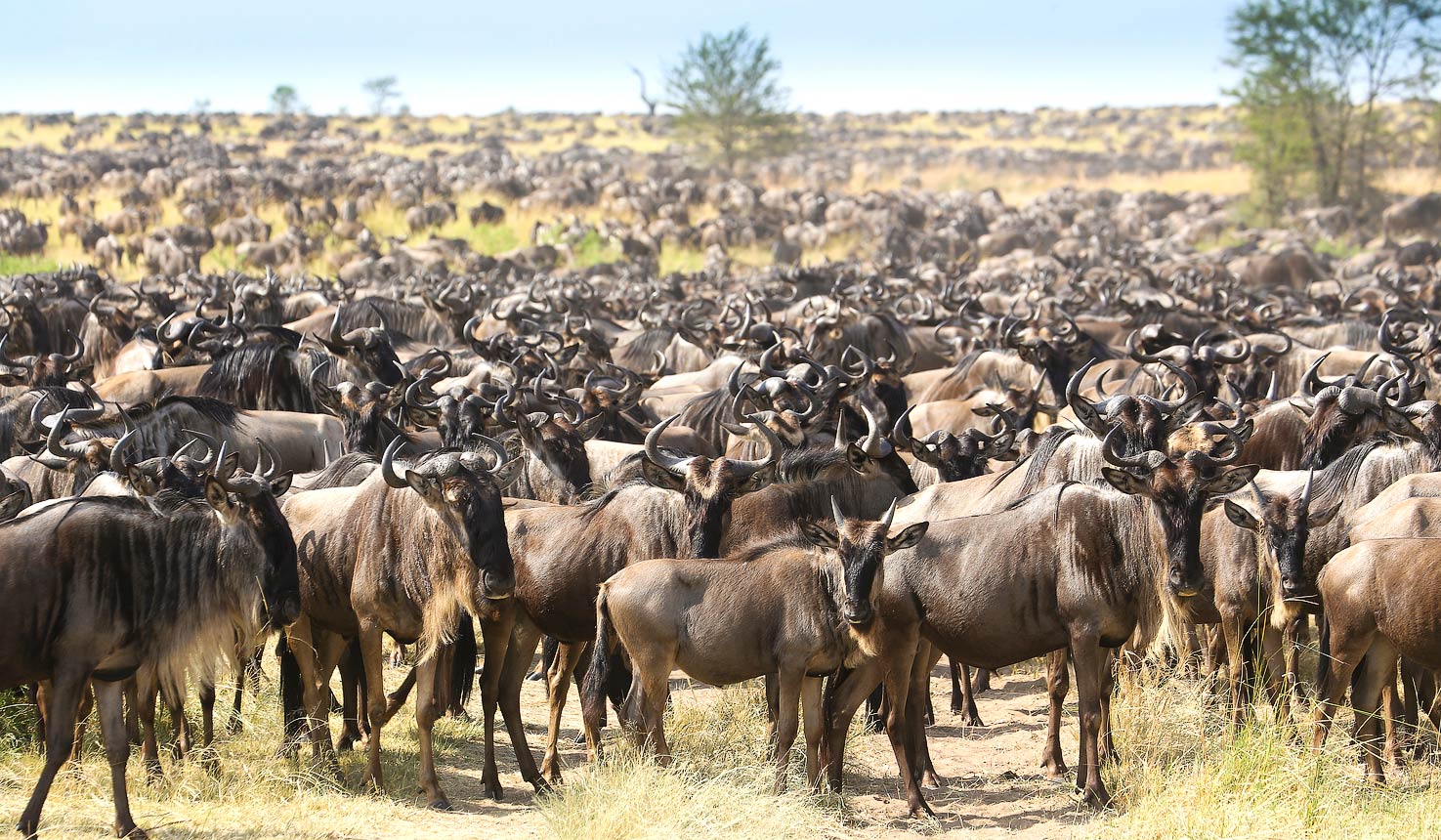
Arrival is timed for an afternoon game drive, with the Mara's resident lion prides, elephant and buffalo and, depending on the season, the migrating wildebeest herds that cross from the Serengeti, among the sightings travellers remember most from the first evening.

Where you rest

Enkakenya Camp, an unfenced tented camp on the Olare Orok River, inside the Masai Mara reserve · Two nights here, positioned for a full day exploring the reserve.

Day
Day 8
Masai Mara
Full day exploring the Masai Mara

A Full Day on the Mara's Open Plains

A full day of game drives covers the Mara's open grassland and the riverine forest along the Mara and Talek rivers, home to the Big Five and, depending on the season, the Great Migration's river crossings, with lunch taken in the bush or back at camp.

For those who want the plains from above, a dawn hot air balloon safari is available as an add-on, drifting over the same grassland as the sun rises, followed by a breakfast served in the bush.

Where you rest

Second night at Enkakenya Camp · Second night here.

Day
Day 9
Serengeti
Masai Mara to Serengeti, crossing the border

Across the Border, From the Mara to the Serengeti

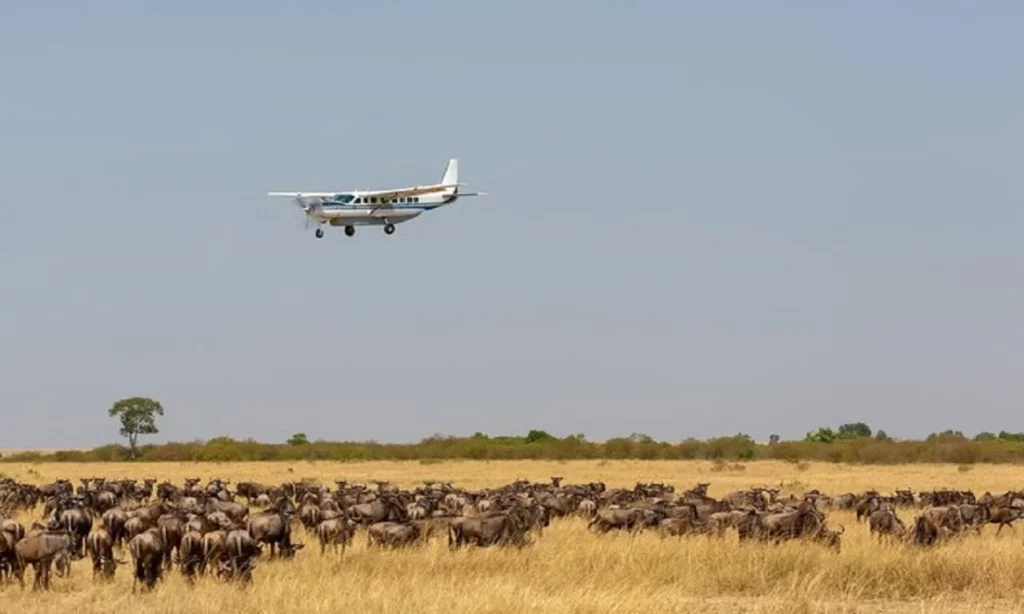
The Mara and the Serengeti are one continuous ecosystem, but the border between them is a real one, with no direct scheduled flight across it, so today is a cross-border transfer by air and road, a short flight from the Mara to Migori, a road crossing at Isebania with immigration formalities, then a second flight on into the Serengeti.

Vehicles and drivers change at the border, as Kenyan and Tanzanian safari vehicles generally do not cross, and the air connection runs seasonally rather than year round, so your specialist confirms the routing for your dates. The day is largely given to travel, with arrival in the Serengeti timed for the late afternoon, in time for a short evening game drive.

Where you rest

A lodge or tented camp inside Serengeti National Park · Two nights here, positioned for a full day exploring the park.

Day
Day 10
Serengeti
Full day exploring Serengeti National Park

A Full Day on the Serengeti's Endless Plains

A full day of game drives covers the open grass plains and rocky kopjes of the central Serengeti, where resident lion, leopard and cheetah hold territory year round and, depending on the month, the Great Migration's herds of over a million wildebeest and hundreds of thousands of zebra are somewhere in the ecosystem.

Because the plains are open and the park is vast, guides read the day from the sky and the horizon, vultures marking a kill or a line of wildebeest turning toward water, and a dawn hot air balloon safari is available as an add-on for those who want to see the same grassland from above.

Where you rest

Second night inside Serengeti National Park · Second night here.

Day
Day 11
Ngorongoro
Serengeti to Ngorongoro Conservation Area

Up From the Plains to the Crater Rim

The drive from the Serengeti to the Ngorongoro highlands takes roughly three to five hours depending on where you start, the grassland giving way to highland forest as the road climbs, and can pass near Olduvai Gorge, the site inside the Conservation Area where fossil discoveries reshaped the scientific understanding of early human evolution.

The afternoon is free to settle in at a lodge on the crater rim, with the crater itself spread out below, a collapsed volcanic caldera some 20 kilometres across and 600 metres deep, and an early night ahead of tomorrow's descent.

Where you rest

A lodge on the Ngorongoro Crater rim · Two nights here, positioned for a full day on the crater floor.

Day
Day 12
Ngorongoro
Full day on the Ngorongoro Crater floor

Down Into Africa's Most Enclosed Wildlife Bowl

An early descent onto the crater floor puts you among an estimated 25,000 large animals living inside a single, enclosed caldera, with lion, wildebeest, zebra and buffalo resident year round alongside a small population of black rhino, making this one of the most reliable full-day game drives anywhere in Africa.

The crater floor is small enough to cross in a morning, which leaves room for a long picnic lunch beside a hippo pool and a slow afternoon ascent back to the rim lodge, in time for sunset over the caldera.

Where you rest

Second night on the Ngorongoro Crater rim · Second night here.

Day
Day 13
Tarangire
Ngorongoro to Tarangire National Park

Down to Tarangire, and Its Baobab-Studded Elephant Herds

The road descends from the crater rim through Karatu, roughly two to three hours, toward Tarangire National Park, a quieter, less visited park of around 2,850 square kilometres where ancient baobab trees stand alone across the plains.

Arrival is timed for lunch, with the first game drive following the Tarangire River, the only significant water for miles once the dry season sets in, and the reason this park holds some of the densest elephant herds in East Africa.

Where you rest

A lodge or tented camp inside Tarangire National Park · Two nights here, positioned for a full day exploring the park.

Day
Day 14
Tarangire
Full day exploring Tarangire National Park

A Full Day Among Tarangire's Elephants and Baobabs

Morning and afternoon game drives cover the park's river valley and woodland, famous for its high density of elephant and its baobab trees, with lion, buffalo, giraffe and zebra alongside and, in the dry months from roughly June to October, wildlife concentrating along the Tarangire River.

Tarangire has been a designated Lion Conservation Unit since 2005, and with far fewer vehicles than the Serengeti or Ngorongoro the pace of the day is slower, a welcome change before the trip turns toward Kilimanjaro.

Where you rest

Second night inside Tarangire National Park · Second night here.

Day
Day 15
Kilimanjaro
Tarangire to Kilimanjaro, near Moshi

East Toward Africa's Highest Mountain

The drive east from Tarangire passes through Arusha before continuing on toward Moshi and the lower slopes of Kilimanjaro, roughly three and a half to four hours in total, with the summit often hidden in cloud until early morning or late afternoon.

Kilimanjaro rises to 5,895 metres at Uhuru Peak, the world's highest free-standing mountain and a UNESCO World Heritage Site since 1987, and the afternoon is free to rest at a lodge on the lower slopes before tomorrow's day on the mountain.

Where you rest

A lodge on Kilimanjaro's lower slopes, near Moshi or Marangu · Two nights here, positioned for a day hike on the mountain.

Day
Day 16
Kilimanjaro
Kilimanjaro day hike

A Day Hike Through Kilimanjaro's Rainforest

A guided day hike enters the mountain's montane rainforest, with the Marangu route to Mandara Hut, at around 2,700 metres, a common choice, a hike of roughly six to eight hours that stays below the altitude where mountain sickness typically begins, and where blue monkeys and black-and-white colobus may be seen.

This is a day on the mountain, not a summit attempt, which takes several days and careful acclimatisation, and shorter alternatives such as the Materuni Waterfall hike or a longer Machame forest hike can be swapped in depending on fitness and interest, your specialist will confirm the route and guides before you travel.

Where you rest

Second night on Kilimanjaro's lower slopes · Second night here.

Day
Day 17
Tsavo East
Kilimanjaro to Tsavo East, crossing into Kenya

Back Across the Border, Into Tsavo East

The route returns to Kenya by road, crossing at Holili and Taveta, a short drive from the mountain's foot with immigration formalities at both posts, before continuing on toward Voi Gate and the plains of Tsavo East.

This is largely a travel day, roughly five to seven hours in total including the border, with arrival at the lodge timed for late afternoon and, if time allows, a first game drive across the park's open, red-dust plains before dark.

Where you rest

A lodge or tented camp inside Tsavo East National Park · Two nights here, positioned for a full day exploring the park.

Day
Day 18
Tsavo East
Full day exploring Tsavo East National Park

A Full Day on Tsavo East's Red-Dust Plains

Tsavo East is one of the largest national parks on Earth, close to 13,750 square kilometres, and a full day of game drives crosses open, semi-arid plains where herds of red-dust elephant, sometimes numbering in the hundreds, are the signature sight, with the Galana River and Lugard Falls among the day's landmarks.

The Yatta Plateau, a lava flow running nearly 300 kilometres along the park's western edge, is the longest of its kind in the world, and the park also protects a safeguard population of hirola, the world's rarest antelope, a quiet conservation story behind the day's scenery.

Where you rest

Second night inside Tsavo East National Park · Second night here.

Day
Day 19
Tsavo West
Tsavo East to Tsavo West National Park

West Across the Highway, Into Tsavo West

The drive from Tsavo East to Tsavo West takes roughly two to four hours depending on gates and route, crossing the Nairobi to Mombasa highway to reach a park of around 9,065 square kilometres shaped by lava and permanent springs rather than open plains alone.

Arrival is timed for an afternoon game drive, with Tsavo West's elephants, famously dusted red from the volcanic soil, and its black lava fields and volcanic hills setting the tone for tomorrow's full day.

Where you rest

A lodge or tented camp inside Tsavo West National Park · Two nights here, positioned for a full day exploring the park.

Day
Day 20
Tsavo West
Full day exploring Tsavo West National Park

Mzima Springs, Lava Fields and Rhino Country

A full day covers Mzima Springs, where natural springs run clear enough to watch hippo and crocodile from an underwater viewing chamber, and the Shetani lava flow, a black field of frozen volcanic rock beside the park's open bush.

Tsavo West also protects one of Kenya's most significant black rhino populations inside a managed sanctuary, recently expanded, and while sightings are never guaranteed, it is one of the few stops on this route where rhino are part of the conversation, and the day closes with a sundowner stop on the park's open bush.

Where you rest

Second night inside Tsavo West National Park · Second night here.

Day
Day 21
Amboseli
Tsavo West to Amboseli National Park

West Beneath Kilimanjaro, Into Amboseli

The drive from Tsavo West to Amboseli takes roughly three to four hours, with the final approach across dry, open country and Kilimanjaro rising ahead on a clear day, the same mountain whose lower slopes you walked on Day 16.

Amboseli is a park of around 392 square kilometres, gazetted in 1974, whose swamps are fed by underground water from Kilimanjaro, drawing some of Africa's most photographed elephant herds, and arrival is timed for an afternoon game drive.

Where you rest

A lodge or tented camp inside Amboseli National Park · Two nights here, positioned for a full day exploring the park.

Day
Day 22
Amboseli
Full day exploring Amboseli National Park

A Full Day Among Amboseli's Elephants

Morning and afternoon game drives cover Amboseli's swamps and open plains, home to elephant herds studied since 1972 by the Amboseli Elephant Research Project, founded by Cynthia Moss and now continued by the Amboseli Trust for Elephants, the longest-running study of wild elephants anywhere in the world.

A visit to Observation Hill offers the park's best panoramic view, elephant herds moving across the plains below with Kilimanjaro behind them, a fitting last view of the mountain after a trip that has walked its slopes and now sees it from Kenya.

Where you rest

Second night inside Amboseli National Park · Second night here.

Day
Day 23
Nairobi
Amboseli to Nairobi

The Road Back to Nairobi

After a final morning game drive or a slow breakfast with Kilimanjaro on the horizon, the road returns to Nairobi, roughly four hours, arriving in the afternoon, timed to connect with onward international flights home.

Twenty-three days after arriving, the trip closes having crossed two countries and twelve landscapes, from the Aberdares' forest waterholes to the Mara and Serengeti plains, the Ngorongoro Crater, Kilimanjaro's slopes and Amboseli's elephants.

What you'll likely see

Key species on this route

Based on past travellers' sightings, here's roughly what to expect on this specific route.

· · · · · · ·
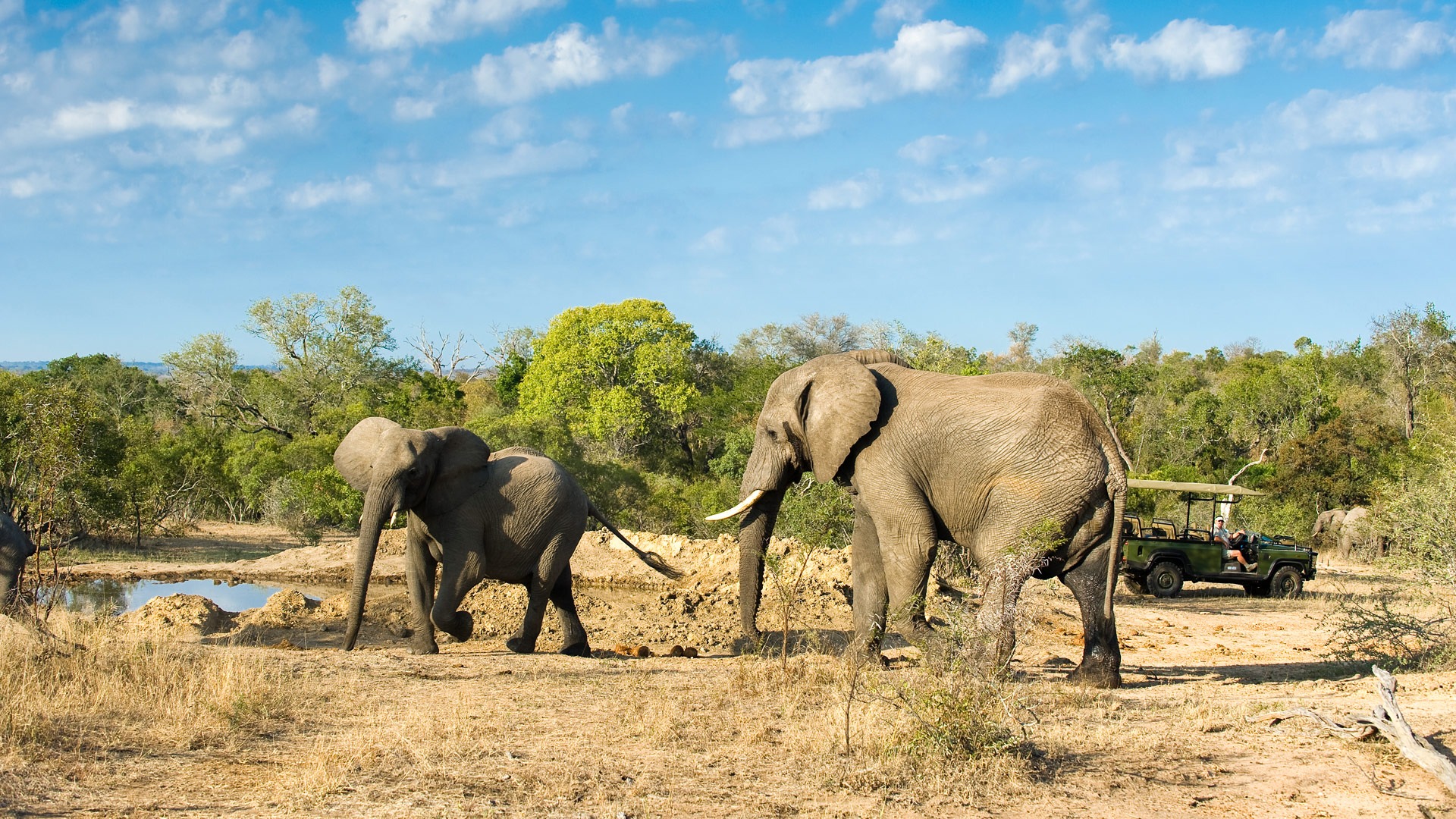
Elephant
Elephant
97% chance
Buffalo
Buffalo
92% chance
Giraffe
Giraffe
92% chance
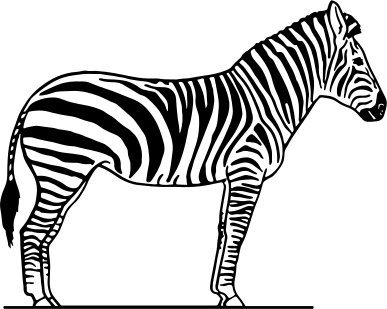
Zebra
Zebra
92% chance
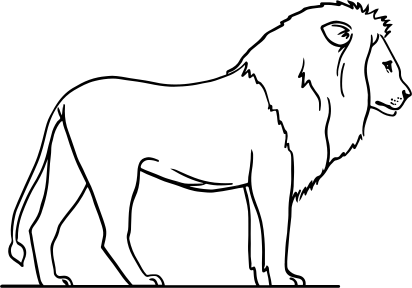
Lion
Lion
90% chance
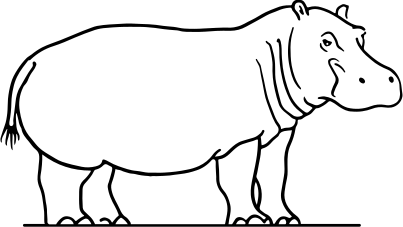
Hippo
Hippo
85% chance
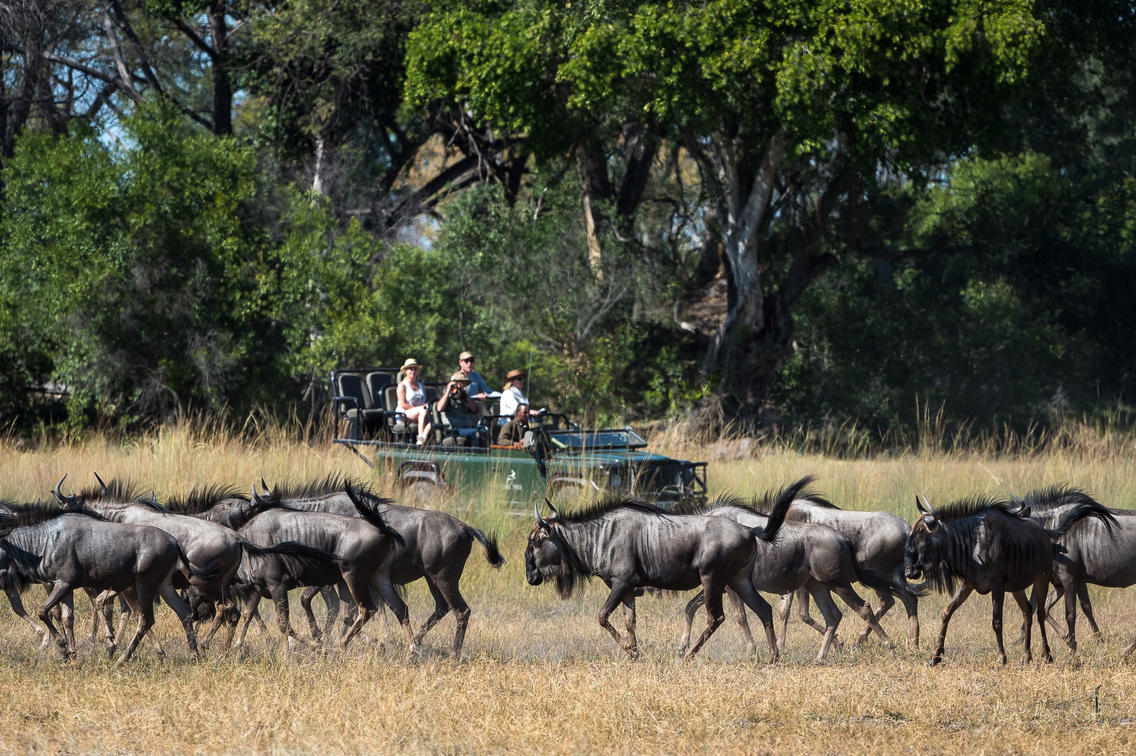
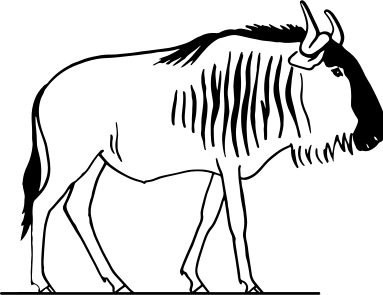
Wildebeest
Wildebeest
78% chance
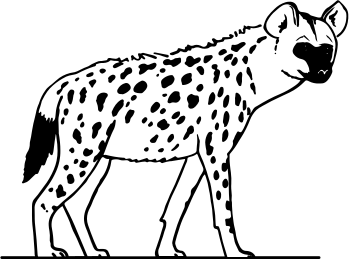
Spotted Hyena
Spotted Hyena
75% chance
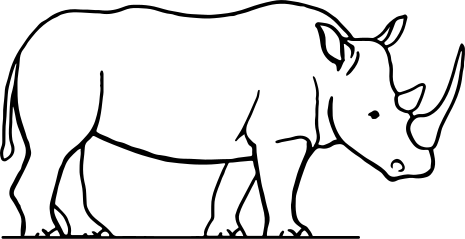
White Rhino
White Rhino
78% chance
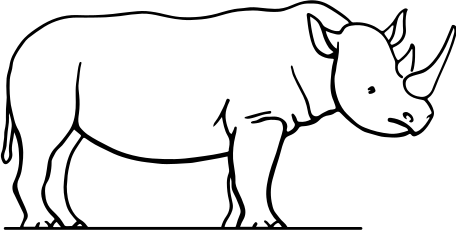
Black Rhino
Black Rhino
70% chance
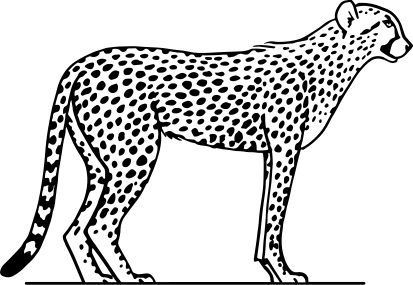
Cheetah
Cheetah
68% chance
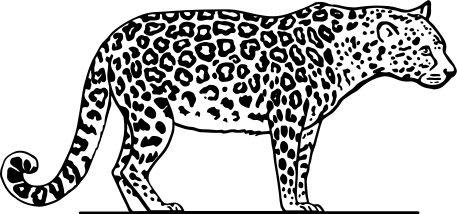
Leopard
Leopard
58% chance
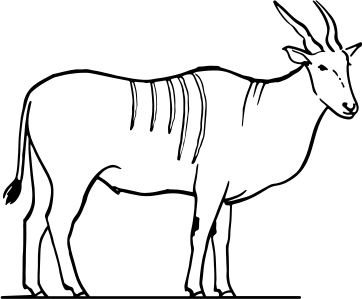
Eland
Eland
40% chance
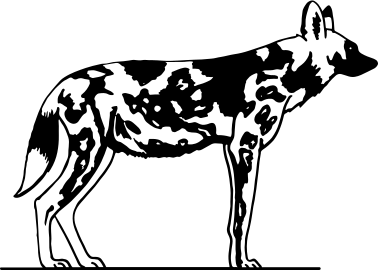
Wild Dog
Wild Dog
12% chance
The details

What's included

What's included

  • Entry fees at every park, reserve and conservancy on the route
  • Kilimanjaro National Park day-hike fee and guide
  • Private road transfers throughout, with a vehicle change at the Kenya and Tanzania border on Day 9
  • Masai Mara to Serengeti cross-border transfer by air and road, Day 9
  • Airport transfers in Nairobi on arrival and departure
  • All meals during the safari (full board)
  • Bottled water throughout
  • Game drives at every wildlife stop

What's not included

  • International flights to and from East Africa
  • Visa fees for Tanzania and Kenya's Electronic Travel Authorisation
  • Travel insurance
  • Alcoholic drinks and premium beverages
  • Optional extras such as hot air balloon safaris and the Sheldrick nursery visit
  • Tips and gratuities for guides and lodge staff
  • Personal expenses (laundry, phone calls, curio purchases

Notes about this trip

  • A private safari, pace and timings adjust to your preferences on the day
  • Room and lodge availability confirmed at time of booking, alternatives offered if your first choice is full
  • This itinerary crosses the Kenya and Tanzania border twice, by air and road on Day 9 and by road on Day 17, current entry requirements for your nationality should be confirmed well before travel
  • The Masai Mara to Serengeti connection on Day 9 runs seasonally rather than year round, confirm availability for your dates before quoting, and a yellow fever certificate may be required at the border
  • Days 7, 9 and 17 are the longest transfer days, worth briefing travellers that these are as much about distance as game viewing
  • The Kilimanjaro day hike is a guided hike on the mountain's lower slopes, not a summit attempt, and suits a moderate level of fitness
  • Rhino sightings at Tsavo West and the Aberdares are possible but never guaranteed, and no rhino sighting is expected at Samburu, Amboseli or Tsavo East
Responsible travel

Responsible Travel

From Samburu's elephant research and Ol Pejeta's rhino sanctuary to Amboseli's long-running elephant study, park and conservancy fees across this route fund protection and research in two countries.

I

Elephant Research Spanning Decades

Save the Elephants has worked from Samburu since 1993 and the Amboseli Elephant Research Project has followed Amboseli's herds since 1972, two of the longest-running elephant studies anywhere, funded in part by the visitors who pass through.

II

Rhino Sanctuaries Across the Route

Ol Pejeta, Lake Nakuru and Tsavo West protect black rhino inside managed sanctuaries, supported in part by the park and conservancy fees paid along this route.

III

Accurate About What Has Changed

Lake Nakuru's flamingo flocks have declined sharply as water levels rose, so the park is described here for its rhino and giraffe instead, and the same standard applies to every species claim on this trip.

Make it mine

Twenty-three days is built for travellers who want the whole region in a single trip, forest, river, plains, crater and mountain, across two countries. Drop any stage that overlaps with a trip you have already taken, add a beach finish at Diani or Zanzibar, or swap the Kilimanjaro day hike for a longer trek, your specialist will work from here.

With the route as a starting point, your specialist will adjust the pace, camps and add-ons until the itinerary feels like yours, not a template.

Start tailoring this safari
If this isn't quite right

Similar safaris

Common questions

Before you enquire

Yes, twice: from the Masai Mara into the Serengeti on Day 9, by air and road with immigration formalities at Isebania, and from Kilimanjaro back into Kenya on Day 17, by road at Holili and Taveta.

Most visitors need Kenya’s Electronic Travel Authorisation before arrival and a Tanzanian visa, and the East Africa Tourist Visa covers Kenya, Uganda and Rwanda but not Tanzania. Because this trip leaves and re-enters Kenya, your specialist confirms the exact requirements for your nationality, including the Day 17 re-entry, before you book.

No, it is a guided hike on the mountain’s lower slopes, such as the Marangu route to Mandara Hut at around 2,700 metres, a day on the mountain rather than a climb to Uhuru Peak at 5,895 metres, which takes several days.

Very likely at Ol Pejeta and Lake Nakuru, where black and white rhino live in fenced sanctuaries, and possible at Tsavo West and the Ngorongoro Crater, but never guaranteed. Rhino sightings are not expected at Samburu, Amboseli or Tsavo East.

Not for flamingos alone, numbers have fallen sharply as rising water levels changed the lake’s chemistry. Its real strengths today are its rhino sanctuary and its Rothschild’s giraffe.

It is the most involved day of the trip. There is no direct flight, so it combines a short flight, a road crossing at Isebania with immigration, and a second flight, and it runs seasonally, so your specialist confirms the routing for your dates.

It is a rare possibility, not a feature, only a small number remain in the wild and sightings are uncommon. Most visitors come for the floodlit waterhole and the forest setting.

Ready when you are

Ask about 23 Days Experience East Africa Safari

Tell us your dates and we'll confirm whether the timing works, then adjust the route from there.

Start planning this trip