Twelve unhurried days from a Nairobi garden to the private wilderness of Laikipia, the river country of Samburu and the golden plains of the Masai Mara
The 12 Days Luxury Escapade Kenya Safari is a private, tailor-made luxury Kenya safari that travels from Nairobi to the Laikipia Plateau, Samburu National Reserve and the Masai Mara over twelve days and eleven nights, with three light-aircraft flights between them.
It is at its finest from July to October, when the Great Migration usually fills the Masai Mara, and very fine in the drier weeks of January and February.
There was a time when a journey of this kind was undertaken with porters, a cook and a season to spare. The spirit of it has not changed, only the hurry has gone out of it. Your escapade opens in Nairobi with a day for the city’s kinder side: the orphaned elephants of the Sheldrick Wildlife Trust, the Rothschild’s giraffe at the Giraffe Centre, and the women who hand-make Kazuri’s ceramic beads. From there a small aircraft carries you north to Laikipia, a high plateau of private conservancies beneath Mount Kenya, where one may walk with a guide, follow the rhino and stay out after dark.
Samburu follows, a drier and older country where the Ewaso Nyiro River draws animals found almost nowhere else, and then the Masai Mara, three nights at Enkakenya Camp on the Olare Orok River, with the plains at the door. Each landscape is given three nights, so that it may be known rather than glimpsed. No honest guide can promise a particular animal on a particular morning, and the pages that follow are plain about that. What we can promise is the care with which every day is arranged.
The moments past guests on this journey mention most.
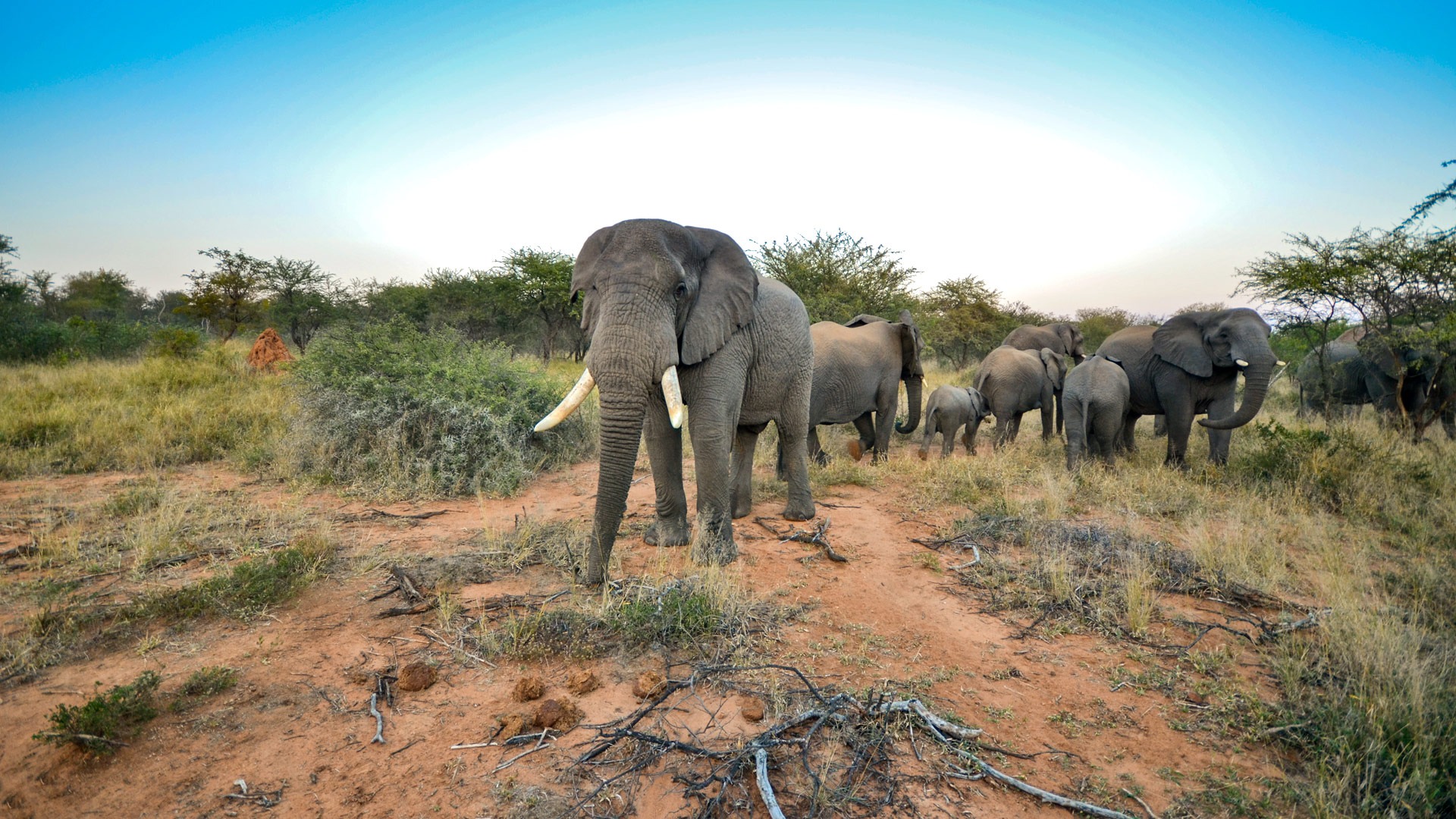
The orphaned elephants of the Sheldrick Wildlife Trust at their late-morning feed, Rothschild's giraffe met at eye level, and Kazuri's hand-shaped beads, all before the first flight north.
More than 9,000 square kilometres of private conservancies beneath Mount Kenya, where walking safaris and night drives are possible in a way the national reserves do not allow.
Laikipia holds roughly half of Kenya's black rhino, and with Samburu almost all of its Grevy's zebra, a species now found only in northern Kenya and a few corners of Ethiopia.
The Ewaso Nyiro draws reticulated giraffe, Grevy's zebra, Beisa oryx, gerenuk and Somali ostrich to its banks, with elephants studied here by Save the Elephants since 1993
An unfenced tented camp on the Olare Orok River in the Masai Mara, a reserve of about 1,510 square kilometres, with the Mara River crossings possible from roughly July to October.
Three scheduled flights carry you from Nairobi to Laikipia, from Samburu to the Mara and home again, so the hours belong to the wilderness rather than the road.
A starting shape: pace, order and length of each stage are all adjustable.
Every great journey deserves a gentle first page. Your guide is waiting as you step through arrivals at Jomo Kenyatta International Airport, and a private transfer carries you west, away from the city's bustle, to the green suburbs of Karen and Langata, where old gardens run towards the Ngong Hills and the air is noticeably cooler.
The remainder of the day is yours to spend as the long flight requires, whether in the garden with a pot of tea or in an early night. Before dinner your guide calls to talk through the days ahead, so that you may set out tomorrow knowing exactly how the journey has been arranged, and that every detail has been seen to.
A garden hotel in Karen or Langata, Nairobi's leafy western suburbs · Two nights here, a quiet beginning before the flight north
The morning begins at Kazuri, founded in Karen in 1975 by Susan Wood, who began it in her own back garden, and named for the Swahili for "small and beautiful". Several hundred people, most of them single mothers, now shape and paint its ceramic beads and pottery by hand, and one may watch the work and choose a piece to carry home. At eleven o'clock the Sheldrick Wildlife Trust opens its nursery inside Nairobi National Park for a single hour, and the young orphaned elephants come trotting in for their milk and a wallow in the mud, each one rescued from the wild and each one raised by keepers who stay with them day and night.
The Trust was founded in 1977 by Daphne Sheldrick, in memory of her husband David, the founding warden of Tsavo East National Park, and its orphans are raised with the intention of returning them to the wild. After luncheon the afternoon is spent at the Giraffe Centre in Langata, founded in 1979 by Jock and Betty Leslie-Melville to protect the endangered Rothschild's giraffe, where you meet these gentle creatures at eye level from a raised platform. Those who wish may also call at the Karen Blixen Museum, the farmhouse remembered in Out of Africa.
Second night at your garden hotel in Karen or Langata · Second night here
After a leisurely breakfast you are driven to Wilson Airport for a scheduled flight of about an hour north, the city falling away and the farmland giving way to open plateau, with Mount Kenya, at 5,199 metres the second highest mountain in Africa, standing to the east on a clear morning. Your Laikipia guide meets you on the airstrip, and the short drive to camp is often a game drive in itself.
Laikipia is a high, open plateau of private ranches and conservancies north-west of Mount Kenya, more than 9,000 square kilometres in all, almost the size of New Jersey, and it has become one of the great conservation stories of East Africa. The afternoon is given to a first drive across the conservancy, ending with a sundowner on a rise as the light turns gold over the mountain.
A lodge or tented camp in a private conservancy on the Laikipia Plateau · Three nights here, positioned for two full days exploring the conservancy.
Here the rules of the national reserves give way to the freedom of private land, and the days take a different shape. Where the conservancy permits, mornings may begin on foot with an armed guide, reading spoor and approaching the plains game quietly, and evenings may end with a night drive, the spotlight finding the eyes of creatures seldom seen by day. Horseback and camel-assisted outings are offered on some conservancies as well, and your specialist arranges whichever your chosen camp provides.
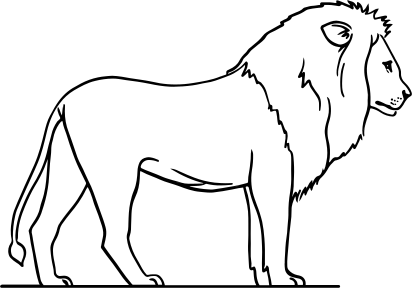
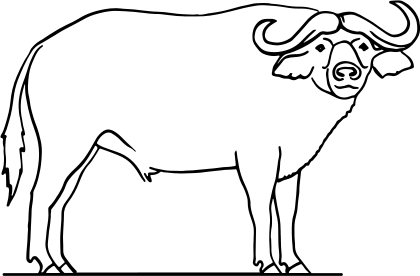
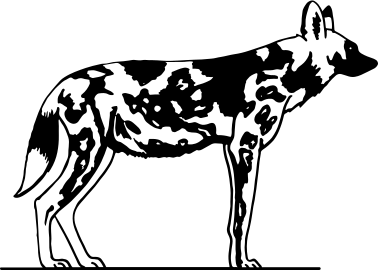
Laikipia holds roughly half of Kenya's black rhino, and with neighbouring Samburu almost all of its Grevy's zebra, a species now found only in northern Kenya and a few corners of southern Ethiopia. It is also one of Africa's most important strongholds for the African wild dog, though a sighting is a rare privilege rather than an expectation. Elephant, lion, leopard, buffalo and reticulated giraffe share the plateau, and two full days allow it to be met at every hour.
Second and third nights in your Laikipia conservancy · Two full days here
After a final morning in Laikipia, the road leads north by way of Isiolo, roughly two and a half to four hours depending on the conservancy, the green of the plateau falling behind and the land turning drier, redder and more open with every mile. The Samburu people have kept their herds in this country for generations, and their beaded ornaments and red cloths are a common and striking sight along the way.
At length the Ewaso Nyiro River appears as a ribbon of doum palms and riverine forest through the thorn scrub, and you arrive in time for luncheon and a rest through the heat of the day. The afternoon game drive follows the river, where elephant are the first and most dependable of its inhabitants, coming down to drink in the late light.
A lodge or tented camp on the Ewaso Nyiro River, inside Samburu National Reserve · Three nights here, positioned for two full days exploring the reserve.
Morning and afternoon game drives follow the Ewaso Nyiro, the only permanent water for miles, which draws animals adapted to the dry north and found together almost nowhere else on a safari: the reticulated giraffe, Grevy's zebra, Beisa oryx, gerenuk and Somali ostrich, known together as the Special Five. The riverine forest gives leopard more cover here than on the open plains, and lion, cheetah and buffalo keep company with them.
Samburu is also the home of Save the Elephants, founded here in 1993 by Iain Douglas-Hamilton, which has followed the lives of close to a thousand individual elephants, and its work shapes how guides here read the herds. Between drives there is time for a breakfast laid beside the river, an unhurried afternoon at camp, or a visit to a Samburu community, arranged with care by your guide.
Second and third nights on the Ewaso Nyiro River · Two full days here.
A morning flight of about two hours carries you south from Samburu's airstrip to the Masai Mara, the arid north giving way beneath the wings to farmland, forest and at last the rolling grassland of the south-west. On days when the direct service does not run, the routing is by way of Wilson Airport, and your specialist confirms which applies to your dates.
Your Mara guide meets you on the airstrip, and the drive to camp leads through some of the most celebrated wildlife country in the world. Enkakenya Camp stands unfenced beside the Olare Orok River, so the wilderness comes to the very edge of the tents, and the afternoon game drive is your first meeting with the Mara's resident lion prides, elephant and buffalo.
Enkakenya Camp, an unfenced tented camp on the Olare Orok River, inside the Masai Mara reserve · Three nights here, positioned for two full days exploring the reserve.
The Masai Mara National Reserve covers about 1,510 square kilometres of open grassland and riverine forest, a national reserve since 1961 and the Kenyan half of the great Serengeti ecosystem. Full days of game drives follow the light and the animals rather than the clock, with luncheon taken in the shade of an acacia or back at camp, and from roughly July to October the Great Migration's herds and their crossings of the Mara River may be the day's whole purpose.
For those who would see the plains from above, a dawn hot air balloon safari drifts over the grassland as the sun rises, followed by breakfast laid in the bush, and a visit to a Maasai community can be arranged for a quieter afternoon. Two full days allow the Mara to be seen in different light and different corners, which is the difference between visiting a place and coming to know it.
Second and third nights at Enkakenya Camp · Two full days here
There is time for a final dawn drive or a slow breakfast with the river below, before your guide takes you to the airstrip for a flight of about 45 minutes to Wilson Airport in Nairobi. From there a private transfer of roughly 30 to 45 minutes connects you with your evening international departure from Jomo Kenyatta.
Twelve days after arriving, the story closes much as it began, quietly and in good hands, having travelled from a Nairobi garden to Laikipia's private wilderness, Samburu's river and the golden plains of the Mara. Most guests leave already planning the next chapter.
Based on past travellers' experiences, here's what this route is really about.
Four stays, each chosen for the landscape it belongs to: a garden hotel in Nairobi's green suburbs, a private conservancy camp on the Laikipia Plateau, a riverside camp in Samburu and Enkakenya Camp on the Olare Orok River in the Masai Mara, with three nights in each wilderness so that nothing is hurried.
We believe the finest luxury Kenya safari leaves the country a little richer than it found it. Along this route your visits and fees help to raise orphaned elephants, protect Laikipia's rhino and sustain the women of Kazuri, and your guide will gladly share the story behind each. It is a conservation safari in Kenya without the sermon, simply responsible luxury travel done well.
Since 1977 the Sheldrick Wildlife Trust has rescued orphaned elephants and raised them for a return to the wild. Your nursery visit supports that work, and many guests go on to foster an orphan of their own, a gift that continues long after the journey ends.
Laikipia's private and community conservancies protect roughly half of Kenya's black rhino and almost all of its Grevy's zebra. The conservancy fees paid on your Laikipia safari help to fund their rangers and the neighbouring communities who share the land.
Kazuri has employed women in Karen since 1975, most of them single mothers. A string of beads chosen there is a keepsake for you and helps to sustain the livelihoods of the women who make them.
We would rather tell you the truth than a pleasing story. Rhino, leopard and wild dog are never certain, and the Sheldrick orphans and the Giraffe Centre's giraffe are rescued animals rather than wild sightings, so every promise on this page is one we intend to keep.
Your specialist will shape every night, flight and small kindness of your private Kenya safari around you.
We have always felt that a luxury Kenya safari should seem as though it were written for one family alone, and this escapade is simply where that conversation begins. Linger a fourth night on your Laikipia safari for a longer walk or a morning in the saddle, exchange the Day 6 road for a short charter flight, or stay on at Enkakenya Camp whilst the Migration fills the Mara. Travelling with children, or celebrating a honeymoon or an anniversary? Tell us, and the days will be arranged around you, closing, should you wish, with sea air at Diani or on Zanzibar.
Begin your Kenya escapade
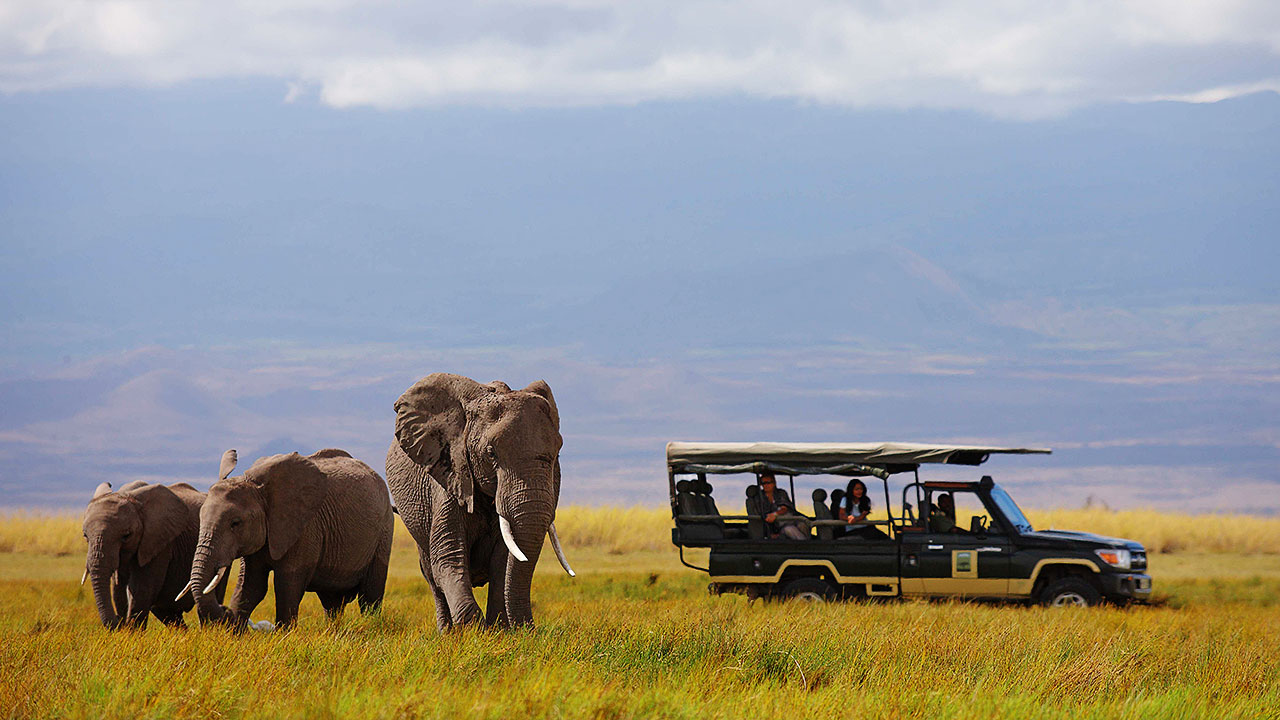
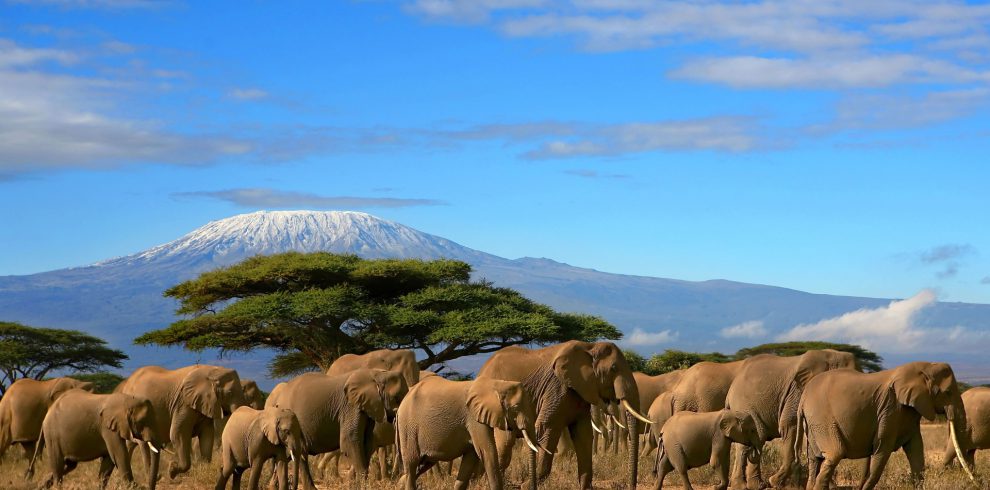
A four-day fly-in escape to Amboseli, elephants beneath Kilimanjaro, without the road transfer.
A three-day escape to Amboseli, elephants beneath Kilimanjaro, without a long flight to reach it.
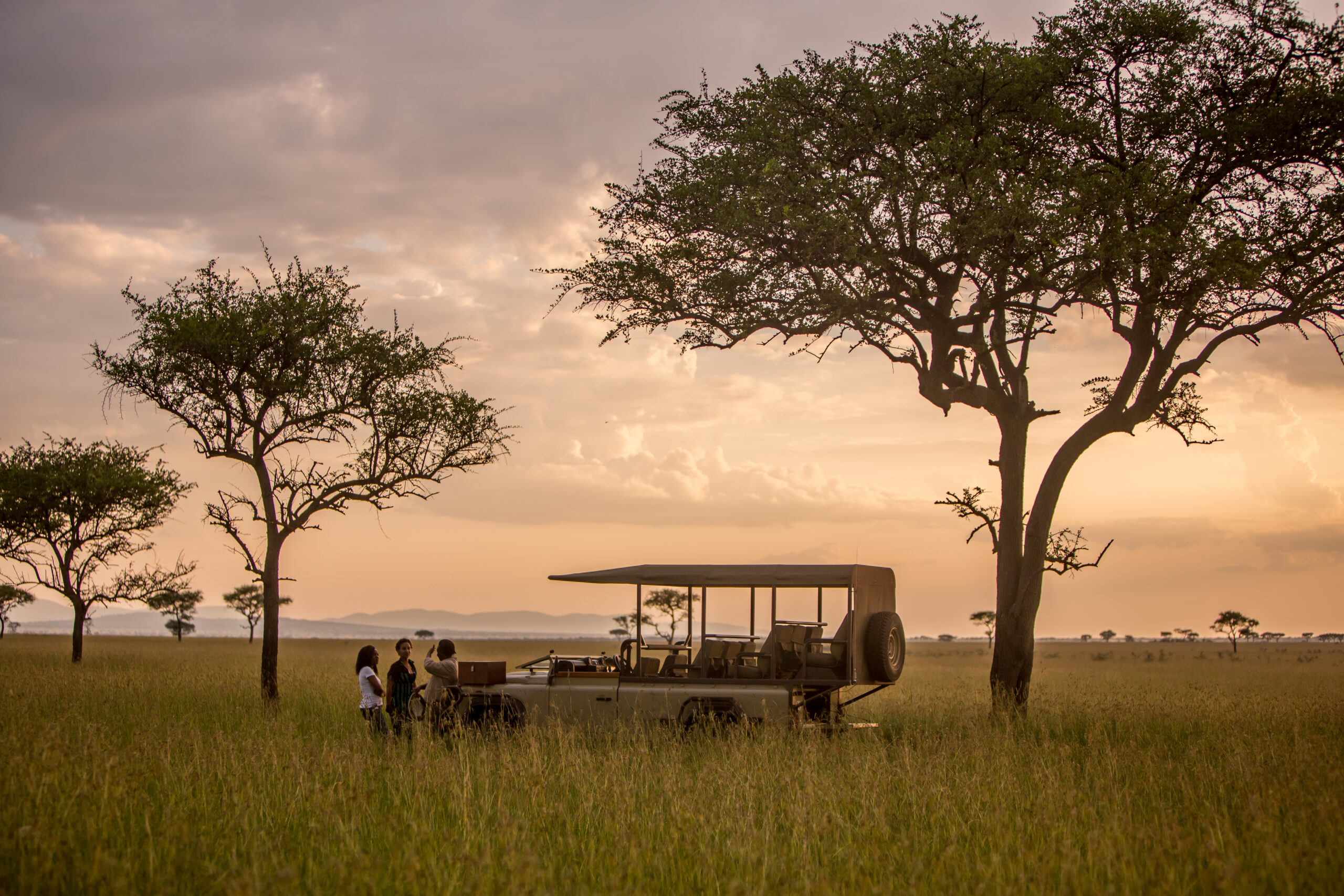
Three full days in the Masai Mara, then a scenic flight to two unhurried days on…
It is a private, twelve day luxury Kenya safari that begins with two nights in Nairobi, then spends three nights each in a private Laikipia conservancy, Samburu National Reserve and the Masai Mara. Three scheduled light-aircraft flights and one road transfer join the stays, and the journey ends in Nairobi on Day 12.
Yes, the visit is part of Day 2. The Trust’s nursery inside Nairobi National Park opens to the public from 11:00 to 12:00 each day, by advance booking only, when the orphaned elephants come in for their milk feed and a mud bath. Your specialist makes the booking for you.
Laikipia is a high plateau of private ranches and conservancies northwest of Mount Kenya, more than 9,000 square kilometres in all. Because the land is private, many conservancies allow walking safaris, night drives and horseback outings that the national reserves do not, and Laikipia holds roughly half of Kenya’s black rhinos.
You have a real chance at all five, but no sighting can be guaranteed. Elephant, buffalo and lion are seen on most days in the Mara and Samburu, rhino depend on the Laikipia conservancy chosen, and leopard is the one most often missed, though Samburu’s riverine forest and Laikipia improve the odds.
The Special Five are the reticulated giraffe, Grevy’s zebra, Beisa oryx, gerenuk and Somali ostrich, animals adapted to Kenya’s dry north that are found together almost nowhere else on a safari itinerary. They are sought on the Ewaso Nyiro River on Days 6 to 8.
July to October is the finest window, when the dry season suits game viewing and the Great Migration is usually in the Masai Mara, with river crossings possible. January and February are also excellent. The long rains, roughly April and May, bring greener landscapes and quieter camps, and some properties close for part of that season.
Mostly by scheduled light aircraft: Nairobi to Laikipia on Day 3, Samburu to the Masai Mara on Day 9, and the Mara back to Nairobi on Day 12. The one road day, Laikipia to Samburu on Day 6, takes roughly two and a half to four hours. Luggage on the small aircraft is usually limited to about 15 kg per person in soft bags.
Most visitors, including citizens of the United States, Germany, Finland and Japan, need Kenya’s Electronic Travel Authorisation, applied for online before travel. It is a single-entry authorisation, and as this safari never leaves Kenya, one is enough. Your specialist confirms the current requirements for your nationality before you book.
Nairobi’s Jomo Kenyatta International Airport is served by a nonstop Kenya Airways flight from New York, and by one-stop connections through the major European, Middle Eastern and Asian hubs from Germany, Finland, Japan and elsewhere. Day 1 is arranged around your arrival time, and Day 12 suits an evening departure.
Tell us your dates and we'll confirm whether the timing works, then adjust the route from there.
Start planning this trip