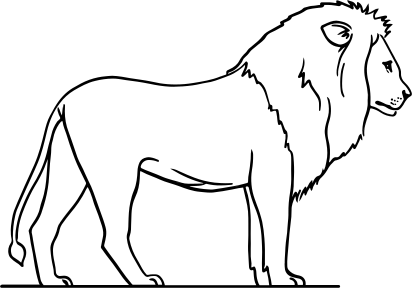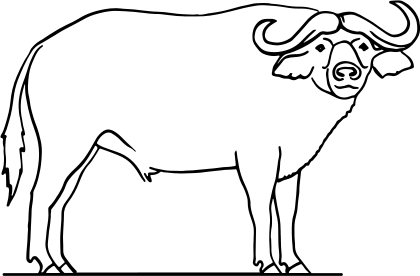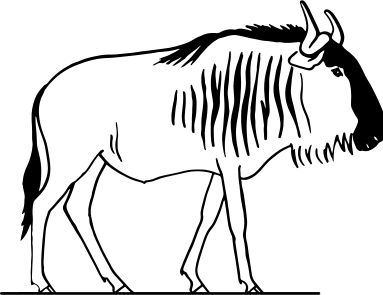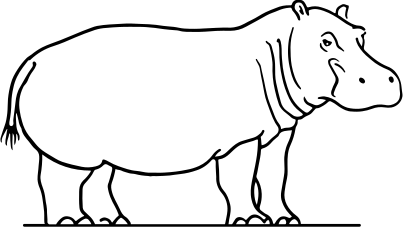
Eight days from Tarangire's baobabs, the Serengeti's plains and the Ngorongoro Crater to the rainforest slopes of Kilimanjaro, Africa's highest mountain, for a guided day hike to Mandara Hut
This 8-day wildlife safari and Kilimanjaro day tour is a private, tailor-made experience in Tanzania that includes a hike on Kilimanjaro.
Spend two nights in Tarangire, two in the central Serengeti and one on the Ngorongoro Crater rim, then two in the foothills of Kilimanjaro, with a guided walk up the Marangu Route to Mandara Hut before the flight home. It is at its finest from June to October and in January and February, the drier months for both the parks and the mountain.
Northern Tanzania offers two kinds of grandeur, and most journeys choose one. This one gathers both. The first six days belong to the wildlife: Tarangire’s elephants among the baobabs, the Serengeti’s lions and leopards, and an afternoon on the floor of the Ngorongoro Crater, where black rhinos still live. The last two belong to the mountain that has watched over this country for longer than anyone can say.
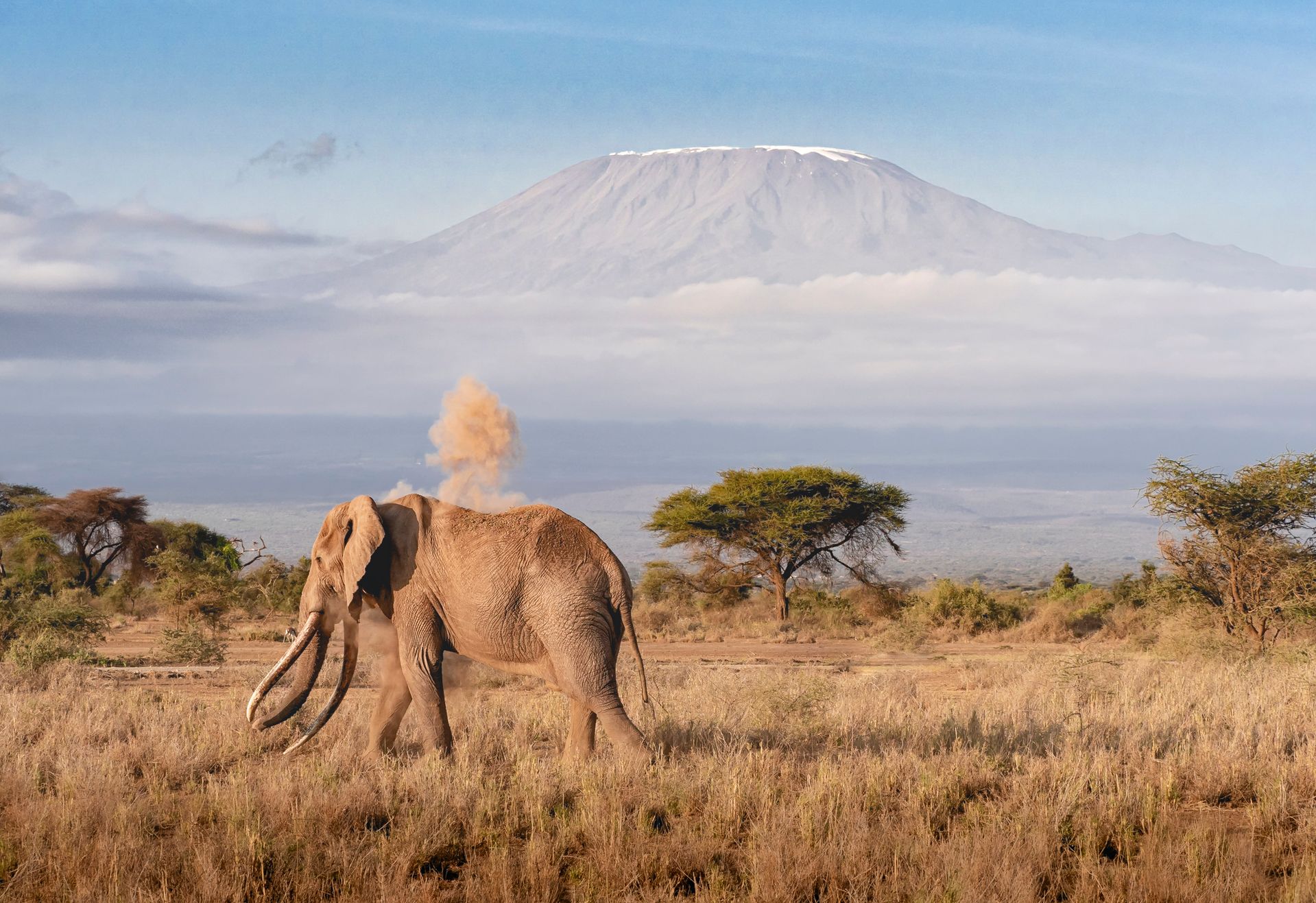
Kilimanjaro rises 5,895 metres from the plains, the largest free-standing volcanic mass in the world, and a single day on its lower slopes, through cloud forest alive with monkeys and birdsong, is enough to understand why it has drawn travellers for well over a century. The summit is a journey of its own and is not attempted here. No honest guide can promise a particular animal or a clear view of the peak, and these pages say so plainly.
The moments past guests on this journey mention most
A full day in a park of about 2,850 square kilometres, where baobabs stand centuries old and, from roughly June to November, elephant crowd the river in great herds.
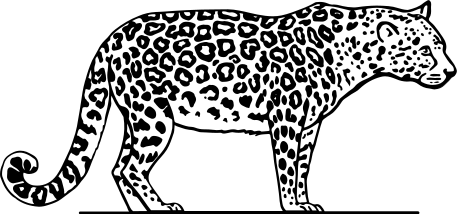
Two nights near Seronera, a national park since 1951, where resident lion prides keep their territories all year and the river woodland is prized leopard country.
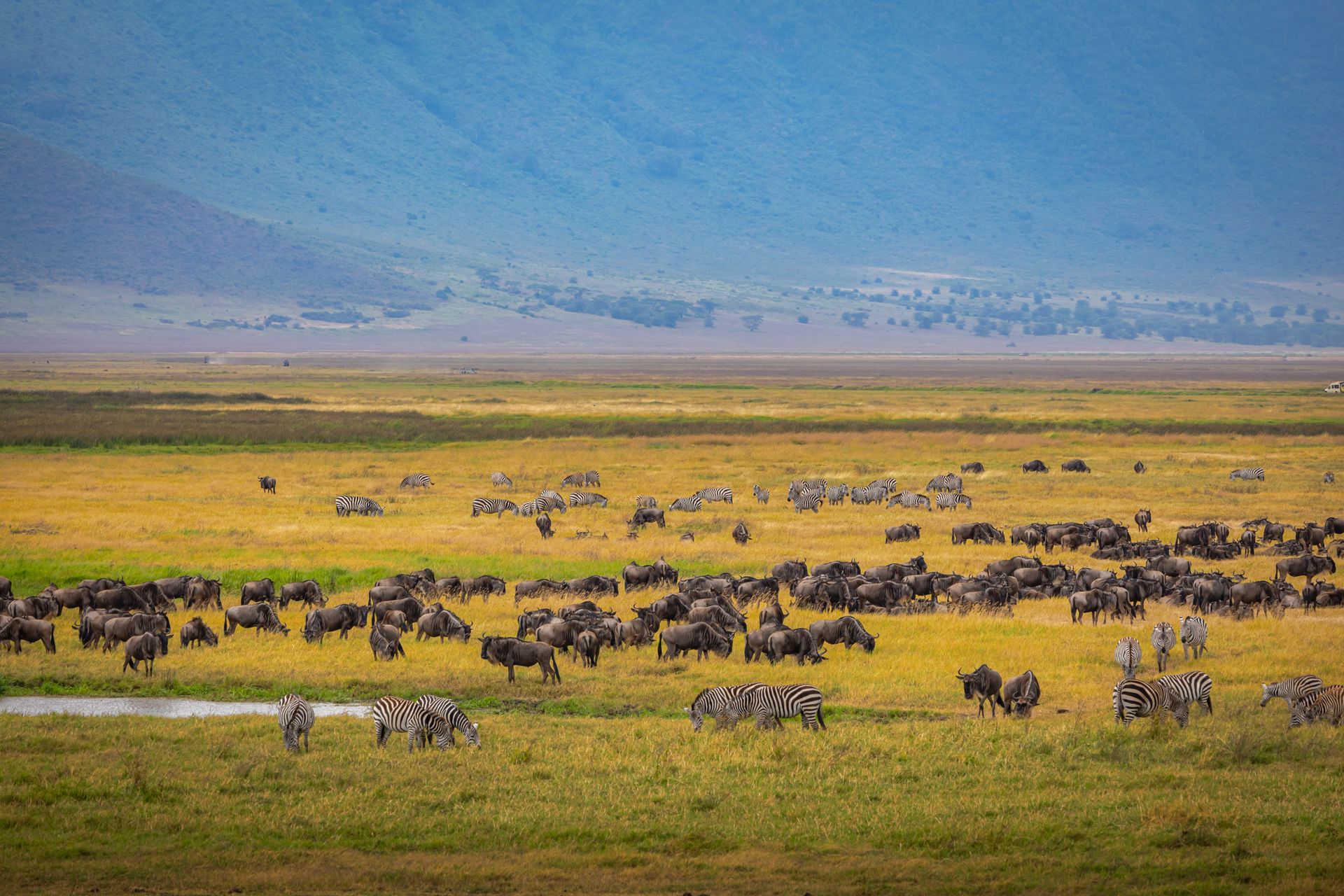
Around four hours on the floor of the Ngorongoro Crater, some 20 kilometres across, home to around 25,000 large animals and some 30 black rhino, though never a certainty.
A guided walk up the Marangu Route through montane rainforest to Mandara Hut, at about 2,700 metres, with black-and-white colobus and blue monkeys often seen along the trail.
Kilimanjaro rises to 5,895 metres, the largest free-standing volcanic mass in the world and a UNESCO World Heritage Site since 1987.
The journey begins and ends at Kilimanjaro International Airport, so your flights home leave from the foot of the very mountain you have walked on.
A starting shape: pace, order and length of each stage are all adjustable.
Your guide meets you in Arusha, or at Kilimanjaro International Airport if your flight lands that morning, and within the first hour the town's lively streets give way to maize fields, Maasai herders and the long blue line of the Rift. In two to three hours you pass through the gate of Tarangire National Park, protected since 1970, and the landscape changes character entirely.
Here the baobab is king, its massive trunk scarred by generations of elephant tusks, and the Tarangire River draws life to it from across the surrounding country. Luncheon is taken at camp, and the afternoon drive follows the river as the heat eases, past herds of elephant, giraffe browsing the acacia and, with luck, a pride of lion resting in the shade.
A lodge or tented camp in or beside Tarangire National Park · Two nights here, positioned for a full day exploring the park.
A full day allows Tarangire to be seen as few visitors see it. You set out in the cool of early morning, when the park is at its most active, and follow the river and its tributaries deep into country that day visitors never reach. In the dry months, roughly June to November, this is one of the finest places in northern Tanzania to watch elephant, with family herds gathering at the water in their hundreds.
A picnic luncheon is taken beneath the shade of a great tree, and the afternoon continues wherever the animals lead. Tarangire has been a Lion Conservation Unit since 2005, and its quieter corners also shelter buffalo, eland and the lesser-known antelope of the dry woodland. You return to camp as the baobabs turn to silhouettes against the evening sky.
Second night in Tarangire · Second night here.
Today's long journey, roughly seven to eight hours with a picnic luncheon on the way, is one of the great road journeys of East Africa. From Tarangire the road climbs the wall of the Rift to the green farmland around Karatu and on into the Ngorongoro Highlands, where cloud often hangs in the forest and the road traces the outer rim of the crater before falling away to the plains below.
Beyond Naabi Hill Gate the land opens without interruption, and the remaining drive to Seronera becomes a game drive, with gazelle, zebra and, in their season, the herds of the Great Migration spread across the grass. You reach camp in the heart of the Serengeti in the late afternoon, with two nights ahead.
A lodge or tented camp in the central Serengeti, near Seronera · Two nights here, positioned for a full day exploring the park.
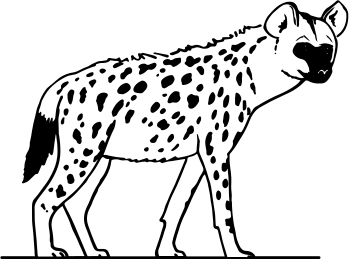
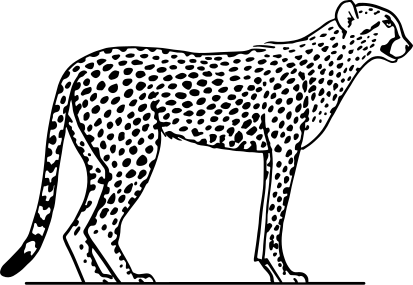
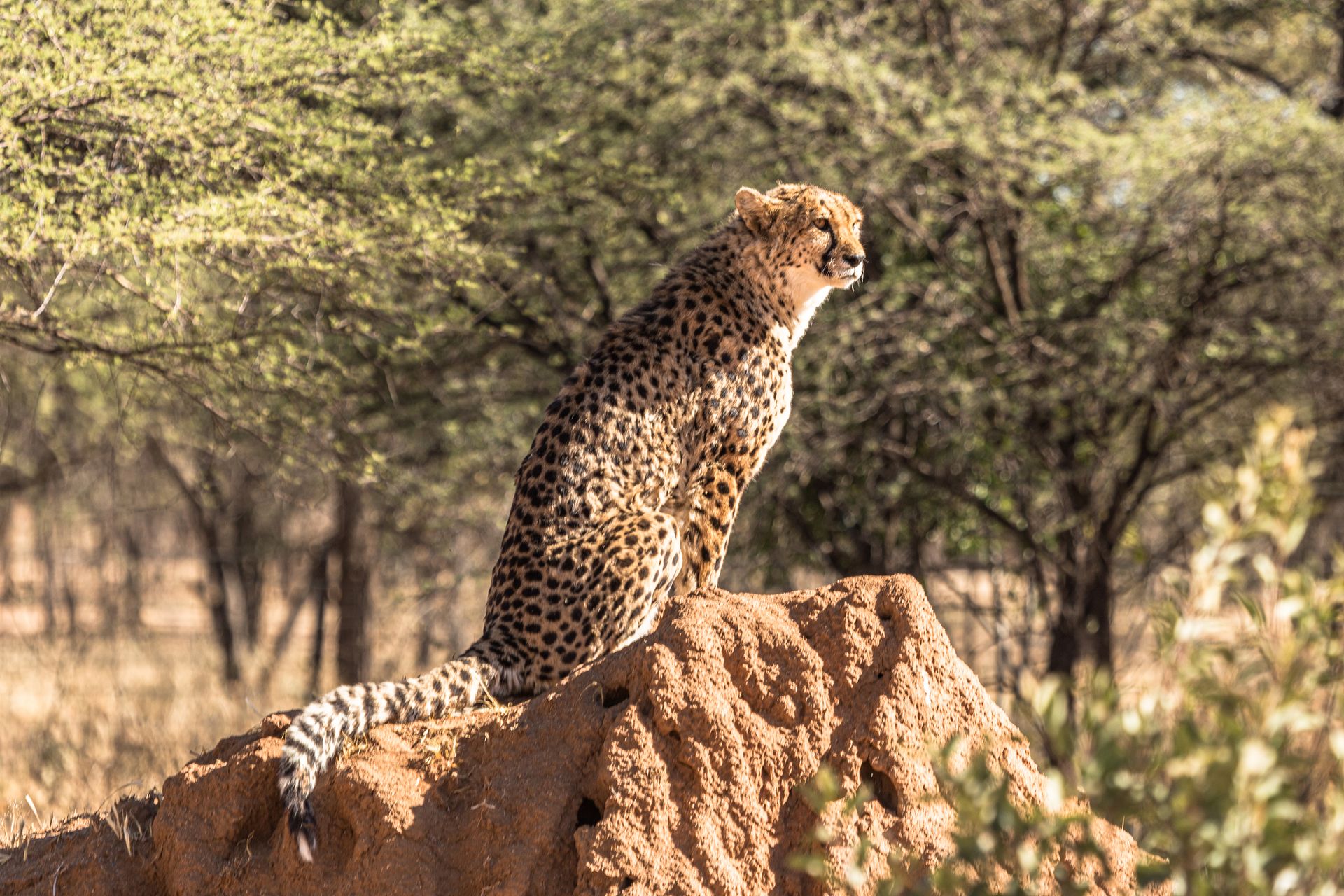
There is no fixed route today, only the plains and what they offer. The Serengeti covers close to 15,000 square kilometres, has been a national park since 1951 and a UNESCO World Heritage Site since 1981, and its central plains around Seronera are some of the most rewarding big-cat country in Africa. Lion, cheetah and spotted hyena are seen here in every month.
Your guide may spend the morning amongst the granite kopjes, where lion like to rest above the grass, and the afternoon along the wooded banks of the Seronera River, where leopard rest in the branches, though one can never be promised. Those who wish may begin the day aloft, in a balloon drifting over the plains at sunrise.
Second night in the central Serengeti · Second night here
A last early drive across the Serengeti carries you back to Naabi Hill and up into the highlands, roughly three to four hours to the Ngorongoro Crater. The conservation area was established in 1959 and inscribed on the UNESCO World Heritage List in 1979, and from the rim the caldera opens beneath you, some 600 metres deep and around 20 kilometres across.
After an early luncheon, the vehicle winds down the crater wall for an afternoon of around four hours on the floor, amongst lion, buffalo, zebra, wildebeest and elephant bulls, though giraffe are absent here. Around 30 black rhino live in the crater, the largest single group in Tanzania, and your guide will search for them. You climb back to the rim before 6:00 pm, when every vehicle must be out.
A lodge on the Ngorongoro Crater rim · One night here, above the caldera.
After a leisurely breakfast on the rim, the road descends from the highlands through Karatu and across the plains to Arusha, then on beneath Mount Meru towards Moshi, roughly five to six hours in all with a stop for luncheon. As you travel east, watch the horizon: on a clear afternoon, Kilimanjaro appears above the clouds long before you reach it.
Your lodge sits in the green foothills of the mountain, amongst the coffee and banana farms of the Chagga people, who have cultivated these slopes for generations. The rest of the afternoon is yours, to rest after the safari, prepare for tomorrow's walk, or visit a nearby coffee farm to see how the beans are grown, roasted and brewed.
A lodge in the Kilimanjaro foothills, near Moshi or Marangu · Two nights here, positioned for the Kilimanjaro day hike.
An early start brings you to Marangu Gate, about an hour from Moshi and at around 1,860 metres, where your licensed mountain guide completes the park registration. The path climbs steadily through montane rainforest hung with moss and ferns, where black-and-white colobus and blue monkeys are often heard before they are seen, for roughly 8 kilometres and three to four hours, to Mandara Hut at about 2,700 metres.
After a packed luncheon at the hut, a short detour of around 15 minutes leads to the rim of Maundi Crater, from which, on a clear day, the view extends across the plains and towards Kibo, the mountain's highest cone. The descent takes two to three hours, and you return to the lodge in the late afternoon, having walked, if only for a day, on Africa's highest mountain.
Second night in the Kilimanjaro foothills · Second night here
Depending on your flight, the morning may be spent at leisure in the foothills, with a final look at the mountain if the clouds allow, or on a short walk to the Materuni waterfalls. When it is time, a private transfer of 45 to 60 minutes carries you to Kilimanjaro International Airport for your flight home.
Eight days after arriving, you leave from the foot of the mountain you have walked upon, having followed Tarangire's elephants, the Serengeti's lions and the crater's rhino, and having seen, from both the plains and its own slopes, the great peak that stands guard over northern Tanzania.
Based on past travellers' experiences, here's what this route is really about.
Four stays across seven nights, each placed where the journey needs it: two nights amongst Tarangire's baobabs, two near Seronera in the Serengeti, one on the rim of the Ngorongoro Crater, and two in the green foothills of Kilimanjaro.
We believe the finest journeys leave behind more than footprints, and this one passes through four protected landscapes, each with its own story of care. The fees and choices along the way help to sustain them, and your guides will gladly explain how.
Kilimanjaro's montane forest was brought within the national park in 2005, and the entry fees paid on your day hike help to protect a forest that shelters colobus and blue monkeys and feeds the streams below.
Kilimanjaro depends on its guides and porters, and we ask that every member of your mountain team is licensed, fairly paid and properly equipped. Tips are a valued part of their income, and your specialist will advise on sensible amounts.
By the mid-1980s poachers had cut the crater's black rhino to fewer than 20. Today around 30 graze its floor, Tanzania's largest single group, and the conservation fees from your afternoon there help to keep them guarded.
We would rather tell you the truth than a pleasing story. Leopard and rhino are never certain, Kilimanjaro's summit hides in cloud on many days, and the day hike does not reach the top, so every promise on this page is one we intend to keep.
Tell us how you like to travel, and your specialist will shape the safari, the mountain day and every night in between to suit you
This journey was made for travellers who like to stretch their legs as well as their horizons, and we enjoy shaping it for them. Those who find a single day on the mountain is not enough can extend into a full Kilimanjaro climb, which takes most guests five to eight days. Others may add a dawn crater descent with a second night on the rim, fly rather than drive to the Serengeti, or close an active Tanzania safari with a few unhurried days on Zanzibar.
Plan your safari and Kilimanjaro hike
A 7 day Tanzania wildlife safari through Manyara, the Serengeti, the Ngorongoro Crater, Lake Eyasi and…
A 7 day Tanzania safari with two nights each in Tarangire, the Serengeti and at the…
An 8 day Tanzania safari and Zanzibar beach holiday: two nights at Ngorongoro, two in the…
It is a private eight day Tanzania safari and Kilimanjaro day hike, with two nights in Tarangire, two in the central Serengeti, one on the Ngorongoro Crater rim with an afternoon on the crater floor, and two in the Kilimanjaro foothills. Day 7 is a guided walk to Mandara Hut, and you fly home from Kilimanjaro International Airport on Day 8.
No. The day hike follows the Marangu Route from Marangu Gate, at about 1,860 metres, to Mandara Hut, at about 2,700 metres, through the mountain’s rainforest. The summit, Uhuru Peak at 5,895 metres, needs a full climb of five to eight days, which your specialist can arrange separately.
You need to be comfortable walking uphill for three to four hours on a steady path of stone and roots, then two to three hours down. It suits most fit adults who walk regularly, and the altitude at Mandara Hut is moderate, but it is not recommended for children under about ten.
The trail climbs through montane rainforest, often with black-and-white colobus and blue monkeys, birds and chameleons. From Maundi Crater, a short walk beyond Mandara Hut, the view on a clear morning reaches across the plains and towards Kibo’s summit.
You have a real chance at all five, but no sighting can be guaranteed. Elephant, lion and buffalo are seen most days in Tarangire and the Serengeti, leopard is the most elusive, and black rhino are possible only on the Ngorongoro Crater floor.
June to October and January to February are the best windows, with dry weather in the parks and the firmest trails and clearest views on the mountain. The long rains, roughly April and May, make the Kilimanjaro trail muddy and the summit often hidden, and some safari camps close.
Day 3 is the longest, roughly seven to eight hours from Tarangire to the central Serengeti, and Day 6 is roughly five to six hours from the crater to the Kilimanjaro foothills. The other days are shorter, and a flight can replace the Day 3 road.
Tell us your dates and we'll confirm whether the timing works, then adjust the route from there.
Start planning this trip