The best time to visit the Serengeti depends on what you most wish to see.
For the calving season on the southern plains around Ndutu, go from late January to March. For the Grumeti River crossings in the Western Corridor, go in June and early July. For the Mara River crossings in the Northern Serengeti, go from July to October. For superb resident wildlife with far fewer vehicles, the Central Serengeti rewards a visit in any month, and the green season from November to May brings lush landscapes, newborn animals and the quietest days of the year.
The Serengeti is one of the most celebrated wildernesses on Earth, and for good reason. The national park alone covers some 14,750 square kilometres of northern Tanzania, and the wider ecosystem, which reaches across the border into Kenya’s Masai Mara, is larger still. Through it moves the Great Migration, a slow, endless circle of more than a million wildebeest, with hundreds of thousands of zebra and gazelle, following the rain and the fresh grass that comes after it. No fence holds them, no calendar binds them, and no two years are ever quite the same.
That is why the question of when to go to the Serengeti has no single answer, and why it is the first question our guests ask. The honest reply is another question: what do you most wish to see? A first-time traveller dreaming of a river crossing, a photographer chasing cheetah on open grass, a honeymooning couple who would rather have a sighting to themselves, and a family travelling in the school holidays will each find their perfect month in a different part of the year, and very often in a different part of the park.
This guide is written to help you choose. We will walk with you through the Serengeti’s seasons, then sector by sector, from the short-grass plains of the south to the river country of the north, and close with a month-by-month calendar and the questions we hear most often. By the end, you should know not only the best time to visit the Serengeti, but the best time for you.
The Serengeti’s Seasons in Brief
Before we follow the herds, it helps to understand the weather that drives them. The Serengeti lies just south of the equator, at an altitude of roughly 1,100 to 2,000 metres, so it is warm by day all year and pleasantly cool at night. Its year is shaped not by summer and winter, but by rain.
The long dry season (June to October)
This is the Serengeti most people picture: golden grass, clear blue skies and animals gathering at the rivers and remaining water. Game viewing is at its most straightforward, because the vegetation is thin and wildlife concentrates near water. It is also the season of the river crossings, first on the Grumeti in the west, then on the Mara in the north, and so it is the most popular, and most heavily booked, time of the year.
The short rains (November and December)
Brief, often dramatic afternoon storms return to the plains, the dust settles and the grass begins to green. The herds start their journey south. Mornings are usually bright and clear, and visitor numbers fall away after the busy dry season, which makes this a quietly rewarding time to travel.
The short dry spell and calving season (January to March)
Between the two rains comes a gentler interlude, warm and green, with occasional showers. The herds settle on the short-grass plains of the south, and in a few weeks, usually peaking in February, hundreds of thousands of calves are born. Predators follow, and this is some of the most dramatic wildlife viewing of the year.
The long rains (April and May)
The heaviest rain of the year falls in these months, usually in afternoon downpours rather than all-day grey skies. Some tracks become muddy, and a few seasonal camps close. Yet the landscape is at its most beautiful, the light is extraordinary, and the Serengeti is at its quietest. For travellers who value solitude and are content to trade a little certainty for it, this is a secret season.
The Serengeti, Sector by Sector
The Serengeti is too vast to be understood as one place. Guides and planners divide it into regions, each with its own landscapes, its own resident animals and its own best months. Here is the story of each, and when to go.
The Central Serengeti (Seronera)
If the migration is the Serengeti’s great travelling theatre, the Seronera Valley is its permanent stage. This is the central region of the park, threaded by the Seronera River and its tributaries, where the water lingers longest into the dry season and the wildlife, therefore, never quite leaves.
Picture a sausage tree beside the river in the early morning, its long fruits hanging like lanterns, and a leopard draped along a branch above them, one paw dangling, entirely untroubled by your arrival. The Seronera is one of the finest places in Africa to find leopard, and it is lion country too, with prides that rest on the granite kopjes and hunt on the open plains around them. Cheetah, elephant, giraffe, buffalo and hippo complete the picture, and resident herds of zebra, topi and gazelle remain all year.
When to go: the Central Serengeti is excellent in every month, which makes it the anchor of almost every Serengeti safari. It is especially rewarding from April to June and again in October and November, when the migrating herds pass through on their way north and back south. To the south-west, the Moru Kopjes, with their ancient Maasai rock paintings at Gong Rock, add a quieter corner to explore.
Who it suits: first-time visitors, travellers with limited time, and anyone who wants excellent big cat viewing without having to chase the herds. The one honest caveat: because it is central and easily reached, it can be busier than the outer sectors, and a thoughtful guide will lead you away from the main roads.
Our most requested safari through the Serengeti
Ndutu: Where a Generation Is Born
At the southern edge of the Serengeti ecosystem, just within the Ngorongoro Conservation Area, lie the woodlands and short-grass plains around Lake Ndutu and Lake Masek. For most of the year it is a peaceful, almost forgotten place. Then, as the short rains fall and the grass grows rich with minerals from the volcanic soils, the herds arrive, and Ndutu becomes the most extraordinary nursery on Earth.
The Ndutu calving season usually begins in late January and peaks in February, when, by most estimates, around half a million wildebeest calves are born in a few short weeks. You may watch a mother drop to the grass and, within minutes, see her calf stagger to its feet and begin to run beside her. You will also see why so many arrive at once: the sheer number of newborns overwhelms the predators. And the predators are many. Lion, cheetah, spotted hyena and jackal follow the herds closely, and Ndutu is one of the most reliable places in Africa to watch a cheetah hunt in the open.
When to go: late January to March, with February the classic month for the calving. December can bring early arrivals in a good year, and by April the herds are usually moving north.
Who it suits: photographers, returning safari-goers and anyone who wants raw, unscripted predator action. Calving season is also one of the two busiest times of the year, alongside the northern crossings, so lodges near Ndutu should be reserved well in advance.
Our Signature Safari to see the migration
The Southern Serengeti: The Endless Plains
The very name Serengeti is usually traced to a Maasai word meaning “the place where the land runs on forever”, and nowhere is that truer than on the southern plains. South of the Seronera and around Naabi Hill, the short grass rolls away to a horizon broken only by the occasional granite kopje, and on a still day you can see weather approaching an hour before it arrives.
The southern plains belong to the same calving story as Ndutu, and the two are best thought of as neighbours. When the herds are in residence, the plains around Naabi Hill, Kusini and the Simba Kopjes fill with wildebeest and zebra as far as the eye can follow, and the great predator dramas play out against a backdrop of almost unbroken sky. Kusini, in the far south-west, with its kopjes and woodland edges, is especially quiet.
When to go: December to March, while the herds are on the short grass. Outside these months the southern plains are dry and largely empty of the great herds, though resident predators remain, and the drive through them is a fine introduction to the park’s scale.
Who it suits: travellers who wish to combine the calving season with a sense of true wilderness, often by dividing their nights between Ndutu and a camp on the southern plains.
The Eastern Serengeti: The Kingdom of the Cheetah
East of the Seronera, towards the Gol Mountains and the boundary with Loliondo, the plains open into some of the emptiest and most beautiful country in the park. The Gol Kopjes rise here like islands from a sea of grass, and the Namiri Plains stretch beyond them, for many years closed to visitors so that their cheetah could be studied undisturbed.
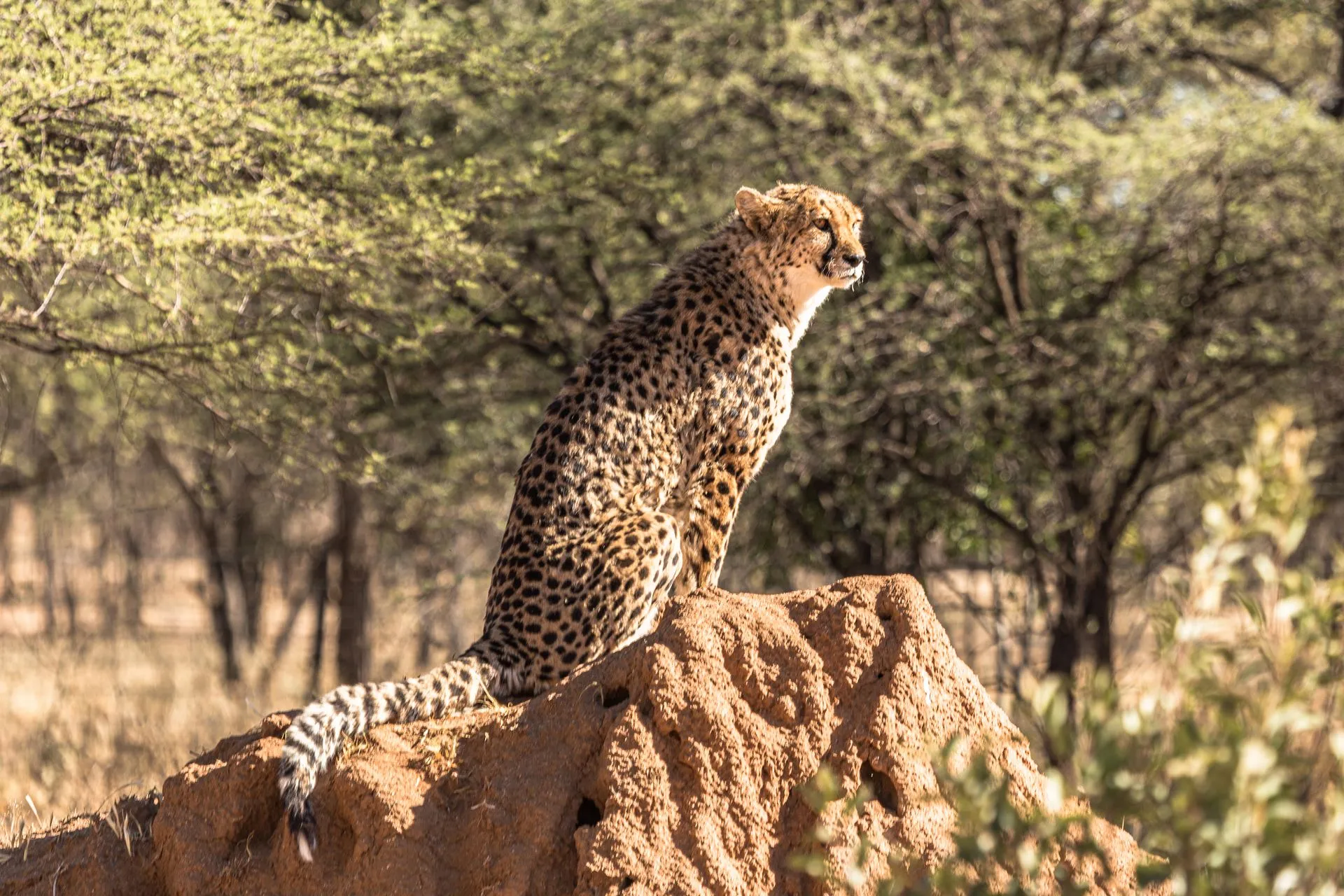
It is a landscape of extraordinary concentrations of big cats. Cheetah are the great prize of the east, often seen in coalitions of brothers, scanning the plains from a termite mound, but lion are plentiful too, and the kopjes shelter leopard and serval. Because the eastern plains are remote and lightly visited, you may well spend a morning watching a cheetah hunt and see no other vehicle at all.
When to go: the east is rewarding all year for its resident big cats, and especially so from December to April, when the migrating herds graze across the short grass of the eastern and southern plains before moving west and north.
Who it suits: discerning travellers, photographers and returning guests who want the Serengeti’s drama without its crowds. It is one of the finest choices for a luxury Serengeti safari built around solitude.
The Western Corridor: Crocodiles of the Grumeti
The Western Corridor is a long finger of the park reaching towards Lake Victoria, a land of black-cotton plains, riverine forest and the slow, brown waters of the Grumeti River. In the quiet months it feels like a private world. Then, in late May and June, the herds arrive from the south, and the corridor becomes one of the great stages of the migration.
The Grumeti River crossing is less famous than the Mara’s, and for that reason often more intimate. The river runs lower and in places forms pools, but it is home to some of the largest Nile crocodiles in Africa, and they have waited all year for this moment. Watching the herds gather nervously on the bank, then commit to the water, is a sight few people forget. In the riverine forest along the Grumeti, you may also find black-and-white colobus monkeys, a reminder of how different this corner of the Serengeti is.
When to go: late May to early July, with June usually the finest month for the Grumeti River crossing. Crossings here are less predictable and less constant than in the north, because the river is smaller and the herds often move along it before crossing. Outside the migration season, the corridor’s resident lion, elephant and plains game make it a peaceful place to explore.
Who it suits: travellers who want to see the migration at its gathering point with fewer vehicles than in the north, and those travelling in June, when the northern crossings have not yet begun.
The Northern Serengeti: The Mara River Crossings
The north is the Serengeti at its most theatrical. Here the land rises into rolling hills and granite outcrops, cut by the Mara River on its way from Kenya to Lake Victoria. In the Kogatende area, the Lamai Triangle beyond the river and the woodlands around Lobo and Bologonja, the scenery is greener and more varied than in the south, and for half the year the region is almost entirely peaceful.
Then the herds come. From around July, the vanguard of the migration reaches the southern bank of the Mara River, and for the next three months the river becomes the scene of the most famous wildlife spectacle on Earth. The herds gather, sometimes for hours, sometimes for days, until one animal makes the leap and thousands follow, scrambling down the banks, swimming against the current and running the gauntlet of waiting crocodiles before hauling themselves out on the far side. No crossing can be timed, and none is ever guaranteed; patience is everything, and your guide’s knowledge of where the herds are massing is worth more than any map.
When to go: July to October for the Mara River crossing, with August and September usually the peak. In October and November, the herds begin to drift south again, often through the Lobo area. Outside these months, the north has superb resident game and very few visitors, and lions, elephants and the rare black rhino make it worthwhile in any season.
Who it suits: anyone for whom a river crossing is the dream of a lifetime. Because this is the most sought-after experience in the Serengeti, northern camps for August and September are often reserved a year or more ahead. Many travellers fly in, as the north lies far from the park’s southern gates.
Fly-in from Zanzibar for the ultimate wildlife safari
Visit Serengeti for the Migration: Month by Month
| Month | Where the herds usually are | Best sectors to stay | Season and weather |
|---|---|---|---|
| January | Southern and eastern short-grass plains | Ndutu, Southern, Eastern | Short dry spell, green |
| February | Ndutu and the southern plains, peak calving | Ndutu, Southern | Warm, occasional showers |
| March | Southern plains, starting to move | Ndutu, Southern, Central | Long rains beginning |
| April | Moving north-west through the centre | Central, Moru Kopjes | Long rains, quietest month |
| May | Central and the Western Corridor | Central, Western | Rains easing, very green |
| June | Western Corridor, Grumeti crossings | Western, Central | Dry season begins |
| July | Moving north, first Mara crossings | Western, Northern, Central | Dry, clear |
| August | Northern Serengeti, Mara River | Northern | Dry, peak season |
| September | Northern Serengeti and the Masai Mara | Northern | Dry, peak season |
| October | Northern, starting south via Lobo | Northern, Central | Dry, crossings continue |
| November | Moving south through the centre | Central, Eastern | Short rains, quieter |
| December | Arriving on the southern plains | Southern, Ndutu, Eastern | Short rains easing |
“The migration follows the rain, not the calendar, so its timing can shift by several weeks from one year to the next. Your specialist will place you where the herds are most likely to be for your dates.”
Finding the Best Time
With the map of the year before you, the choice becomes a matter of temperament. Here is how we usually guide our guests.
For your first Serengeti safari
If you are coming for the first time and dream of the classic Serengeti, choose July to October for the drama of the Mara River crossings, combined with a stay in the Central Serengeti for its big cats. If you prefer fewer vehicles and gentler rates, late January and February offer the calving season and some of the finest predator viewing of the year.
For photographers
The calving season, from late January to March, is a photographer’s dream: soft green light, dramatic skies, newborn animals and cheetah hunting on open plains. The long rains of April and May bring astonishing storm light, and the northern crossings offer the most dynamic action shots of all.
For honeymooners and those seeking solitude
Consider the Eastern Serengeti at almost any time of year, or the shoulder months of November, March and early June, when the herds are on the move, the camps are quieter and a sighting is more often yours alone.
For families
The school holidays of July and August coincide with the dry season and the northern crossings, which makes them ideal for families who must travel then. Book early. The December holidays bring the herds back to the south, and a family safari combining the Central Serengeti and Ndutu can be wonderful.
For the green season traveller
April and May are the Serengeti’s secret. Many camps offer their most favourable rates of the year, the landscape is at its most beautiful and the park is almost empty. You will likely meet some rain, usually in short afternoon storms, and some seasonal camps close, but the herds are moving through the Central Serengeti and the experience can be magical.
Combining Sectors: The Art of a Great Serengeti Safari
The finest Serengeti safaris rarely stay in one place. Because each sector has its own season, the most rewarding journeys follow a simple principle: one stay where the migration is likely to be, and one stay in the Central Serengeti for its year-round wildlife.
In February, that might mean three nights at Ndutu for the calving and two in the Seronera Valley for leopard. In August, it might mean three nights in the north beside the Mara River and two or three in the centre. Light aircraft connect the Serengeti’s airstrips, so even the long distances between sectors can be crossed in under an hour, leaving more of each day for the plains.
A Serengeti safari also pairs beautifully with the Ngorongoro Crater, where a remarkable density of wildlife lives within the walls of an ancient caldera, and with Tarangire, famous for its elephants and baobabs in the dry season. For those who wish to end with sea air, a few days on Zanzibar make a gentle finale.
A look at our 2 most liked safaris: the Best of Tanzania safari and our Bush and Beach Safari
How Far Ahead Should You Plan?
For the most sought-after moments, plan early. Camps near the Mara River in August and September, and near Ndutu in February, are often reserved a year or more in advance, particularly the smaller luxury camps with only a handful of tents. For the green season and the shoulder months, six to nine months is usually enough, and sometimes less.
Whenever you travel, a specialist who knows the Serengeti’s rhythms is your greatest asset. The migration does not read the calendar, and a guide who knows where the herds were last week, and where the rain has fallen, will place you in the right sector at the right time.
A Final Word
There is no wrong time to visit the Serengeti. There is only the time that is right for you. Perhaps it is a February morning at Ndutu, with a newborn calf finding its feet in the grass beside your vehicle. Perhaps it is an August afternoon on the banks of the Mara, the herds massing on the far side and the whole world holding its breath. Or perhaps it is a quiet April evening in the Seronera Valley, with a storm passing over the plains, the light turning gold and a leopard stirring in the branches above you, and not another soul in sight.
Whichever you choose, the Serengeti will be there, telling its endless story in hoofprints and rain. We would be delighted to help you find your chapter.
Tell us when you would like to travel and what you most wish to see, and your specialist will design a private Serengeti safari around the season, the sectors and the moments that matter most to you. PLAN MY SERENGETI SAFARI
Frequently Asked Questions
What is the best month to visit the Serengeti? There is no single best month, because the Serengeti changes with the seasons. February is the finest month for the calving season at Ndutu, June for the Grumeti River crossings in the Western Corridor, and August and September for the Mara River crossings in the north. For excellent wildlife with fewer visitors, the shoulder months of November, March and early June are wonderful.
When is the best time to see the Great Migration in the Serengeti? The Great Migration is in the Serengeti for most of the year, but its location changes. It is on the southern plains around Ndutu from roughly December to March, in the central and western Serengeti from April to July, and in the northern Serengeti from July to October. The river crossings, the most famous moments, are usually from June to October.
When is the Serengeti calving season? The calving season usually runs from late January to March on the southern plains around Ndutu, with the peak in February, when, by most estimates, around half a million wildebeest calves are born in a few weeks. It is one of the best times of the year to watch lion, cheetah and hyena hunt.
When can I see the Mara River crossing in the Serengeti? Mara River crossings usually take place from July to October in the northern Serengeti, with August and September often the peak. The herds may cross several times in both directions, but no crossing can be predicted or guaranteed on a particular day, so patience and a knowledgeable guide make all the difference.
Is it worth visiting the Serengeti in the rainy season? Yes, for many travellers. The rains bring green landscapes, newborn animals, dramatic light and far fewer visitors, and many camps offer their most favourable rates. The rain usually falls in afternoon storms rather than all day. April and May are the wettest months, when some tracks become muddy and a few seasonal camps close.
Where is the Great Migration in August? In August, the herds are usually in the northern Serengeti and across the border in Kenya’s Masai Mara, gathering along the Mara River. This is the peak of the river crossing season, and northern Serengeti camps are often reserved a year or more in advance.
Which part of the Serengeti is best for big cats? The Central Serengeti around the Seronera Valley is famous for leopard and lion in every month, and the Eastern Serengeti around the Gol Kopjes is renowned for cheetah. During the calving season, Ndutu and the southern plains offer some of the most dramatic predator action in Africa.
How many days do I need in the Serengeti? Three to four nights is a good minimum, which allows time to explore without hurrying. Five or more nights lets you combine two sectors, for example the Central Serengeti with Ndutu in February or with the northern Serengeti in August. Many guests also add the Ngorongoro Crater and Tarangire.
Is the Serengeti good to visit in December? Yes. In December the short rains are easing, the plains are turning green and the herds are returning to the southern Serengeti. It is a quieter time than the peak seasons, and in good years early calving may begin. The Central and Eastern Serengeti are also excellent.
How do I plan a luxury Serengeti safari? Start with the season and what you most wish to see, then choose the sectors that match, usually one where the migration is likely to be and one in the Central Serengeti. Reserve early for February and for July to October. A specialist can arrange private guiding, light aircraft between sectors and the right camp for each region.